


Guide To Site Surveying
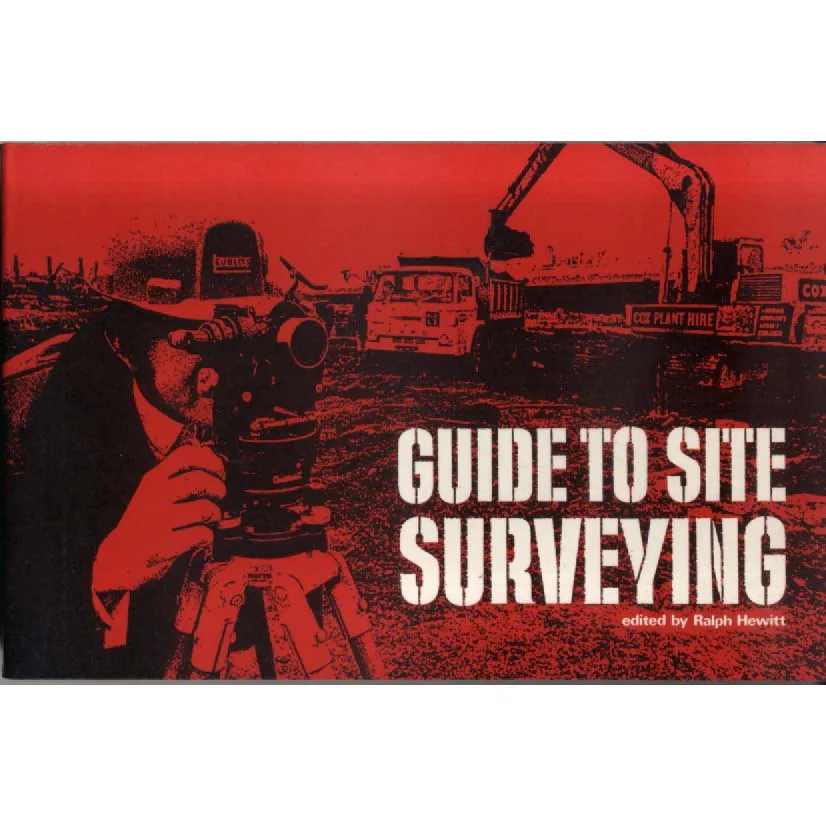
Publisher: The Architectural Press
Format: Paperback
ISBN: 0851392687
Guide to Site Surveying (1972) by Ralph Hewitt
The Architectural Press | ISBN: 0851392687
Condition: Near Fine
As sold by Crappy Old Books
There are two kinds of people in the world: those who look at a patch of ground and see “a nice spot for a building,” and those who look at the same patch of ground and see levels, bearings, datums, drainage falls, boundary anomalies, and the faint threat of future litigation. If you’re even slightly curious about becoming the second kind of person, Guide to Site Surveying is your enabling manual.
Ralph Hewitt’s 1972 classic is a beautifully practical book from The Architectural Press — the sort of sober, competent volume that doesn’t waste time on motivational speeches. It simply assumes you want to do the job properly, and it shows you how. Because site surveying is not glamorous. It is not “design.” It is not “vision.” It is the crucial bit where reality taps the architect on the shoulder and says, “Hello. I’m a slope.”
This is the world of measuring things that refuse to be tidy: land that isn’t level, boundaries that aren’t where the fence claims they are, corners that aren’t square, and existing structures that have been “modified” by decades of optimism. Hewitt deals in the practical truths of the site: how to set out, how to record, how to check, how not to embarrass yourself in front of someone holding a tape measure and an expression of disappointment.
And because it’s 1972, there’s a particularly charming layer of analogue seriousness. No GPS. No drones. No laser scanning that produces a point cloud the size of a small planet. This is surveying with human judgement, careful method, and instruments that demand you pay attention. It’s not quaint, exactly — it’s disciplined. The kind of book that quietly teaches you to respect accuracy because in the real world, being “about right” is how you end up with a door that doesn’t open and a client who suddenly knows the word “snagging.”
Expect clear explanation, methodical steps, and the reassuring tone of someone who has watched enough people do it wrong to know exactly where you’ll trip up. It’s a guide, not a philosophy. But it’s also a little bit of a philosophy, because surveying is ultimately about humility: accepting that you can’t build anything properly until you’ve understood what’s actually there.
It’s also a subtle joy as a time capsule of professional practice. The principles don’t change — measurement is measurement — but the context does. Reading older technical books is oddly satisfying because they’re written with an assumption that you, the reader, are competent, patient, and capable of following instructions without needing a cartoon mascot to cheer you on. It’s refreshing. Slightly stern. Very British.
And the condition? Near Fine. Which is almost suspiciously appropriate for a surveying book. A manual about accuracy, surviving in unusually accurate shape. Minimal wear, crisp presence — ready to sit on a desk, be consulted, and make you feel like you know what you’re doing even if you’re still quietly Googling “what is a datum” under the table.
Perfect for:
-
architects, builders, and anyone who enjoys things being measurable
-
DIYers flirting with the dangerous idea of “I’ll just set it out myself”
-
people who find unexpected comfort in lines, numbers, and the idea of a correct method
From Crappy Old Books: because dreams are lovely, but a good site survey is what stops your dream extension from accidentally leaning into the neighbour’s hydrangeas.
Keep browsing: See more Architecture books Other books by Ralph Hewitt
