


Europes First Monumental Sculpture - New Discoveries At Lepenski Vir
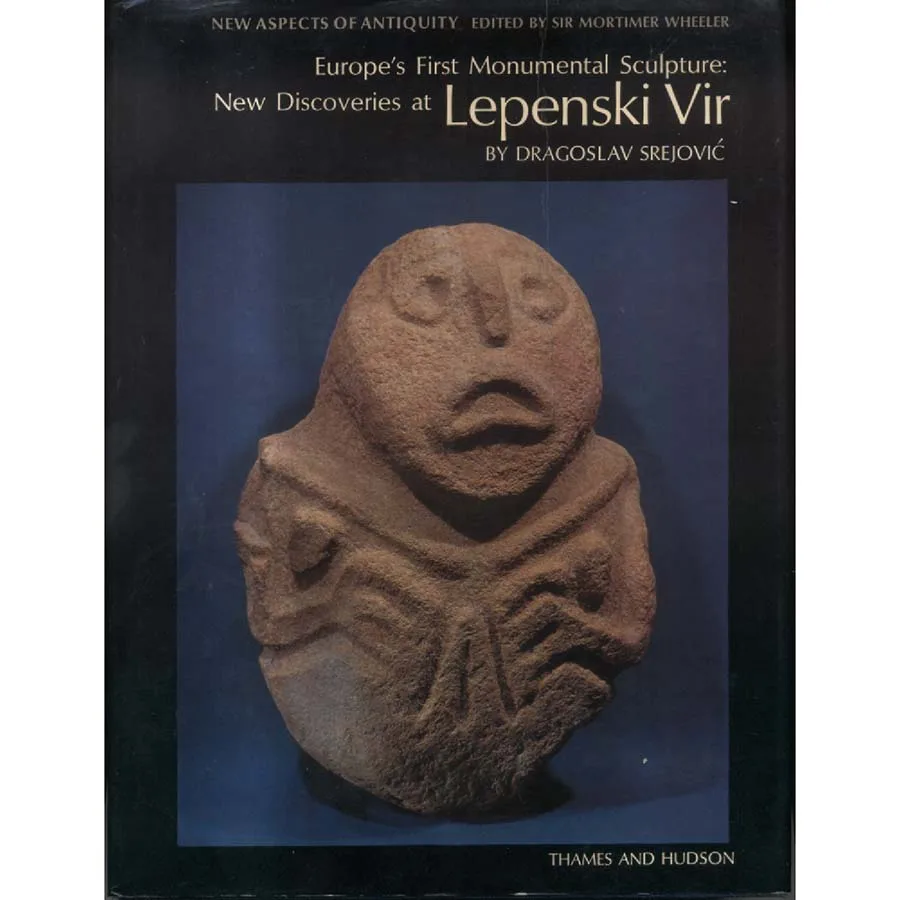
Publisher: Thames and Hudson
Format: Hardback
ISBN: 0500390096
Europe’s First Monumental Sculpture – New Discoveries at Lepenski Vir (1972) by Dragoslav Srejović
Thames and Hudson | ISBN: 0500390096
Condition: Good
As sold by Crappy Old Books
Somewhere in the long, foggy stretch of prehistory, humanity stops merely existing and starts doing that very human thing where it thinks, “You know what this place needs? A proper statement piece.” Not a handy tool. Not a shelter patch-up. Not a sensible pot. A monumental sculpture. Because nothing says “we’re doing civilisation now” like carving something large, strange, and meaningful enough to outlast everyone involved.
Europe’s First Monumental Sculpture – New Discoveries at Lepenski Vir is your invitation into exactly that moment — a beautifully serious, quietly thrilling archaeological story from Dragoslav Srejović, the excavator and interpreter of one of Europe’s most famous Mesolithic sites on the Danube. And yes, it’s published by Thames and Hudson, which means it has that reassuring air of: this will contain photographs, plans, and the kind of careful explanation that makes you feel smarter just by holding it.
Lepenski Vir is the sort of site archaeologists dream about and everyone else only half-believes exists: a settlement with a distinctive layout, a powerful sense of place, and art that feels uncannily modern in its boldness. These aren’t “little scratches on bone” that you have to squint at while someone says, “Well, it might be a deer.” This is the real deal: sculpted forms, strong design, a visual language that makes you realise prehistoric people weren’t just grimly surviving — they were thinking symbolically, making choices, creating culture, and apparently having opinions about aesthetics.
The book balances that wonderful combination of discovery narrative and evidence: what was found, where, what it looked like, how it fits together, and why it matters. It’s archaeology at its best — not just a list of artefacts, but a reconstruction of a world. A community living at a key river corridor, negotiating the environment, shaping space, and leaving behind objects that feel like they were made to be looked at, not merely used.
And there’s a delicious irony here, too: we spend so much time imagining early Europeans as “primitive,” while they’re out here commissioning the continent’s first monumental art as if it’s the most natural thing in the world. Meanwhile, most of us can’t hang a picture frame without a crisis.
You’ll get diagrams, contextual discussion, and that lovely 1970s academic confidence: a period when archaeology books had a whiff of adventure, a sense of “we are genuinely discovering something new,” and the thrill of interpretation before everything became footnotes arguing with other footnotes. It’s scholarly, but it’s also genuinely readable — the tone of someone who has seen extraordinary things come out of the ground and wants you to understand why they matter.
This copy is Good, which is exactly what you want for a proper thinking person’s book: handled, appreciated, still solid. The kind of volume that looks excellent on a shelf and even better open on a table, surrounded by coffee cups and ambitious plans to “just read a chapter” (which, in archaeology, is how you lose an evening).
If you like your history deep-time, your art origins mysterious, and your human story told through stone, settlement, and serious interpretation, Lepenski Vir is a rabbit hole with a river running through it.
From Crappy Old Books: because someone, thousands of years ago, looked at the Danube and thought, “This would be improved by sculpture,” and honestly — respect.
Keep browsing: See more History books Other books by Dragoslav Srejovi
