


Diaries - 1946-49 Caves Of Ice And Midway On The Waves
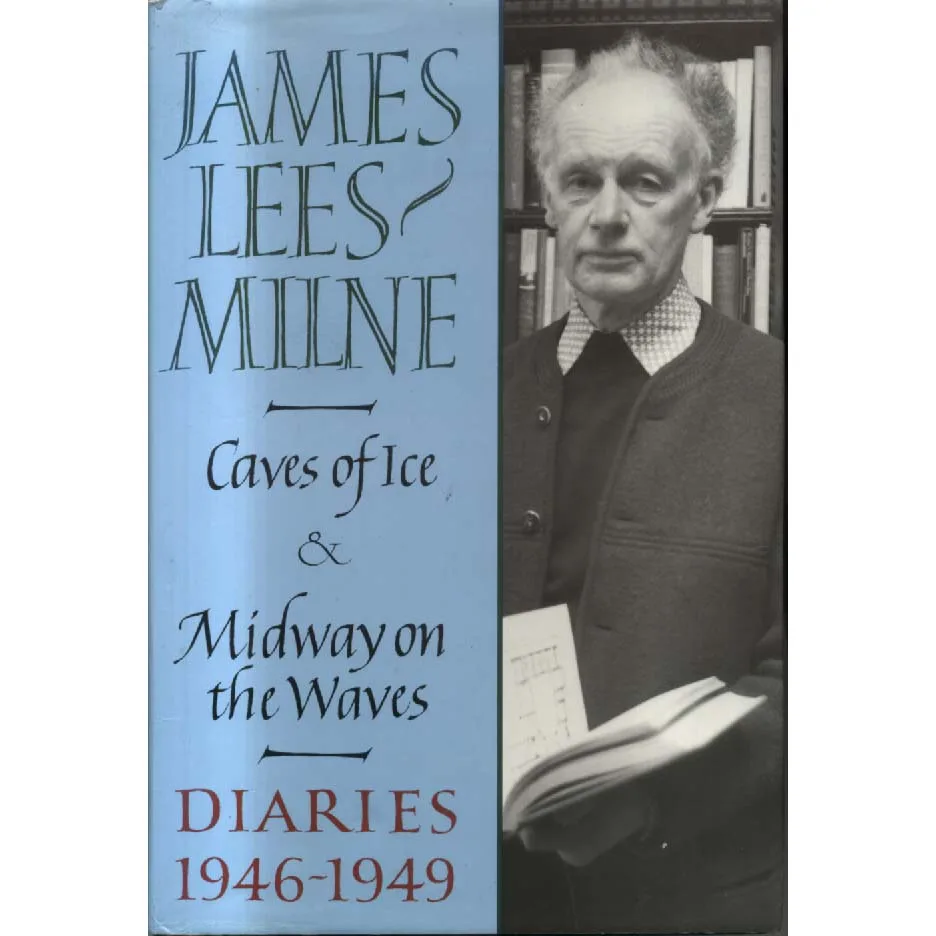
Publisher: John Murray
Format: Hardback
ISBN: 9780719555916
Diaries 1946–49: Caves of Ice and Midway on the Waves (1996) by James Lees-Milne, published by John Murray (ISBN: 9780719555916), is what happens when you take the post-war years — rationing, rebuilding, social reshuffles, fading grandeur and new austerity — and filter them through a man with an eye for architecture, a taste for society, and a talent for writing down exactly what everyone was like when they thought nobody important was watching.
Lees-Milne’s diaries are not the “dear diary, today I felt reflective” variety. They’re more “dear diary, the country is rearranging itself, the houses are crumbling, the egos are thriving, and I’ve just had lunch with someone fascinatingly dreadful.” If you like your history with sharp edges, good sentences, and the soft rustle of drawing-room scandal, you’re in the right place.
The title alone is beautifully, quietly theatrical: Caves of Ice and Midway on the Waves. It sounds like a modernist poem or a particularly ambitious weather forecast. In practice, it’s Lees-Milne doing what he does best: capturing mood, movement, and the strange in-between state of a Britain that has survived a war and is now trying to decide what it is. Everything feels transitional: old money and old certainties wobbling; new realities turning up with clipboards; and a country that still looks picturesque even when it’s exhausted.
What makes these diaries so addictive is the blend. You get the big background hum of the era — the National Trust world, country houses, preservation, culture — but you also get the intimate, immediate texture of daily life: encounters, impressions, petty triumphs, private irritations, sudden admirations. He notices people the way a good critic notices a building: by line, proportion, surface, and structural weakness. Compliments, when they arrive, feel earned. Snubs, when they land, tend to land neatly.
And the irony is that diaries often pretend to be private, when in fact they are performance under the guise of privacy. Lees-Milne knew he was good. He knew his circle was interesting. And he knew that writing it down was, in its own way, an act of preservation too — not of stone, but of atmosphere. The social world, captured before it remodels itself out of recognition.
This copy is in Good condition as sold by Crappy Old Books, which is ideal for a diary volume: sturdy enough to be dipped into, read in bed, carried around, and used as a kind of elegant time machine. You don’t really “finish” diaries so much as live alongside them for a while, popping in for an entry or three and emerging with the sense that you’ve overheard something you shouldn’t, but are very glad you did.
Perfect for:
-
lovers of post-war British social history
-
country house and National Trust obsessives
-
readers who enjoy wit, judgement, and beautifully turned observation
-
anyone who likes their memoirs lightly iced with froideur
A book that proves the late 1940s weren’t just about shortages and recovery — they were also about taste, ambition, fragile worlds, and the quiet drama of who still mattered when the old rules started slipping.
Sharp, civilised, and faintly lethal — the best kind of diary.
Keep browsing: See more Biography books Other books by JamesLees-Milne
