


Shakespeares History Plays
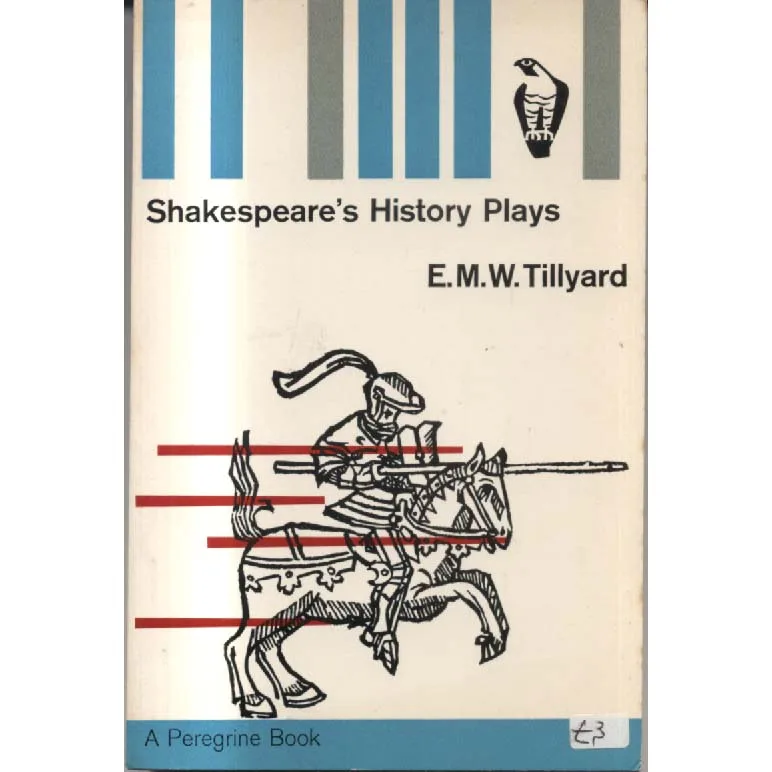
Publisher: Peregrine Books
Format: Paperback
ISBN: none
Shakespeare’s History Plays (1966) by E. M. W. Tillyard, published by Peregrine Books, is one of those reassuringly serious paperbacks that looks like it should come with a cardigan and a quiet admonition to “read properly.” No ISBN (because 1966 didn’t need numbers to feel authoritative). Condition: Good, as sold by Crappy Old Books — which is exactly right for a book that exists to be underlined, argued with, and used to win minor intellectual battles.
This is Tillyard doing what he did best: taking Shakespeare’s history plays — the ones full of crowns, rebellions, speeches, mud, and inconvenient relatives — and treating them not as a random cluster of medieval dramas but as a coherent, meaningful pattern. The histories, in his view, aren’t just entertainment. They are Shakespeare thinking in public about power, legitimacy, disorder, and the terrifying fact that the state is often one bad decision away from becoming a travelling chaos circus.
And the irony is that Shakespeare’s “history” plays aren’t really history in the way historians mean it. They’re a mash-up of propaganda, theatre, moral argument, and Elizabethan anxieties dressed up in armour. Tillyard is fascinated by exactly that: how Shakespeare shapes the past into a story that makes sense, gives it rhythm, and turns messy dynastic violence into something that feels like a grand national narrative — a kind of dramatic conveyor belt from chaos to order, with a lot of stabbing along the way.
If you’ve ever watched Henry IV or Richard III and thought, “This feels like it’s about my workplace,” you’re not wrong. These plays are full of leaders who perform confidence, rivals who never quite disappear, allies who turn into liabilities, and crowds who can be swayed by a good line. Tillyard helps you see the structure behind it: the themes that recur, the way one play talks to the next, the idea (controversial, influential, very Tillyard) that Shakespeare’s histories reflect an underlying moral and political order — an “English” vision of how the world ought to work, even when it plainly doesn’t.
It’s also a particularly enjoyable kind of book because it’s old-school criticism: confident, sweeping, full of big claims. Modern scholarship may quibble, complicate, and argue back — and that’s part of the fun. Tillyard is not writing timidly. He’s laying down a map and saying, “Look. This is the shape.” You can follow it, challenge it, or use it as a springboard, but you won’t finish it feeling like nothing was said.
This copy, in Good condition from Crappy Old Books, is ideal for:
-
Shakespeare readers who want the histories to feel connected and purposeful
-
students who need a strong framework (even if they later disagree with it)
-
theatre people who love the politics of performance
-
anyone who enjoys criticism that actually has the courage of its convictions
A 1966 Peregrine paperback that tries to make sense of kings, rebels, legitimacy, and the national story — all by peering into Shakespeare and saying, “He wasn’t just writing plays. He was writing England.”
Read it and you’ll start seeing the history plays not as a row of dusty monarchs, but as a long, dramatic argument about power — delivered with poetry, pomp, and a body count.
Which, honestly, is still how politics works.
Keep browsing: See more Poetry books Other books by EMW Tillyard
