


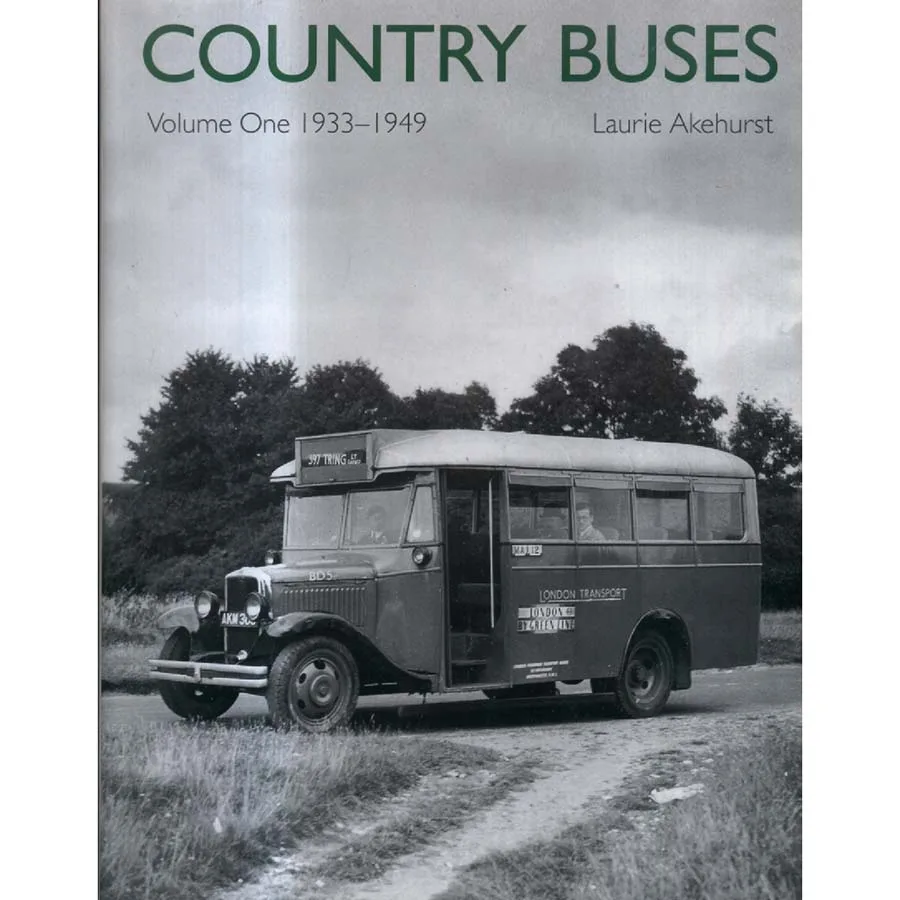
Country Buses - Volume One 1933-1949
Publisher: Capital Transport
Format: Hardback
ISBN: 9781854143556
At last: a book dedicated to the true silent heroes of British history — not kings, not generals, but the country bus. The rolling village noticeboard. The mobile rumour exchange. The courageous box on wheels that looked at a muddy lane in 1937 and thought, Yes. I will attempt that.
Country Buses – Volume One: 1933–1949 (2012) by Laurie Akehurst, published by Capital Transport (ISBN 9781854143556), is pure transport nostalgia with proper scholarly backbone. It’s for anyone who sees an old bus photo and immediately starts asking the important questions: What route was it on? Who operated it? What colour was the fleet livery? And how on earth did it get up that hill with six passengers and a crate of chickens?
This volume covers the period when rural Britain ran on timetables, persistence, and the faint hope that the bus would actually come. It’s the era of pre-war practicality, wartime austerity, post-war rebuilding — and through it all, buses just kept turning up, doing the rounds, and quietly stitching communities together one stop at a time. While history thundered overhead, the country bus continued its modest mission: delivering people to markets, stations, work, school, and the occasional life-changing dance in the next village.
Akehurst doesn’t treat these vehicles as mere machines. They’re characters. Each operator and route tells a story about local geography, economics, and the odd British obsession with forming committees to decide whether a bus should turn left or right at the pub. You’ll get the operators, the networks, the changes, the liveries, the types — the whole ecosystem of rural transport before “mobility solutions” became a phrase and before everyone was expected to own a car and a sense of direction.
And yes, there’s delicious irony here: the country bus — often teased, overlooked, taken for granted — now receives the sort of loving documentation usually reserved for warships and steam locomotives. Which is only fair. Steam engines got romance; country buses got service. They didn’t want glory. They wanted a decent road surface and maybe a new set of tyres.
This is a 2012 book looking back at 1933–1949, which means you get modern production quality and research, but all the charm of the period: those boxy silhouettes, the typography, the photographs that make you want to put on a coat and queue politely for a ticket. It’s a book that makes “interwar rural bus operations” sound like a thrilling niche — because it is.
Condition: Fine, meaning it’s crisp, clean, and ready to be admired like a freshly polished destination blind. This is the sort of copy that looks almost suspiciously well-behaved for a subject built on muddy lanes and hard work. Ideal for collectors, transport historians, model makers, bus spotters, and anyone who believes Britain makes more sense when viewed through the prism of routes, depots, and timetable compromises.
Perfect for: local history lovers, public transport obsessives, nostalgists with a soft spot for rural life, and anyone who has ever felt a small surge of joy at the phrase “Request Stop.”
Sold proudly by Crappy Old Books — because some people collect rare first editions, and some people collect the beautifully specific joy of country buses, 1933–1949.
Keep browsing: See more Transport books Other books by Laurie Akehurst
