


The Rise Of The Novel
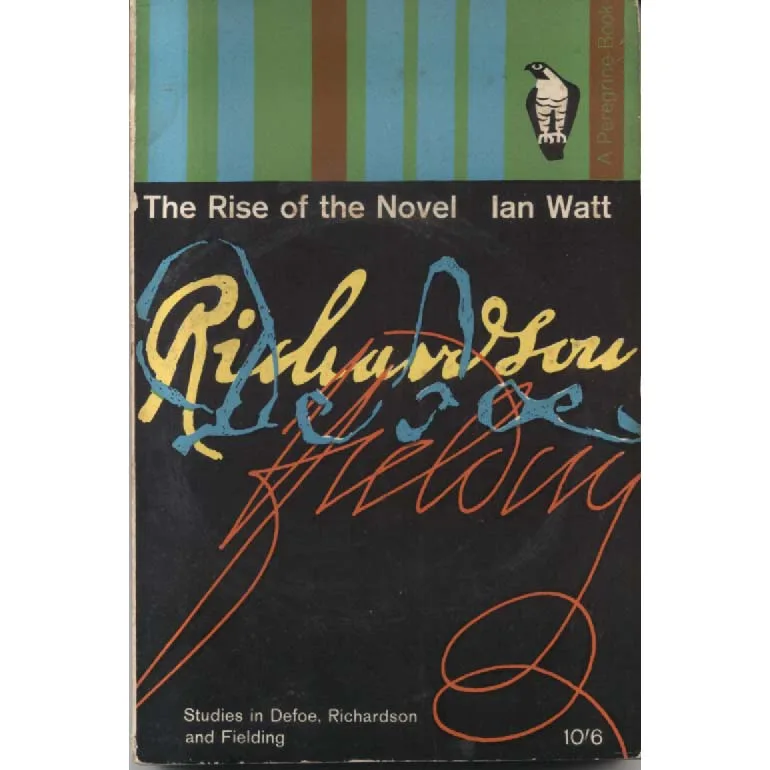
Publisher: Peregrine Books
Format: Paperback
ISBN: none
Here it is: The Rise of the Novel (1963) by Ian Watt, Peregrine Books — the book that politely, firmly, and with a terrifying amount of calm logic explains why you are reading novels in the first place, and why you can’t stop.
This is not a novel. It is, in a way, a post-mortem on the invention of the modern reader: that strange creature who willingly sits down to consume hundreds of pages about someone else’s problems, then calls it “relaxing.” Ian Watt takes you back to the moment literature stopped being mostly heroes, allegories, and epic thunder, and began being… people. Specific people. Awkward people. People who worry about money and virtue and furniture, and then write long letters about it.
Watt’s central cast is wonderfully unglamorous: Defoe, Richardson, Fielding — the founding fathers of the English novel, each of whom helped drag storytelling away from myth and into the world of receipts, moral anxiety, and the chilling realisation that your choices have consequences. Here is the birth of “realism,” which is basically literature saying: what if we wrote about ordinary life, but made it feel important? A dangerous idea, frankly.
This is also a book about the rise of the middle class, capitalism, individualism, and the whole cultural machine that allowed a person to sit alone and think, “My inner life matters enough to fill 300 pages.” It’s part literary criticism, part social history, part a beautifully controlled demolition of any remaining belief that novels simply “happened.” Watt argues they were made, by economics, religion, printing, and a growing appetite for detail — the slow, delicious creep from “Once upon a time” to “On Tuesday the 14th, at 10:15am, he felt mildly betrayed.”
And because it’s Ian Watt, the prose is that perfect academic blend of crisp and quietly ruthless. He does not shout. He does not waffle. He simply lays out the evidence until you find yourself nodding along like you’ve just been convinced in court. By the end, you may never look at an opening sentence the same way again. You may also develop a mild compulsion to mutter things like “formal realism” at parties. Consider yourself warned.
This Peregrine edition has that classic mid-century paperback energy: serious, purposeful, designed to be carried around and underlined by someone in a raincoat who drinks weak tea and has Opinions about narrative voice. Condition: Good, which is exactly right for a book like this — it should look slightly handled, faintly lived with, as if it has survived at least one earnest debate and possibly a cigarette.
Perfect for:
-
Readers who want to know why novels became the dominant life-form
-
Anyone who suspects Robinson Crusoe is more than a man and a goat
-
Students, armchair academics, and people who enjoy being right about books
-
The sort of person who says “I don’t read fiction” and needs a gentle corrective
The Rise of the Novel is the definitive explanation of how we got from knights and dragons to awkward individuals with diaries, debt, and personal growth. It’s witty, foundational, and just intellectual enough to make you feel virtuous simply by owning it.
As sold by Crappy Old Books — because obviously this is the kind of thing that belongs slightly battered, mildly smug, and ready to explain everything.
Keep browsing: See more Academic books Other books by Ian Watt
