


British Insect Life
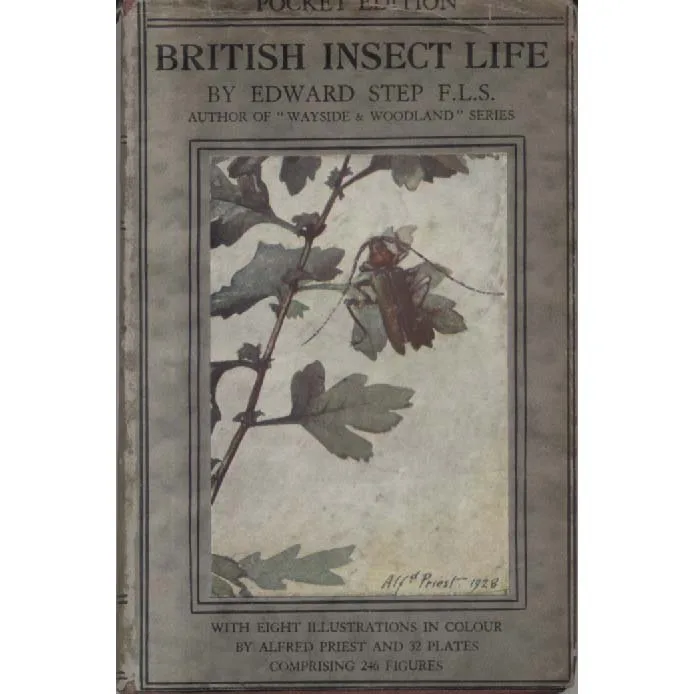
Publisher: T Werner Laurie Ltd
Format: Paperback
ISBN: none
Ah, British Insect Life (1936) by Edward Step, published by T. Werner Laurie Ltd — a book from that glorious era when natural history involved stout boots, a net on a stick, and the firm belief that beetles deserved proper introductions.
This is not one of your modern, glossy, macro-photography coffee-table affairs where dragonflies look like alien spacecraft and everything is described as “biodiverse.” No. This is 1936 Britain. Insects are approached with patience, Latin, and the quiet authority of a man who probably owned a waistcoat specifically for fieldwork.
Edward Step does not merely “observe” insects. He acquaints you with them. He introduces them as if they might call for tea. Butterflies are dignified. Beetles are industrious. Moths are treated with the faint suspicion reserved for creatures that insist on appearing at night and eating wool.
Inside, you’ll find careful descriptions, that delightful interwar prose that assumes the reader has both curiosity and stamina, and an underlying optimism that the British countryside — hedgerows, meadows, damp woodlands — will always be there, gently humming with life. It is a snapshot of pre-war natural England, before pesticides, motorways, and the concept of “rewilding” entered polite conversation.
The charm lies partly in what it does not do. There are no QR codes. No climate disclaimers. No “citizen science portals.” Just knowledge, methodically presented. If you wished to identify a hoverfly in 1936, this is the sort of book you would consult before writing a letter about it.
Condition: Good, which in Crappy Old Books dialect means “lived with, respected, possibly taken outdoors.” The pages may have mellowed to that agreeable cream tone that suggests decades of quiet shelf-dwelling. It may even retain the faint aura of a previous owner who once peered intensely at a hedgerow and declared something to be a weevil.
This is the kind of volume that makes you want to wander into a meadow and start taking notes. Or at least feel faintly guilty for not knowing the difference between a sawfly and a wasp.
Ideal for:
-
Naturalists with a taste for the interwar period
-
People who say “hedgerow” with conviction
-
Anyone who suspects insects deserve better press
A thoroughly civilised guide to the small, many-legged citizens of Britain — written when the Empire was still large, the countryside still plentiful, and beetles were taken seriously. As sold by Crappy Old Books, naturally.
Keep browsing: See more Nature books Other books by Edward Step
