


The Empty Space
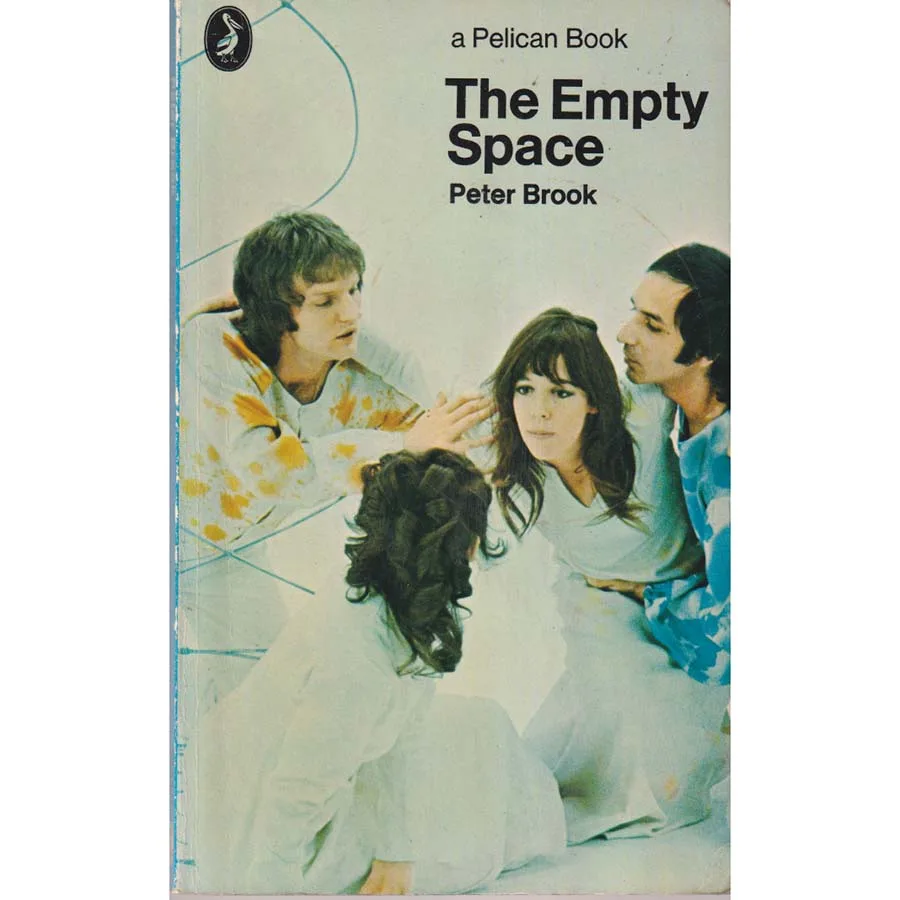
Publisher: Pelican Books
Format: Paperback
ISBN: 0140214151
The Empty Space is Peter Brook walking onto a bare stage, looking you dead in the eye, and saying: “Right then — what are we actually doing here?” And somehow you feel both inspired and mildly indicted.
This is the 1977 Pelican Books edition (ISBN: 0140214151), offered in Good condition by Crappy Old Books. A classic, sensible paperback that’s done what Pelicans were born to do: be read, carried, argued with, and occasionally waved about by someone trying to win a point in a pub. Expect honest wear consistent with that life — maybe a softened spine, a bit of rubbing, a touch of age — but still solid and very readable.
Brook’s central premise is wonderfully simple and quietly explosive: theatre can happen anywhere. “I can take any empty space and call it a bare stage,” he says (paraphrasing, but you’ll feel the line land when you meet it), and from that he builds a sharp, practical philosophy of performance. This isn’t theatre as polite cultural wallpaper. It’s theatre as a living thing — something that can be dead, deadly, holy, rough, immediate, or (worst of all) boring.
The book is famously organised into Brook’s big categories — ways theatre behaves when it’s functioning, failing, or pretending. He pokes at Deadly Theatre (the respectable, well-funded kind that somehow makes you want to nap), celebrates Rough Theatre (alive, scrappy, direct), explores the lure of the Holy Theatre (transcendence, ritual, the “something more”), and argues for the Immediate Theatre (presence, attention, electricity). It’s the kind of framework that makes you start diagnosing every production you’ve ever seen, and several meetings you’ve ever attended.
What makes The Empty Space so enduring is its tone: Brook writes like a practitioner who has actually been in the room when things work — and when they very much do not. He’s not selling mystique. He’s talking about craft, attention, truth, and the brutal fact that audiences can smell dishonesty at twenty paces. There’s a generous humanity to it, but also a steeliness: theatre matters because it’s one of the few places humans can gather and really look at each other without immediately reaching for their phones. (Brook got there early; the rest of us followed.)
This book is perfect if you:
-
Love theatre and want to understand why some performances feel like lightning and others feel like homework
-
Make things — plays, talks, videos, websites, pitches — and suspect “empty space” might apply to more than stages
-
Enjoy criticism that is practical, a bit ruthless, and strangely uplifting
And yes, it reads brilliantly even if you’ve never stepped on stage. Because Brook is really talking about attention, intention, and what it means to make something alive. Which is a useful thought whether you’re directing Shakespeare, running a meeting, or trying to write an email that doesn’t die on impact.
Condition: Good — a sturdy copy with the usual Pelican patina, ideal for reading with a pencil in hand and a slightly superior expression on your face. From Crappy Old Books, where we appreciate books that don’t just fill space on a shelf — they make you look at the space differently.
Open it. Clear a little room.
Brook would call that a stage.
Keep browsing: See more Academic books Other books by Peter Brook
