


The Use Of History
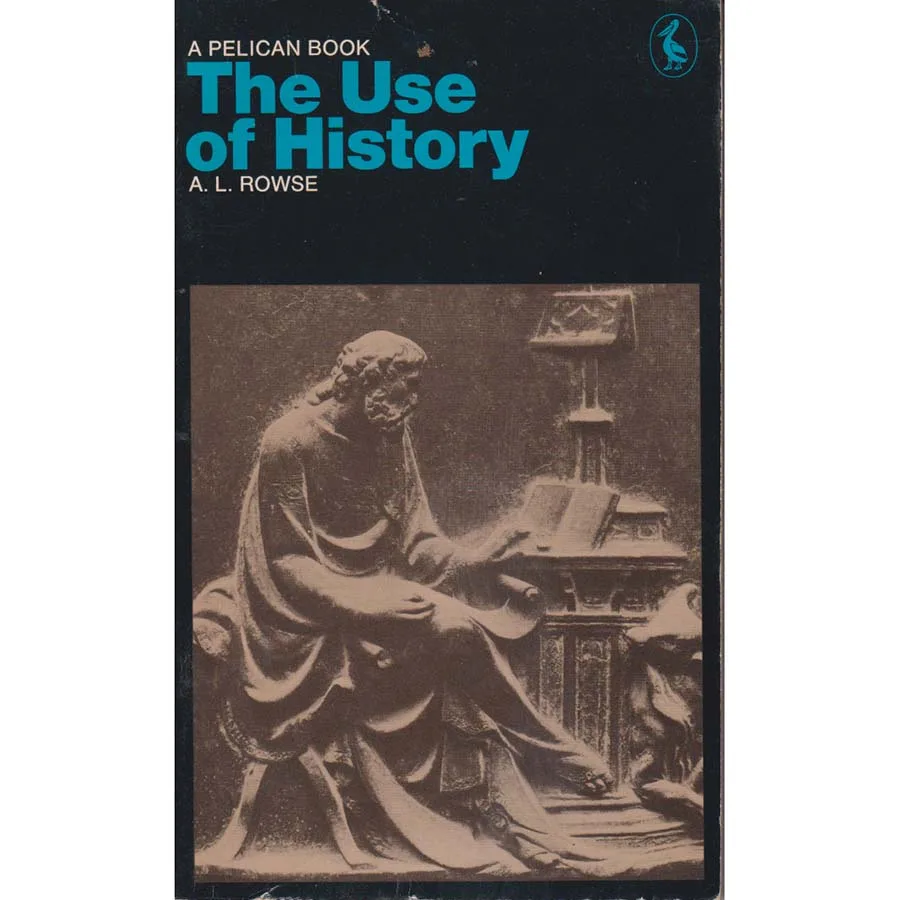
Publisher: Pelican Books
Format: Paperback
ISBN: 014021299X
The Use of History is A. L. Rowse arriving with the brisk confidence of a man who has read the archives, met the past in a dimly lit record office, and come back to tell the rest of us what we’re doing wrong.
This is the 1971 Pelican Books edition (ISBN: 014021299X), offered in Good condition by Crappy Old Books. A proper serious paperback from the era when Pelican made intellectual self-improvement cheap enough to be slightly dangerous. Expect honest signs of use: mild shelf wear, perhaps a gently creased spine, a bit of age-toning — nothing scandalous, just the evidence of a book that has actually been handled by people who wanted to think.
Rowse’s central question is deceptively simple: what is history for? Not “what happened” (that’s the raw material), but what we’re meant to do with it — as readers, citizens, students, politicians, dinner-party pontificators, and anyone tempted to weaponise a vaguely remembered Tudor fact. He’s interested in the uses and abuses: the way history can illuminate, mislead, console, provoke, flatter, and occasionally be dragged into service as a kind of intellectual costume.
You’ll find Rowse in full voice: clear, forceful, opinionated, and not remotely interested in apologising for having opinions. He’s the sort of writer who makes arguments with the certainty of someone tapping ash into a tray and expecting you to keep up. If you like your historical thinking with a bit of edge — less “isn’t the past fascinating” and more “here’s what you’re missing and why it matters” — this will suit you nicely.
This book is ideal for:
-
People who suspect history is more than dates, and also more dangerous than it looks
-
Readers who enjoy criticism that feels like it’s wearing a blazer
-
Anyone who has ever watched a modern debate and thought, “This would go better if someone understood what precedent actually means”
It’s also a neat antidote to the two most common historical ailments: nostalgia (“things were better then”), and presentism (“everyone back then was an idiot and we are very advanced”). Rowse reminds you, with varying degrees of patience, that the past is not a theme park and not a courtroom drama designed for your moral superiority. It’s a complicated, human thing — and if you use it badly, it will happily repay the favour.
Condition: Good — a sound copy with the usual Pelican wear that suggests it has been read, argued with, and possibly used as moral support on a long train journey. From Crappy Old Books, where we appreciate a paperback that doesn’t just sit there looking clever — it actually tries to make you clever, which is far more inconvenient.
History: still happening, still being misquoted, still useful. Rowse: still unimpressed.
Keep browsing: See more History books Other books by AL Rowse
