


National Geographic 1999 August
Publisher: National Geographic
Format: Paperback
ISBN: none
Welcome to National Geographic, August 1999 (Vol. 196, No. 2) — the late-90s moment when the world was one year away from the millennium, and National Geographic was bravely attempting the impossible: summarising “Global Culture” without the paper catching fire.
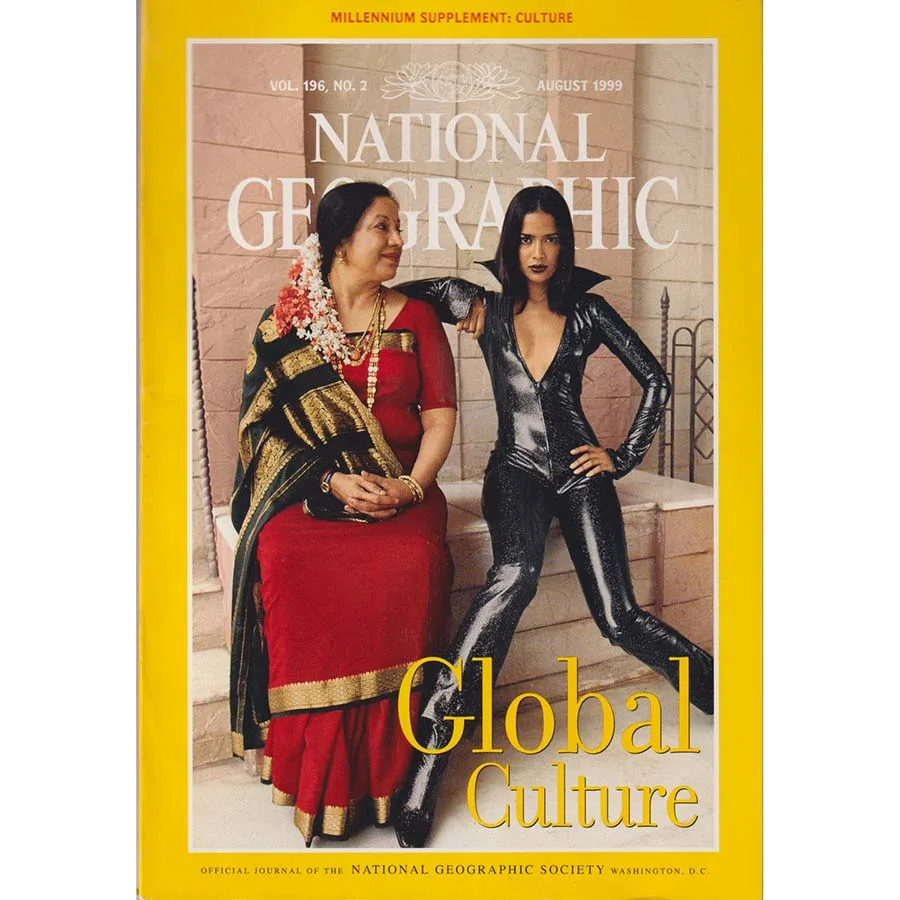
The cover says it all. Two women, two aesthetics, one perfectly poised generational vibe-check: traditional elegance on one side, glossy future-facing attitude on the other. It’s not subtle. It’s not meant to be. It’s National Geographic planting a flag in the decade’s biggest feeling: everything is changing, everything is mixing, and nobody is quite sure whether to celebrate or panic, so let’s do a feature and call it “Culture.”
This is the Millennium Supplement: Culture, which is basically the magazine’s way of saying, “Right. Before the calendar flips, let’s take stock of what humans are doing with music, fashion, food, language, belief, migration, media, identity, and the quiet global spread of the same four pop songs.” It’s big-picture, glossy, and wonderfully earnest — the kind of issue that makes you feel like you’ve attended a world tour without leaving your sofa, while also gently nudging you to notice how the world’s edges are getting blurrier.
And because it’s National Geographic, you’re not just getting vibes — you’re getting structure. The real treat here is the included pull-out: “Millennium in Maps – Cultures.” This is prime yellow-border behaviour: take something wildly complex and living, flatten it into a beautiful cartographic object, and suddenly you’re standing over a fully unfolded map thinking, Yes. I too am an informed citizen of Earth. It’s the sort of insert that ends up on a wall, then accidentally becomes your personality. (“Oh that? Just my cultures map. No big deal.”)
Expect the classic Nat Geo flavour throughout:
-
careful, wide-eyed curiosity,
-
a confident belief that understanding is possible,
-
and that very 1999 optimism that globalisation might be messy but also kind of exciting, like a party where everyone brought a different playlist and someone has definitely spilt something on the carpet.
Condition: Good, which is exactly what you want for an issue like this: sturdy, readable, and still capable of being dramatically unfolded on a table for maximum impact. It’s pre-loved, but still has that unmistakable National Geographic magic — the one where you open it “for a quick look” and emerge later with opinions about identity, media, and why maps are both helpful and slightly audacious.
If you want a time capsule from the exact point when the world was turning into a smaller, louder, more connected place — and you’d like a beautiful pull-out map to prove it — August 1999 is your ideal pick. Sold by Crappy Old Books, naturally: champions of second-hand enlightenment and accidental anthropology.
Keep browsing: See more National Geographic books Other books by National Geographic
