


National Geographic 1999 November
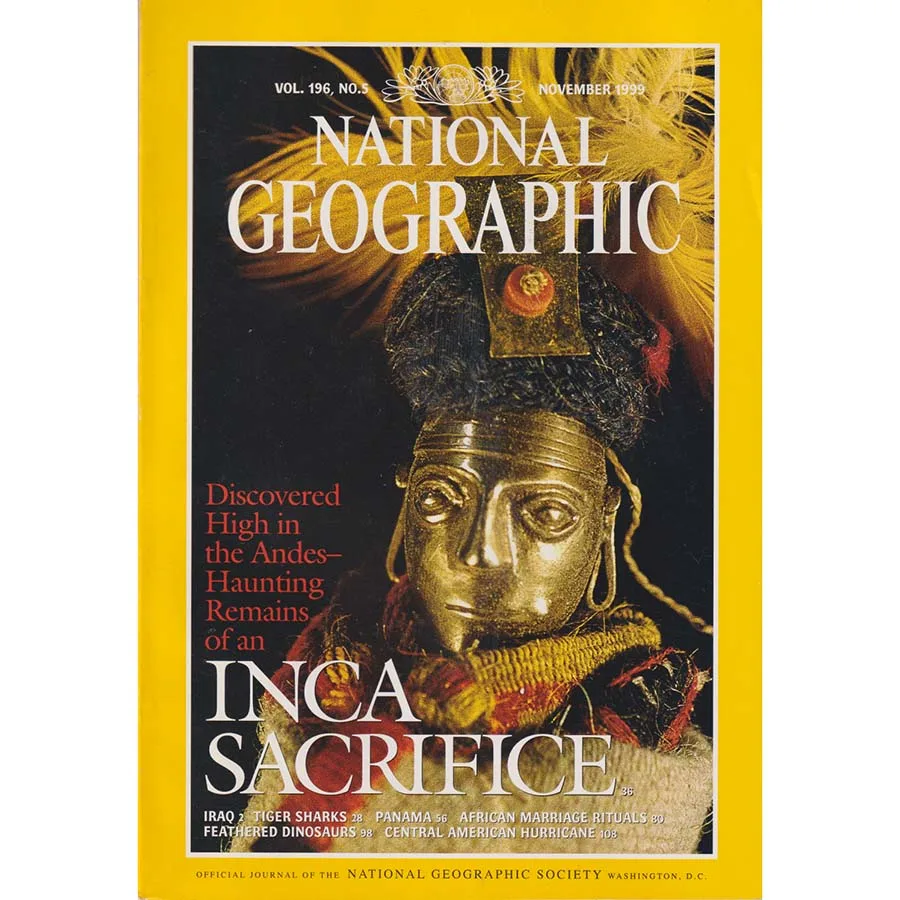
Publisher: National Geographic
Format: Paperback
ISBN: none
Welcome to National Geographic, November 1999 (Vol. 196, No. 5) — the point in the late 90s when everyone was side-eyeing the approaching millennium, and National Geographic calmly responded by saying: Here. Have some ancient awe and a light existential wobble.
The cover is not here to mess about. It announces, in big solemn letters, INCA SACRIFICE, and then politely clarifies: “Discovered High in the Andes — Haunting Remains of an…” (ellipsis implied, because the image already did the heavy lifting). It’s a striking, golden-masked gaze that feels like it’s looking straight through your coffee table and into your moral inventory. Very festive. Very “I was just trying to relax.”
And that’s the beauty of these old Nat Geos: they are simultaneously luxurious and slightly alarming. The photography draws you in with colour and craft, then the stories remind you that humans have always been capable of astonishing beauty, terrifying certainty, and extremely ambitious rituals at high altitude where you can barely breathe. You’ll come away knowing more than you intended, with the added bonus of feeling faintly hushed for the rest of the evening.
But this is National Geographic, so it doesn’t let you stay in one place (or century) for long. Once you’ve had your Andean chill, the issue swings hard into that classic global sampler platter:
-
Iraq turns up early in the contents — late-90s geopolitics with that unmistakable “history is happening right now” tone.
-
Tiger sharks, because after contemplating human sacrifice, you might as well consider an apex predator with no interest in symbolism, just vibes and teeth.
-
Panama, because the world is wide and National Geographic is contractually obligated to whisk you somewhere lush and complicated.
-
African marriage rituals, offering culture, community, and the reminder that humans everywhere have elaborate ways of making big life decisions feel properly witnessed.
-
Feathered dinosaurs, because the 90s absolutely loved the concept that dinosaurs were basically terrifying chickens with better branding.
-
Central American hurricanes, because nature also enjoys a dramatic finale.
It’s an issue that manages to be scholarly, cinematic, and quietly unhinged in the best possible way — a magazine that can take you from archaeology to sharks to storms without so much as a seatbelt warning.
Condition: Good, meaning it’s got that honest second-hand charm: a bit of lived-in character, still perfectly readable, still ready to do its main job — to sit somewhere visible and make you look like the kind of person who reads about volcanoes, rituals, and marine predators for pleasure. (Which, to be fair, you now are.)
If you want a November 1999 time capsule that feels like stepping into a beautifully photographed lecture hall where the lecturer occasionally whispers “by the way, everything is intense,” this is it. Sold, as ever, by Crappy Old Books — proud suppliers of yellow-bordered wonder and mild historical dread.
Keep browsing: See more National Geographic books Other books by National Geographic
