


National Geographic 1999 July
Publisher: National Geographic
Format: Paperback
ISBN: none
Welcome to National Geographic, July 1999 (Vol. 196, No. 1) — a beautifully earnest slice of the late 90s, when the world was busy preparing for the year 2000 and National Geographic was doing what it always does: calmly presenting the entire planet like it’s a fascinating buffet and you’ve simply got to try a bit of everything.
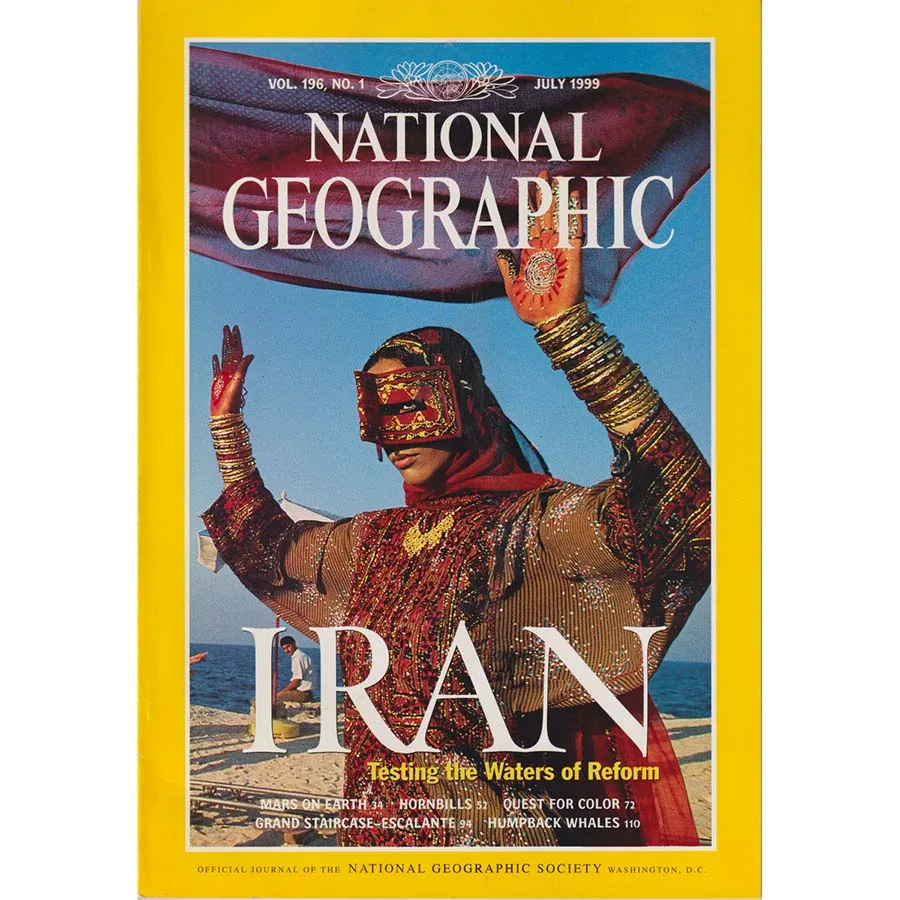
The cover is a stunner: IRAN in big, confident letters, with the subtitle “Testing the Waters of Reform” — which is wonderfully National Geographic, because even political change gets framed like a careful science experiment involving clipboards and sensible shoes. The image itself is pure colour and presence: a figure in richly patterned clothing by the sea, arms raised, jewellery flashing, the kind of visual that says “culture is not a footnote” while also making you want to zoom in on every detail like you’re solving a textile-based mystery.
Inside, this issue does that classic Nat Geo thing where it refuses to stick to one mood. You start with geopolitics and society — Iran, reform, tension, hope, the complicated reality behind headlines — and then, without apology, you’re whisked into a completely different universe. Because why wouldn’t you follow political transformation with “Mars on Earth”? (Nothing like a little planetary cosplay to keep your perspective fresh.) It’s the magazine gently reminding you that Earth contains landscapes so alien you can practise being an astronaut without leaving the gift shop.
Then there are hornbills, which look like a committee designed them: “Make it a bird, but give it a beak that suggests it has strong opinions and a dramatic speaking voice.” There’s Quest for Color, which sounds like an art project until you realise it’s Nat Geo, so it will be an adventure through science, culture, perception, and the weird fact that humans will travel the world for a pigment.
You also get Grand Staircase–Escalante, that glorious American landscape name that already reads like a poem and a warning. It’s all wide-open spaces and geological time, the sort of feature that makes you feel both tiny and strangely refreshed, like your brain has been rinsed out with sandstone.
And then — because the universe loves balance — you finish up with humpback whales, floating in to restore your faith in everything. Big, intelligent, ancient-feeling beings doing their slow, magnificent thing while we argue about borders, budgets, and what colour is technically “blue.”
Condition: Good, which is exactly what you want with a magazine like this: readable, solid, ready to be pored over, gently thumbed, and left strategically on a coffee table so visitors understand you are a person who owns ideas. Expect a little honest wear — a trace of the 20th century still clinging to the pages — but plenty of life left in it.
If you want a single issue that captures National Geographic at peak “we contain multitudes” — serious world affairs, alien deserts, ridiculous birds, sublime landscapes, and whales as emotional support — July 1999 is your yellow-bordered ticket. Sold by Crappy Old Books, naturally: curators of the world’s finest second-hand wonder.
Keep browsing: See more National Geographic books Other books by National Geographic
