


National Geographic 1998 May
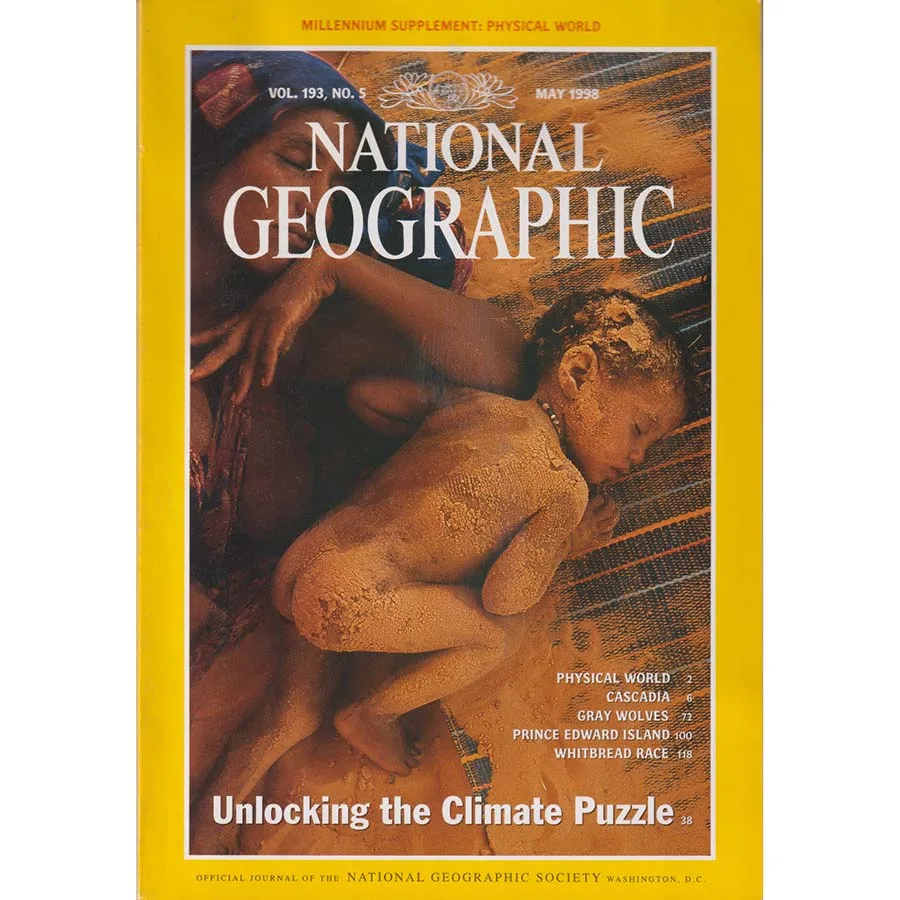
Publisher: National Geographic
Format: Paperback
ISBN: none
Welcome to National Geographic, May 1998 (Vol. 193, No. 5), a glossy yellow-bordered portal to the era when the world was still confidently “unlocking” things — especially problems the size of the atmosphere — with a nice serif font and a can-do attitude.
Front and centre, this issue rolls out the millennium drum again with “Millennium Supplement: Physical World”, which is National Geographic-speak for: Right, everyone sit down, we’re going to explain the planet. The cover image is intimate and human, all warmth and texture, while the headline “Unlocking the Climate Puzzle” sits there like a polite understatement from a publication that has always had a talent for describing existential matters in the tone of someone labelling a cupboard. Climate puzzle! Like it’s a 500-piece scenic jigsaw you can finish after tea. No pressure.
Inside, you get that signature National Geographic mix: earnest, enormous, and oddly comforting. There’s Cascadia, where the ground beneath polite civilisation quietly rehearses its next big moment. There are gray wolves, looking majestic while humans do that eternal thing of projecting symbolism onto animals that are simply trying to live their lives. There’s Prince Edward Island, offering a balm of coastline and character after the heavier stuff. And for anyone who likes their exploration wet, windy, and slightly masochistic, there’s the Whitbread Race — proof that some people see the open ocean and think, Yes. I would like to be flung at that for weeks.
And then there’s the bonus treasure you’ve flagged: “Millennium in Maps – Physical Earth.” This is the kind of pull-out that reminds you why National Geographic has been quietly redecorating homes for a century. It’s not just a map, it’s a statement piece. A cartographic mic drop. The physical Earth laid out in that classic NG style that makes you feel smarter merely by standing near it, like knowledge is absorbed through wallpaper.
Condition: Good, which in Crappy Old Books terms means it’s ready to be admired, read, re-read, and dramatically unfolded on the floor while you announce to nobody in particular, “Look at the tectonic plates on this thing.” Expect a bit of gentle vintage charm: the paper has lived a life, the ideas are big, and the optimism is very 1998 — cautious, curious, and still convinced that if we just study the planet hard enough, it will stop being complicated out of respect.
If you want a single issue that captures National Geographic at peak form — human stories, wild places, scientific gravity, and a map insert that could easily become your entire personality — this is your May 1998.
Keep browsing: See more National Geographic books Other books by National Geographic
