


National Geographic 1989 January
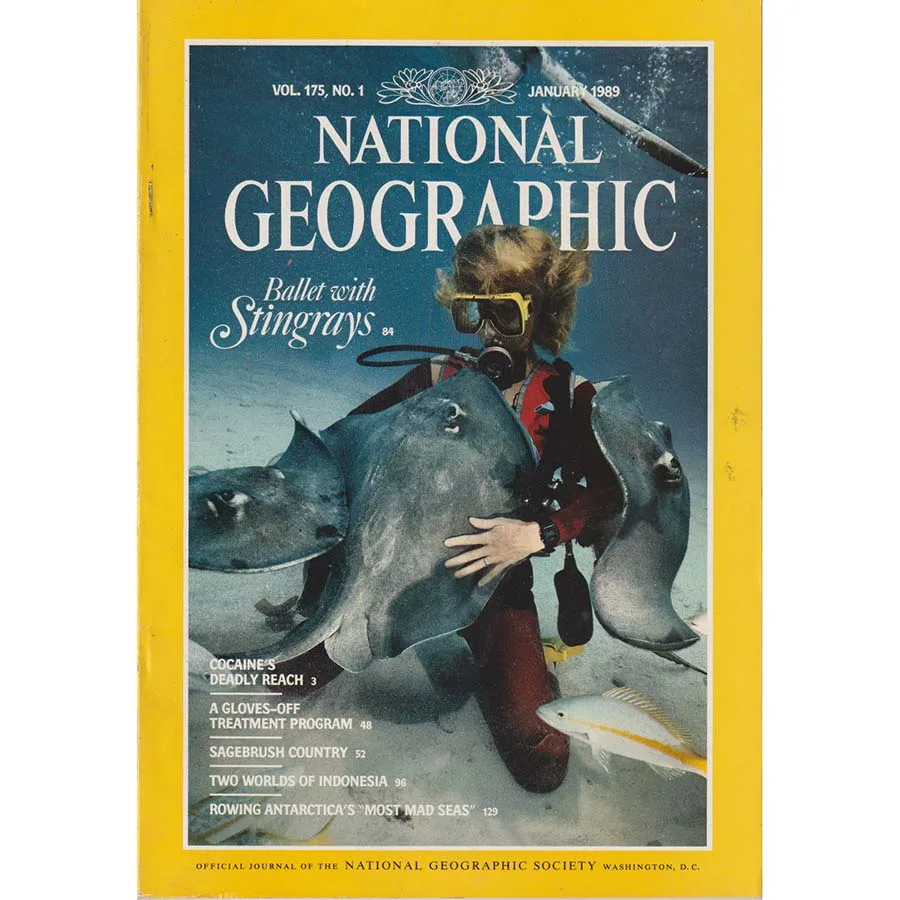
Publisher: National Geographic
Format: Paperback
ISBN: none
National Geographic, January 1989: the issue that kicks off the year by proving, immediately and beyond dispute, that humans will try to make friends with absolutely anything if you hand them a snorkel and a confident attitude.
The cover feature, Ballet with Stingrays, is exactly as elegant and ridiculous as it sounds: a diver in full 80s kit—mask, regulator, hair doing its own freeform choreography—being lovingly mobbed by stingrays the size of ottomans. It’s equal parts underwater waltz and “this seemed like a good idea at the time.” The scene radiates that classic Nat Geo energy: breathtaking nature photography paired with the quiet implication that the photographer was either very brave or slightly unhinged.
But don’t be fooled by the graceful title. Stingrays are beautiful, yes—also basically living kites with opinions. The article is the kind of thing that makes you fall in love with marine life while simultaneously deciding you’re perfectly happy appreciating it from a dry, safe distance with a biscuit.
Then you open the issue and it swings hard into 1989 reality with Cocaine’s Deadly Reach. Because nothing says “new year, fresh start” like a sobering deep dive into global trafficking, violence, and the way one product can warp communities across continents. Nat Geo in this era had a knack for mixing wonder with warning, and this is the warning label right up front: the planet is gorgeous, and humans are complicated.
Next up: A Gloves-Off Treatment Program, which sounds like a sports documentary but is almost certainly about confronting addiction with unvarnished honesty—again, very 80s, very direct, very “we’re going to talk about this properly.” It’s the sort of feature that makes you realise National Geographic wasn’t just pretty pictures; it was also willing to go into hard places and ask uncomfortable questions.
And because your brain deserves a palate cleanser after all that, the magazine takes you out into Sagebrush Country—wide open landscapes, hardy ecology, and the quiet romance of places that look empty until you learn how alive they are. Then comes Two Worlds of Indonesia, which is Nat Geo’s speciality: take one country, show you its contrasts, and remind you that “a place” is never a single story.
Finally, as if to round off the “humans are gloriously weird” theme, you get Rowing Antarctica’s ‘Most Mad Seas’—a phrase that feels like it should come with a waiver and a therapist. Because yes, some people see the Southern Ocean and think, “I’ll take a little boat into that.” The rest of us see it and think, “I’ll take a hot drink and a blanket into the lounge.”
Condition: Good, which is perfect for a 1989 issue: sturdy, readable, and still full of that old-school National Geographic heft—long articles, serious topics, and photos that make you pause. Sold by Crappy Old Books, naturally, because the best place to find stingray ballet, global drug wars, sagebrush poetry, Indonesian contrast, and Antarctic madness is a shop that sounds like it’s one accidental sneeze away from an avalanche of magazines.
If you want a single issue that captures the whole Nat Geo vibe—wonder, danger, beauty, human folly, and just enough existential whiplash to feel alive—January 1989 is a cracking start.
Keep browsing: See more National Geographic books Other books by National Geographic
