


National Geographic 1986 November
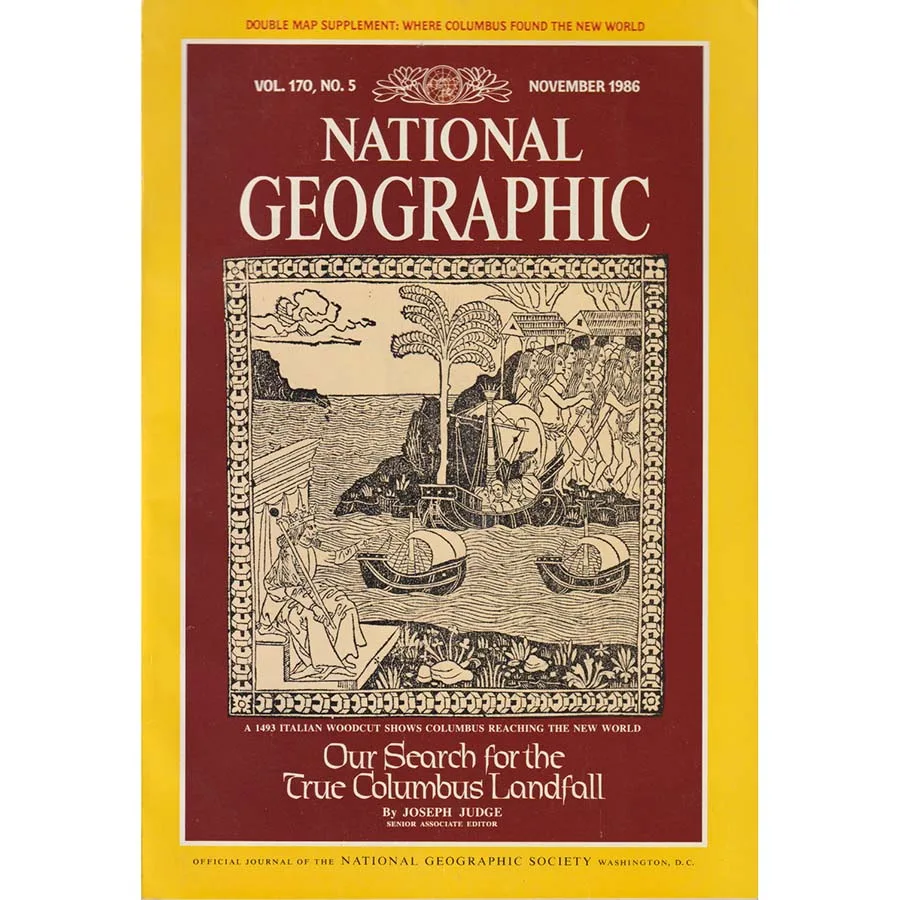
Publisher: National Geographic
Format: Paperback
ISBN: none
National Geographic, November 1986: the issue that turns up looking like a handsome old hardback, then calmly announces it’s going to argue about Columbus with maps, logic, and the quiet confidence of people who own compasses.
Front and centre: Our Search for the True Columbus Landfall—which is essentially National Geographic saying, “Yes, yes, we all learned the story, but where exactly did he hit the beach?” It’s historical detective work with a very 1980s flavour: patient scholarship, careful navigation, and a deep belief that if you stare at enough coastlines, currents, and old accounts, the truth will eventually get tired and wander out. The cover art (a 1493 Italian woodcut) adds a charming layer of “history as seen by someone who definitely wasn’t there,” which is honestly half the fun.
And then there’s the glorious cherry on top: Double Map Supplement: Where Columbus Found the New World. Because Nat Geo doesn’t just give you a story, it gives you a fold-out argument. You can physically unfurl the evidence on your kitchen table and become the kind of person who says things like, “Hmm, but what about the prevailing winds?” while your family backs away slowly. This is peak National Geographic: educational, tactile, and quietly addictive.
Of course, the subject matter comes with its own modern irony. In 1986, the tone is “exploration, discovery, geography!”—an era that still liked its history as a grand adventure with dotted lines on a map. Reading it now, you can feel the extra layer underneath: discovery for whom, at what cost, and how narratives get built. The magazine is doing its earnest best to locate a landing site, while history itself stands behind it tapping its foot and clearing its throat. That tension—between romance and reality—is part of what makes this issue such a fascinating time capsule.
What you get, ultimately, is classic Nat Geo storytelling: meticulous, visual, and strangely thrilling for something that is, on paper, “a man arrives somewhere.” You’ll find yourself pulled into the mechanics of navigation—ships, currents, bearings, geography—until you’re fully invested in the question of which beach deserves the most footnotes.
Condition: Good, meaning it’s still perfectly readable and still looks great—especially with that rich burgundy cover that screams “serious historical investigation.” Sold by Crappy Old Books, naturally, because nothing pairs better with scholarly cartographic debate than buying it from a seller whose name sounds like it specialises in dusty atlases and mildly haunted encyclopaedias.
If you like your National Geographic with maps you can actually unfold, history you can argue about, and a hearty serving of 1986 confidence, this is a cracking pick. Bring a table. Bring a pencil. Prepare to become weirdly passionate about Caribbean coastlines.
Keep browsing: See more National Geographic books Other books by National Geographic
