


National Geographic 2001 April
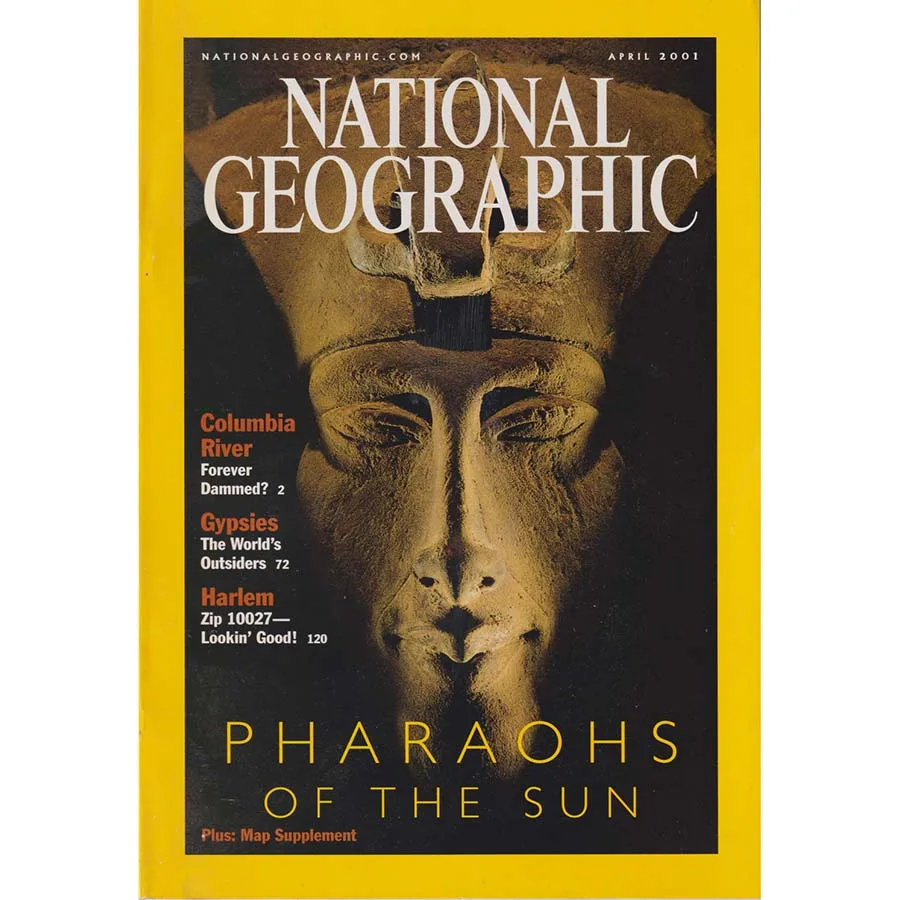
Publisher: National Geographic
Format: Paperback
ISBN: none
National Geographic, April 2001: the issue that stares at you from the coffee table like an ancient deity judging your snack choices.
The cover feature, Pharaohs of the Sun, is pure Nat Geo theatre—golden light, solemn stone, and the unmistakable vibe of “we are about to take you somewhere extremely old and expect you to be respectful about it.” It’s the kind of headline that practically comes with its own incense. Open it up and you’re not just learning about Egypt; you’re being gently marched through the grand machinery of belief, power, architecture, and the absolute confidence of a civilisation that looked at the desert and thought, Yes. Let’s build eternity.
And because this is National Geographic in the early 2000s—peak glossy seriousness with a twinkle in its eye—you don’t just get pyramids and names, you get the human bits: the politics behind divinity, the labour behind monuments, and the eerie intimacy of artefacts that once sat in someone’s hand. It’s history presented the way it should be: not as a dusty list of dates, but as a lived world with heat, noise, and ambition so big it needed stone to contain it.
Then, in classic Nat Geo fashion, the magazine refuses to stay in one century for more than ten seconds. You’ve also got Columbia River: Forever Dammed?—a story that reads like a philosophical argument between engineering and ecology, with salmon caught in the middle like unwilling referees. It’s the sort of piece that makes you look at a river and realise it isn’t just “water going somewhere,” it’s an entire system with memory, momentum, and a long list of human decisions stapled to it.
There’s Gypsies: The World’s Outsiders, which, in that early-2000s Nat Geo way, aims to widen your perspective on identity and belonging—people on the margins, misread, romanticised, misunderstood, and still very much present. It’s part anthropology, part social mirror, and part reminder that “the world” includes a lot of lives most people don’t bother to learn about.
And just when you’re fully immersed in pharaohs and rivers and big human questions, the magazine slides into Harlem (Zip 10027)—Lookin’ Good! like it’s switching playlists: suddenly you’re in a living, modern place with rhythm, grit, style, and the kind of local pride that doesn’t need a monument to be real. It’s a brilliant Nat Geo move—ancient splendour on the cover, contemporary culture inside—because exploration isn’t just deserts and tombs; it’s streets, communities, and change.
Condition: Good, which is exactly right for a 2001 issue: crisp enough to feel collectible, lived-in enough to feel honest. Sold by Crappy Old Books, naturally, because where else would you find a glossy portal to ancient Egypt, river politics, and New York neighbourhood swagger all bound in the same yellow frame?
If you want a magazine that makes you feel both very small (pharaohs) and very responsible (rivers), then perks you up with Harlem confidence—this is the one. One part sun-kings, one part dams, one part human geography, and 100% classic National Geographic: serious, curious, and quietly dramatic.
Keep browsing: See more National Geographic books Other books by National Geographic
