


National Geographic 2013 June
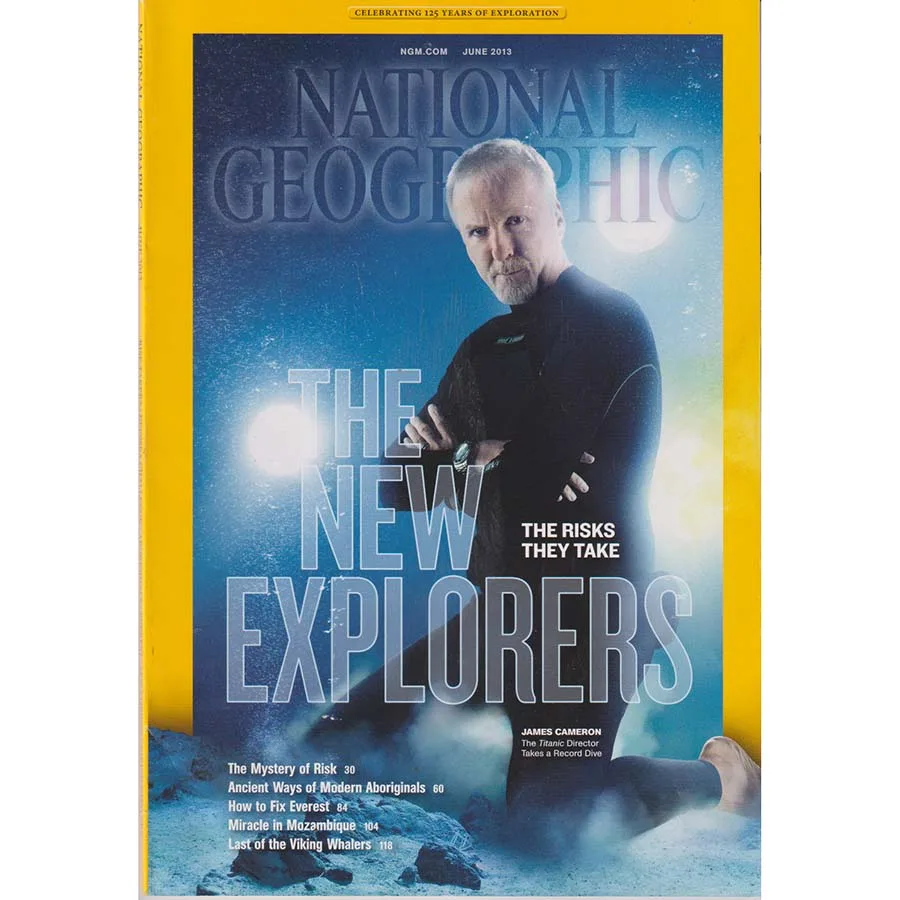
Publisher: National Geographic
Format: Paperback
ISBN: none
National Geographic, June 2013: the issue that arrives like a motivational poster for people who think “a sensible hobby” is a personal failing.
On the cover, The New Explorers: The Risks They Take, starring James Cameron in the sort of pose normally reserved for action films and expensive watches. He’s standing there in a wetsuit, arms folded, looking like he’s about to lecture the ocean into behaving. It’s equal parts inspiring and faintly hilarious, because the message is essentially: some people respond to curiosity by going deeper, higher, colder, darker, and more expensive than the rest of us would consider polite.
Inside, the theme is risk—why humans chase it, how we manage it, and why the planet still has places that can absolutely ruin your day if you turn up unprepared. There’s The Mystery of Risk, which is Nat Geo’s classy way of saying: “Why do some people jump off cliffs with a parachute while others consider a slightly wobbly step ladder a brush with death?” It’s part psychology, part biology, part cultural story—and all of it leaves you feeling either braver or more convinced you should stay indoors forever.
And because this is National Geographic, “exploration” doesn’t just mean dramatic selfies in extreme environments. You’ll also get Ancient Ways of Modern Aboriginals—a reminder that the most sophisticated survival knowledge on Earth often comes without gadgets, branding, or venture capital. It’s humbling in the best way: while we’re inventing new ways to risk our necks, there are cultures that have quietly mastered living with the land, generation after generation, without needing a helmet cam.
Then there’s the wonderfully blunt-sounding How to Fix Everest, which is both a serious environmental and ethical question and a phrase that makes it sound like the world’s tallest mountain is a slightly faulty appliance. But that’s the point: Everest has become a problem we created—traffic jams in the death zone, rubbish, human cost, the paradox of turning “wild” into “manageable.” Nat Geo does what it does best here: it doesn’t just gawp; it asks what happens when exploration becomes an industry.
The issue also roams farther afield with Miracle in Mozambique (hope, resilience, and the kind of story that makes you quietly put your own complaints in the bin), and Last of the Viking Whalers, which sounds like a saga and reads like a living echo—hard lives at the edge of the modern world, where tradition and survival collide.
Condition: Good, which feels appropriate for a magazine about people who deliberately seek out conditions that are very much not good. Sold by Crappy Old Books, whose name suggests this might have been found under a radiator next to a biscuit crumb—but it’s a proper, glossy, globe-trotting shot of 2013 optimism: exploration as identity, risk as virtue, and curiosity as a kind of fuel.
Buy it for Cameron and the deep-sea swagger. Keep it for the big questions: what we chase, what we damage, what we learn, and whether “adventure” is a noble calling or just an elaborate way of saying, “I can’t sit still.”
Keep browsing: See more National Geographic books Other books by National Geographic
