


National Geographic 2013 July
Publisher: National Geographic
Format: Paperback
ISBN: none
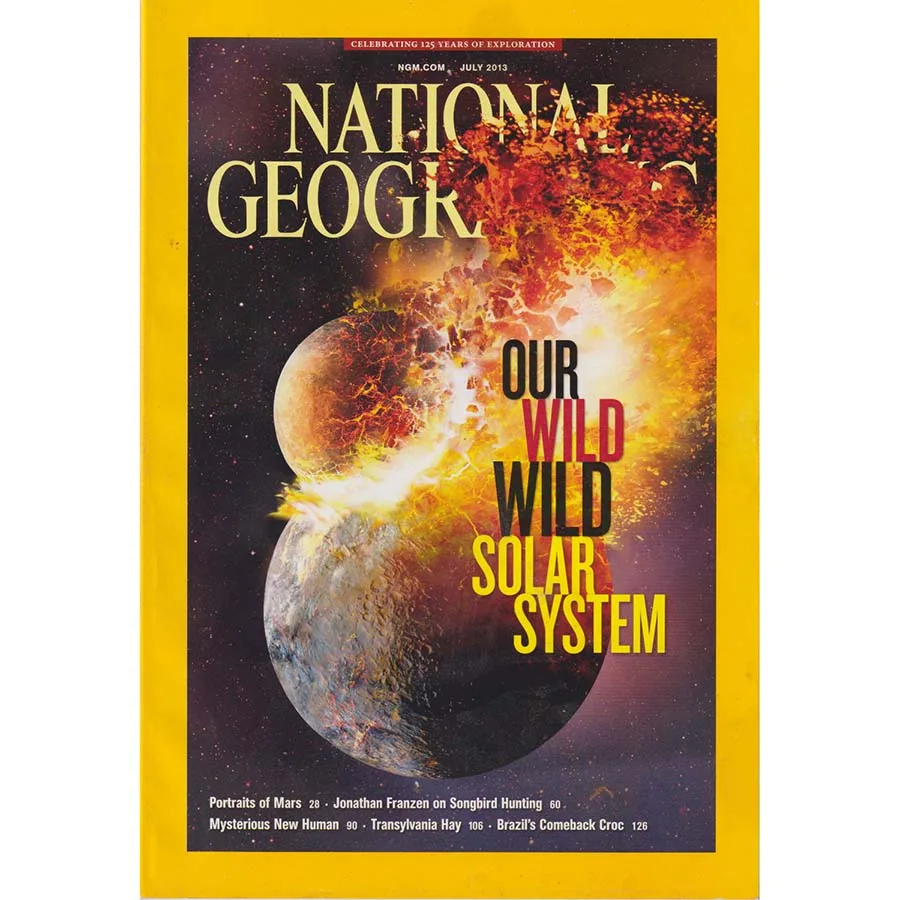
National Geographic, July 2013: the issue that looks you straight in the eye and says, “Here’s the cosmos,” then immediately demonstrates it by smashing two worlds together on the cover like it’s trying to make a point about humility.
The headline—Our Wild Wild Solar System—is wonderfully understated for a scene that appears to involve a planet having an extremely bad day. It’s basically a reminder that space isn’t serene; it’s a loud, messy workshop where gravity is the foreman and everything is one stray rock away from becoming a cautionary tale. If you’ve ever looked at the night sky and thought, how peaceful, this issue gently takes that thought, folds it into a paper aeroplane, and throws it into a meteor shower.
Inside, you’ll get your planetary thrills in full National Geographic style: gorgeous imagery, lucid explanations, and the comforting sensation that you’re learning something enormous while still in your slippers. There are portraits of Mars, because we can’t stop staring at the Red Planet like it’s a neighbour we’re slightly obsessed with. It’s the 2013 era of Mars fascination—part science, part romance, part “we should totally live there one day” optimism, despite the small issue of it being an irradiated desert that actively hates you.
And then, in classic Nat Geo fashion, the magazine swerves from cosmic violence to earthly oddity without changing gears. One moment you’re pondering asteroid impacts; the next you’re reading Jonathan Franzen on songbird hunting, which feels like being asked to contemplate the fragility of life… but specifically with binoculars and a complicated moral expression. It’s a very Nat Geo move: “Isn’t nature beautiful?” followed immediately by “Also humans are doing what to it?”
There’s a mysterious new human in the mix too, because no matter how far we look into space, we are permanently captivated by the question of who we are, where we came from, and why our ancestors didn’t leave better instructions. Add Transylvania hay (yes, really—hay as cultural heritage, which is both delightful and a bit of a slap in the face to anyone who thinks “traditional farming” is boring) and you’ve got one of those issues that makes you respect the humble, hand-cut meadow while simultaneously worrying about the asteroid belt.
And because the world is never just one mood, you also get Brazil’s comeback croc—a story that says: sometimes conservation works, sometimes nature rebounds, and sometimes the universe allows a large reptile to return as if to remind us who owned the planet first.
Condition: Good, which is ideal for this particular time capsule: a 2013 snapshot of our relationship with the universe—wonder, fear, curiosity, and the odd existential chuckle. Sold by Crappy Old Books, naturally, because the best way to read about planetary catastrophe is to buy it from a shop name that sounds like it was invented by an asteroid.
If you want an issue that makes you feel small in the most entertaining way possible—this is it. The solar system is wild, Mars is alluring, hay is important, birds are complicated, and somewhere out there a rock is minding its own business, waiting to become a headline.
Keep browsing: See more National Geographic books Other books by National Geographic
