


National Geographic 1970 July
Publisher: National Geographic
Format: Paperback
ISBN: none
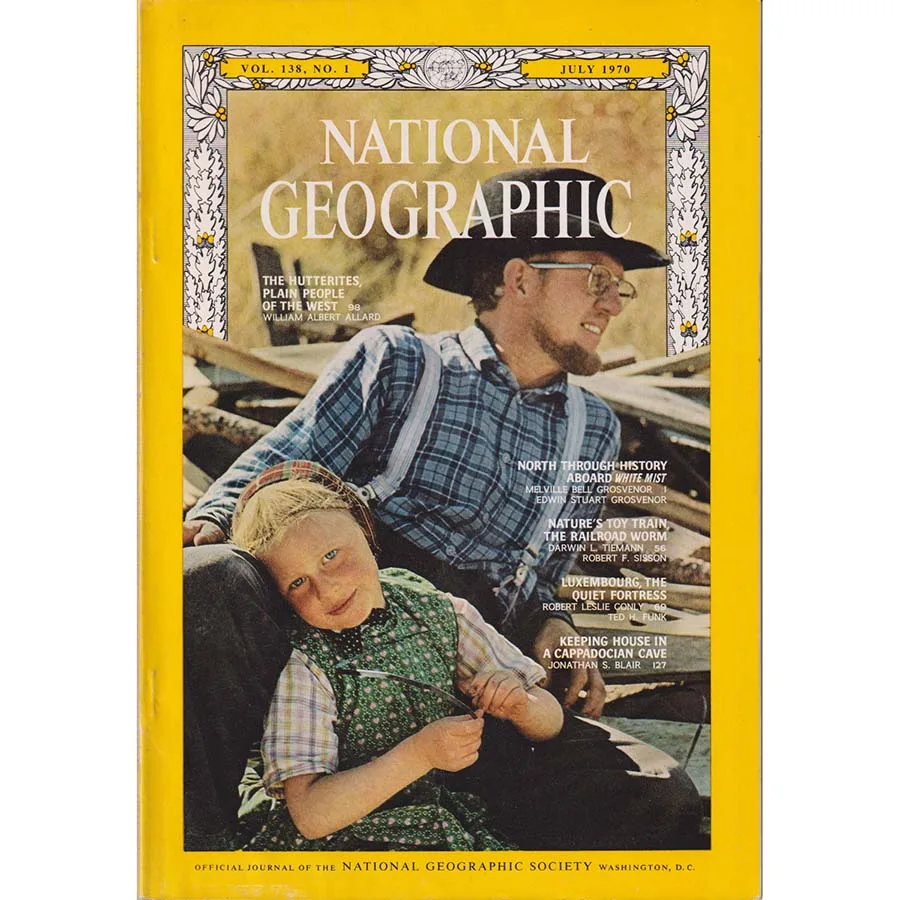
July 1970, and National Geographic decides to celebrate summer by gently reminding you that there are entire worlds of human life you will never fully understand — and that’s fine, because you can at least look at them on glossy paper while eating something inappropriate for the crumbs situation. The cover is pure 1970 warmth: a sunlit scene of a man in a broad-brimmed hat and braces, and a child lounging with the serene confidence of someone who has never once worried about an inbox. It’s pastoral, slightly staged, and deeply charming in that old Geographic way — like the magazine is saying, “Relax. Learn. Pretend you know how to chop wood.”
Front and centre is The Hutterites, Plain People of the West, which is classic Geographic territory: a calm, respectful deep dive into a community living differently — with the magazine’s trademark blend of curiosity, earnest narration, and photography that makes even everyday life feel quietly monumental. Expect wide skies, neat buildings, communal rhythms, and that slightly unnerving sensation that some people have solved the “modern chaos” problem simply by opting out of it. You will read it and feel both fascinated and mildly judged by the concept of organised simplicity.
But because this is National Geographic, July 1970 is not content with one gentle sociological portrait. Oh no. It’s going to take you on a world tour, then toss in a creature that looks like it was invented during a dare.
There’s North Through History Aboard White Mist — which is a wonderfully poetic way of saying, “We went on a boat and made it educational.” Expect waterways, heritage, scenery, and a strong undercurrent of “we should all be more outdoorsy.” Then, in a delightful pivot, you get Nature’s Toy Train, the Railroad Worm, which sounds like a children’s book until you realise it’s probably an actual glow-in-the-dark insect doing strange biological magic, and now you’re committed to learning about it against your will. (Geographic loves a humble creature with a party trick.)
Then the magazine swings to Europe with Luxembourg, the Quiet Fortress — a title that makes an entire country sound like a polite secret. Expect history, strategic geography, castles, and the gentle reminder that small places can have enormous stories. And finally: Keeping House in a Cappadocian Cave, because why not end your July issue with the realisation that some people have literally carved their homes into rock and made it work. You’ll read it and immediately look at your own walls like, “These are embarrassingly normal.”
This is what makes these vintage issues such a joy: the range is absurd, but it’s delivered with total confidence. One moment you’re thinking about communal living on the North American plains, the next you’re on a historical boat, then you’re learning about a luminous worm, then you’re in a European fortress-country, then you’re housekeeping in a cave. It’s like the magazine is trying to stretch your brain in five different directions and calling it leisure.
Condition is Good, meaning this copy has survived more than half a century of shelves, stacks, and coffee-table exile with respectable dignity. Still readable, still presentable, still carrying that lovely old-paper aura that makes the whole experience feel a bit more important than a screen. No ISBN, because 1970 magazines didn’t need barcodes to be authoritative — they just turned up monthly and educated you whether you asked or not.
Sold by Crappy Old Books, which feels exactly right: a slightly timeworn slice of 1970 curiosity, ready to charm collectors, nostalgia-lovers, and armchair travellers alike. Perfect for anyone who likes their summer reading with wholesome vibes, unexpected biology, and at least one cave-based domestic arrangement.
Keep browsing: See more National Geographic books Other books by National Geographic
