


National Geographic 1985 February
Publisher: National Geographic
Format: Paperback
ISBN: none
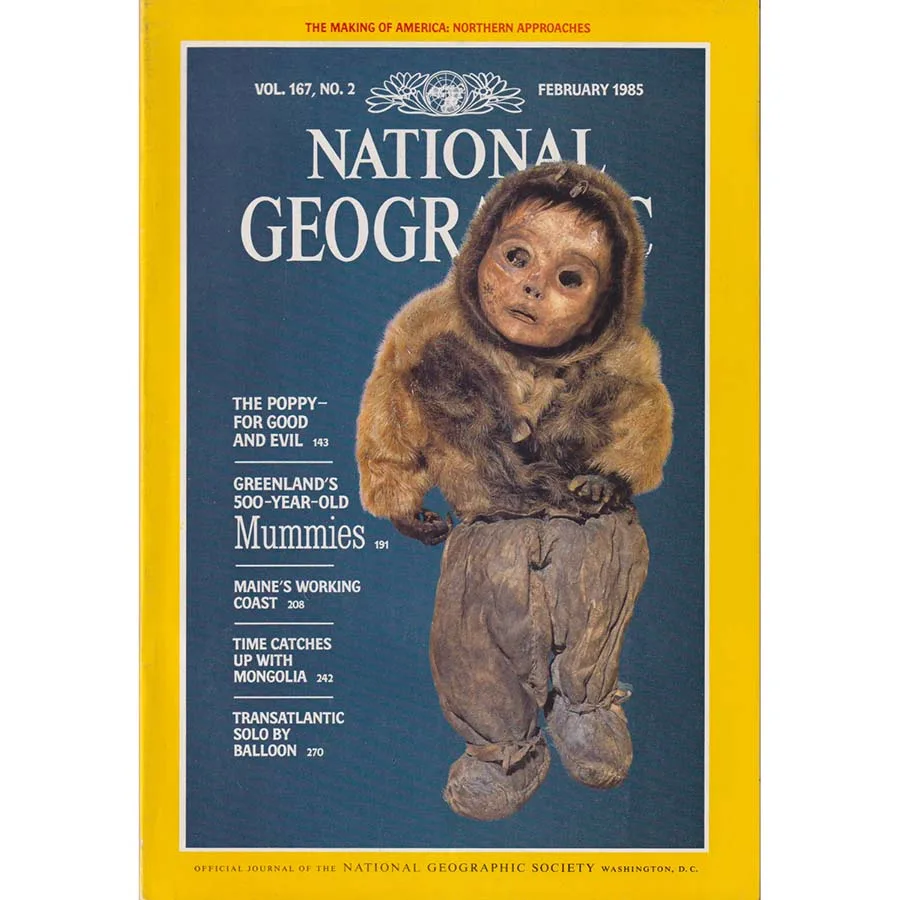
February 1985, and National Geographic opens the month with the kind of cover that doesn’t so much “invite you in” as quietly haunt your coffee table. Front and centre is a small, fur-hooded figure with ancient, wide-eyed seriousness — the sort of image that makes you blink, lower your voice, and suddenly feel like you should stop eating crisps over the magazine. The headline promises Greenland’s 500-year-old mummies, and yes, it’s exactly as intense as it sounds: history preserved by cold, time folded up neatly, and the unsettling realisation that the past is not “gone,” it’s just… waiting.
It’s also peak 1980s Geographic: bold, unashamedly educational, and absolutely convinced you can handle a full-spectrum tour of the world and human nature in one sitting. This issue doesn’t just give you one story — it gives you a moral dilemma, a frozen time capsule, a working coastline, a country in transition, and a balloon ride, and expects you to say thank you.
The big icy headline piece — those Greenland mummies — is classic Geographic magic. It’s not horror, it’s not sensationalism; it’s that steady, respectful, documentary gaze that somehow makes the whole thing more powerful. You get the archaeology, the anthropology, the environment doing its deep-freeze miracle, and the strange intimacy of clothing, faces, and lives preserved far beyond their allotted time. You will start reading out of curiosity and finish slightly more aware of your own mortality. Fun! (In a tasteful, National Geographic way.)
Then the magazine casually swings to The Poppy — For Good and Evil, because nothing says “relaxing February reading” like a plant with a split personality and a global footprint. Expect a thoughtful, fascinating look at how something beautiful can be both medicine and menace — a reminder that the world loves nuance and refuses to be tidy.
After that: Maine’s working coast — a palate cleanser, but the Geographic kind, meaning it’s still full of weather, labour, history, and people who do difficult jobs while looking like they were born holding a rope. Then Time catches up with Mongolia, which sounds poetic (it is) and also slightly ominous, because “time catching up” usually means change, pressure, and the modern world arriving with its boots on.
And just when you think you’ve had enough of ice, ethics, and geopolitics, the issue offers a transatlantic solo by balloon, which is basically the magazine whispering: “Here is one person with courage, questionable comfort standards, and a profound belief in wind.” It’s the kind of story that makes you feel simultaneously inspired and deeply committed to never doing anything like that.
Condition is Good, which means this copy has survived the decades with respectable dignity — still readable, still sturdy, still doing what it was made to do: make you feel worldly, thoughtful, and slightly overwhelmed by reality. No ISBN, because magazines don’t like being catalogued like ordinary books; they prefer to drift through time in stacks and boxes, waiting for the next curious human.
Sold by Crappy Old Books, which feels wonderfully appropriate: a slightly timeworn artefact containing stories about time, preservation, and the strange things humans do. Perfect for collectors, history nerds, cold-climate obsessives, and anyone who likes their nostalgia with a side of existential awe.
Keep browsing: See more National Geographic books Other books by National Geographic
