


National Geographic 1985 July
Publisher: National Geographic
Format: Paperback
ISBN: none
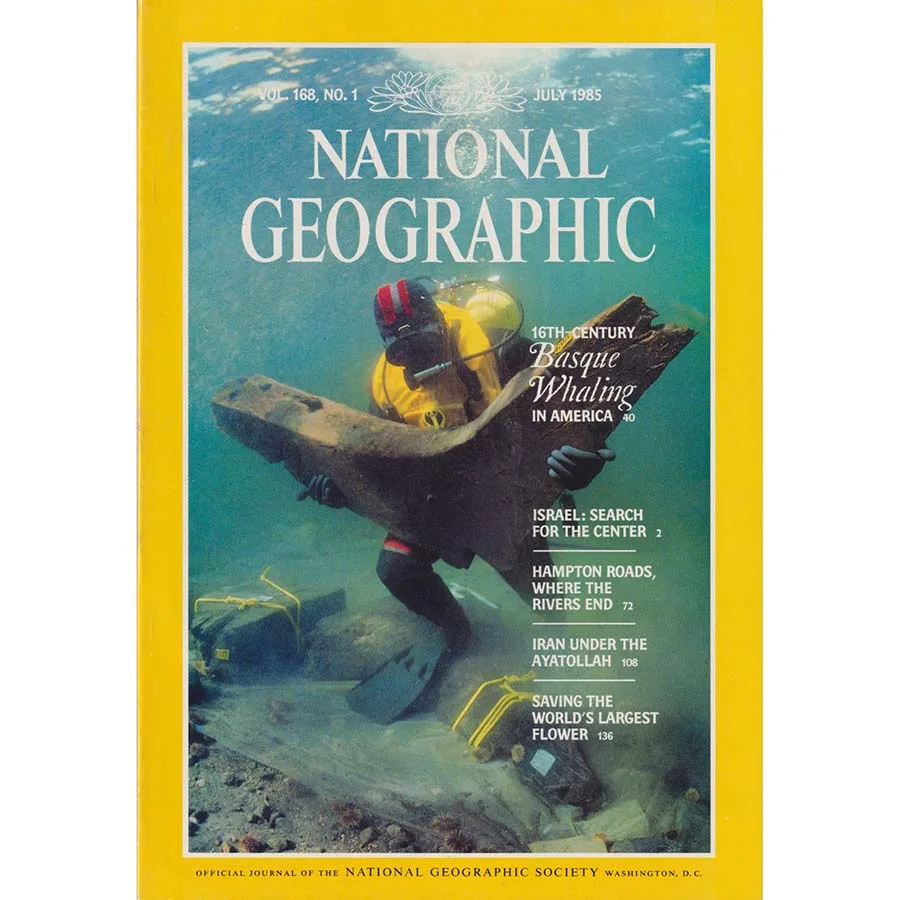
July 1985, and National Geographic is doing that classic thing where it calmly hands you the entire planet, then casually drops you underwater to start. The cover image is pure aquatic competence: a diver in bright gear hauling some chunky historical relic out of the seabed like it’s just another Tuesday. The headline “16th-Century Basque Whaling in America” sits there with the quiet confidence of a topic that sounds niche… right up until you realise it’s about oceans, industry, exploration, and humans doing the usual “let’s go very far and take a lot of stuff” routine—just with more saltwater and harpoons.
This is peak 80s Geographic: glossy, earnest, and gloriously ambitious. You open it expecting a few nice pictures and suddenly you’re being educated at speed, across centuries and continents, by a magazine that assumes you are both curious and capable of concentrating for longer than 12 seconds. (A bold assumption. A flattering one.)
The Basque whaling feature is the kind of story Geographic loves: forgotten history dragged into the light with archaeology, narrative, and a strong sense of “how did people even do this without GPS?” It’s shipwreck vibes, coastal outposts, and the realisation that globalisation didn’t begin with container ports—it began with people in small boats making enormous decisions.
And then the issue does what it always does: whiplash, but in a classy way. There’s Israel: Search for the Center (politics, identity, complexity — and the reminder that “center” is rarely a place you simply find), Hampton Roads, Where the Rivers End (a wonderfully poetic way of describing a serious, working landscape where water, trade, and history all pile up together), and Iran Under the Ayatollah — which is Geographic’s calm-toned way of saying, “Here is a subject with weight, nuance, and consequences; sit down and pay attention.”
Just when you think you’ve had enough of geopolitics and maritime history, the magazine throws in Saving the World’s Largest Flower, because National Geographic is nothing if not determined to give you emotional variety. One minute you’re contemplating heavy affairs of state; the next you’re rooting for a ridiculous, magnificent bloom like it’s the underdog in a nature documentary. It’s the editorial equivalent of being served a three-course meal and then being offered a flower the size of a small coffee table as palate cleanser.
Condition is Good, which means this copy has lived a bit (as any respectable 1985 magazine should) but remains fully readable and presentable — still packed with photos, maps, and that satisfying “old paper” vibe that makes the whole experience feel more real than a screen ever can. No ISBN because magazines refuse to be domesticated like proper books. Sold by Crappy Old Books, which feels exactly right: a slightly timeworn portal to an era when the world was delivered monthly, by post, on thick glossy pages, and your idea of “bingeing” was reading about whaling archaeology and Middle East politics in the same sitting.
Perfect for collectors, history nerds, ocean obsessives, map-and-photo people, and anyone who wants a July issue that takes you diving into the past, then drags you back up for a tour of geopolitics and giant flowers — all without getting your carpet wet.
Keep browsing: See more National Geographic books Other books by National Geographic
