


National Geographic 1985 May
Publisher: National Geographic
Format: Paperback
ISBN: none
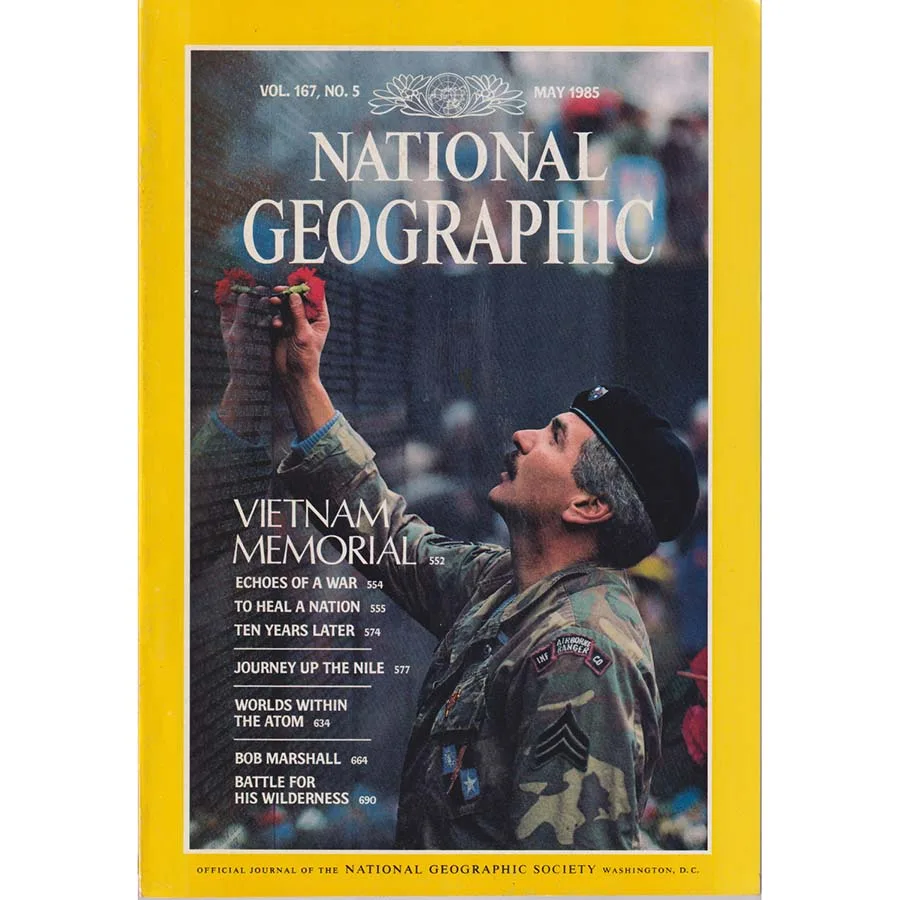
May 1985, and National Geographic is doing that beautifully unsettling thing where it offers you a glossy, perfectly composed window into the world… and then immediately invites you to think about grief, history, and humanity for the next two hours. The cover says VIETNAM MEMORIAL in big, quiet letters, and the image does the rest: a veteran reaching up toward the polished black stone, flowers in hand, as if memory itself has a surface you can touch. It’s not flashy. It’s not “look at this exotic place.” It’s the kind of cover that makes you lower your voice even though you’re alone.
And yet — because this is National Geographic — it’s also relentlessly, almost comically ambitious. You open for a reflective piece about the memorial and suddenly you’re being taken on a tour of the planet, the past, and the inside of an atom, all in one issue. There’s a kind of 1980s confidence here: the belief that a magazine can be solemn, scientific, adventurous, and slightly preachy all at once, and that you, dear reader, will come along willingly with a cup of tea and a sense of purpose.
The Vietnam Memorial feature is the emotional anchor: Echoes of a War, To Heal a Nation, Ten Years Later — phrases that sound like chapter headings in the collective conscience. It’s a reminder that the 1980s weren’t just neon and shoulder pads; they were also a decade of processing, remembering, and trying to build something meaningful out of what couldn’t be fixed. The photography is doing that Geographic thing: respectful, observational, and quietly devastating when it wants to be.
But then—pivot!—because you’re not allowed to stay in one mood for long. The issue also promises a Journey Up the Nile, which is basically the magazine tossing you a life-affirming river after handing you a heavy stone wall of names. And as if that’s not enough contrast, it goes straight into Worlds Within the Atom — which is the editorial equivalent of saying, “Feeling emotional? Great. Now let’s shrink you down to subatomic scale and remind you that reality is weird.” It’s like being taken from a memorial service to a physics lecture to a river expedition without even changing seats.
And then there’s Bob Marshall: Battle for His Wilderness, because every good Geographic issue needs at least one person who loved nature so much they made it everyone else’s problem (in the best possible way). It’s conservation, idealism, big landscapes, and the sense that the Earth is both fragile and stubborn — much like your attention span, which this issue will absolutely conquer.
Condition is Good, which means this copy has lived a bit — perhaps sat on a coffee table during actual 1985, perhaps travelled through a few lofts and bookcases — but it’s still solid, readable, and ready to do its job. No ISBN because magazines don’t do bureaucracy; they do staples, paper, and a quiet sense of authority. Sold by Crappy Old Books, which is fitting, because this is exactly the kind of old magazine that isn’t “old” so much as still relevant, still powerful, still capable of making you stop and think.
Perfect for collectors, history readers, photography admirers, and anyone who likes their nostalgia with substance — an issue that can make you reflect on a war, drift up the Nile, contemplate atoms, and come out the other side feeling oddly grateful to be alive and not currently required to understand particle physics.
Keep browsing: See more National Geographic books Other books by National Geographic
