


National Geographic 1993 July
Publisher: National Geographic
Format: Paperback
ISBN: none
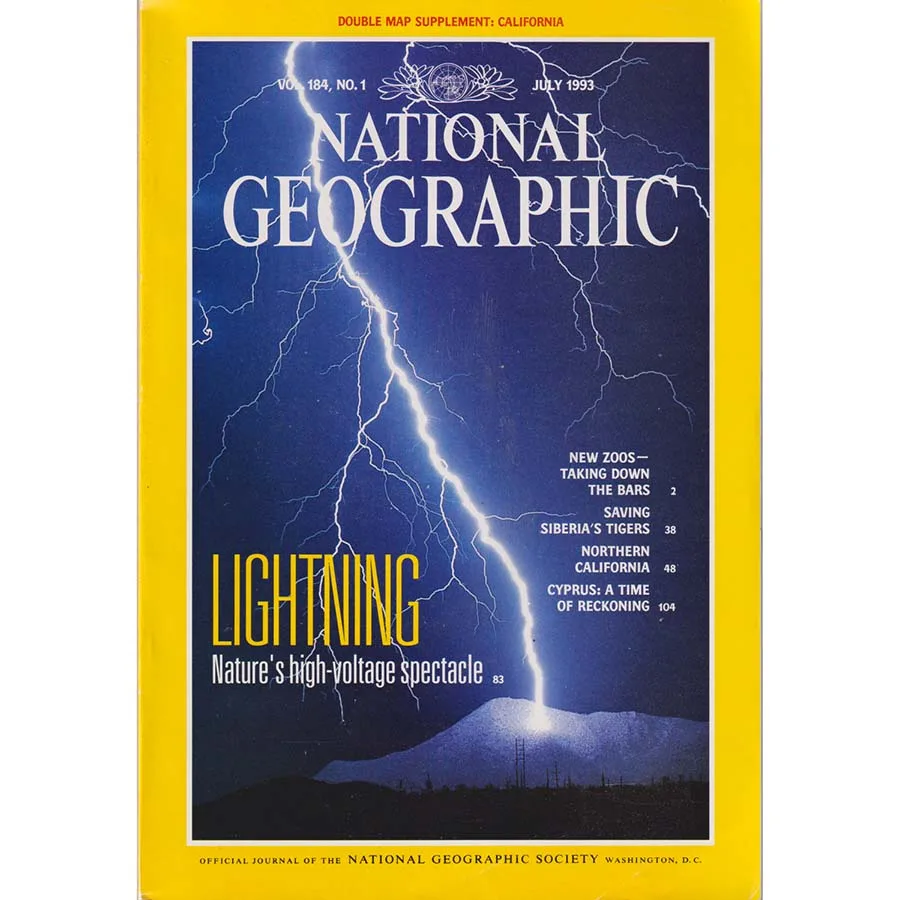
July 1993, and National Geographic shows up like a polite thunderclap: calm yellow border, serious font, and then—BANG—LIGHTNING ripping the sky in half as if the atmosphere has finally had enough of everyone’s nonsense. The cover proudly calls it “Nature’s high-voltage spectacle,” which is a wonderfully measured way of saying: here is the planet casually throwing billion-watt tantrums while you sit indoors pretending you’re not impressed.
This is peak early-90s Geographic energy: big drama on the cover, quietly meticulous science inside, and an implicit assumption that you are the kind of person who wants to spend a summer evening learning exactly how electricity builds inside clouds—right after you’ve jumped at a sudden noise and spilled tea. Lightning is the headline act, and it’s the perfect Geographic subject: terrifying, beautiful, complicated, and just technical enough to make you feel clever for reading about it rather than, say, watching the weather forecast like a normal person.
But of course the magazine doesn’t stop there, because it never stops there. The contents list is basically a world tour and a moral education rolled into one glossy brick. You’ve got New Zoos—Taking Down the Bars (a wholesome moment of humanity trying to improve itself), Saving Siberia’s Tigers (majestic animals, urgent stakes, and the faint sense that the tigers are judging our organisational skills), Northern California (landscapes, culture, and that California habit of looking like a postcard even when it’s just minding its own business), and Cyprus: A Time of Reckoning (history, politics, and the reminder that islands can contain more complexity than your entire week).
And yes — this one comes with a double map supplement: California, because 1993 was an era when magazines casually handed you a large, beautiful map and expected you to become temporarily competent at geography. You will unfold it with confidence, realise it’s the size of a small sail, and then spend five minutes trying to refold it into something that doesn’t resemble an angry paper octopus. Worth it. Hang it on a wall and instantly upgrade your home’s “I travel” credentials, even if your main journey is from the sofa to the kettle.
Condition is Good, which means it’s lived a bit (as it should) but it’s still fully readable, presentable, and ready to educate, entertain, and mildly humble you. No ISBN because magazines are rule-breakers by nature — like lightning itself, but with fewer injuries.
Sold by Crappy Old Books, which feels exactly right for a vintage National Geographic: slightly timeworn, still mighty, and packed with that old-school confidence that the world is worth paying attention to in long form, on paper, with photographs that make you pause and say, “How did they even—”
Perfect for collectors, weather nerds, science dabblers, map hoarders, and anyone who wants a July issue that crackles with atmosphere—without requiring you to stand outside in a storm like an idiot.
Keep browsing: See more National Geographic books Other books by National Geographic
