


National Geographic 1995 July
Publisher: National Geographic
Format: Paperback
ISBN: none
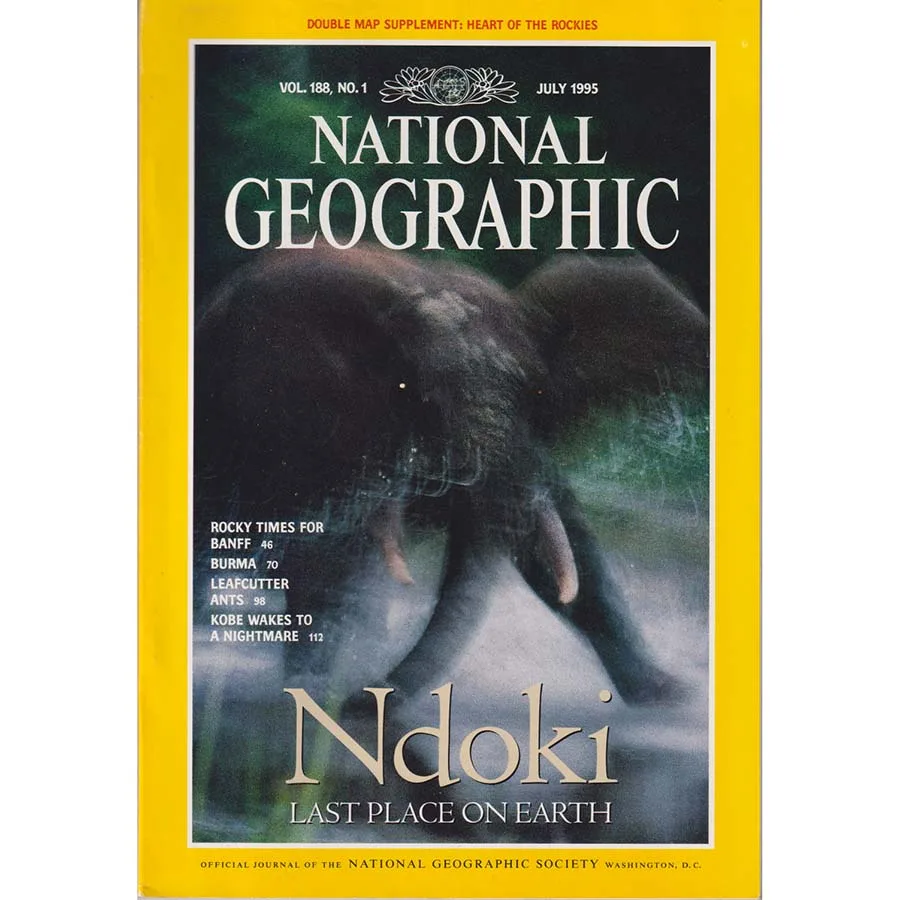
July 1995, and National Geographic is in full “let’s casually redefine your idea of ‘remote’” mode. The cover is pure atmospheric menace: a half-seen elephant shape emerging out of rainforest gloom like the planet itself is trying to sneak up on you. The title Ndoki: Last Place on Earth is wonderfully dramatic — the sort of phrase that makes your sofa feel suspiciously soft and your daily problems feel politely ridiculous. “Last place on Earth,” it says, as if the Earth is a party and this is the room nobody’s cleaned since 10,000 BC. Which, frankly, is the point.
Inside, you get that classic Geographic recipe: awe, danger, science, human stories, and the gentle insistence that you should care deeply about a forest you will probably never visit, but absolutely should. Ndoki (deep Congo vibes, primal-green energy) arrives like a reminder that there are still corners of the world that don’t care about your Wi-Fi password. Expect big wildlife, bigger atmosphere, and that lovely feeling of being educated while mildly haunted.
And because National Geographic cannot simply stay in one biome, it also hands you a neat little global sampler platter: Rocky times for Banff (mountains, parks, politics, probably bears), Burma (history, culture, complexity — the whole layered package), leafcutter ants (tiny creatures doing industrial-scale logistics, making your workplace look inefficient), and Kobe wakes to a nightmare (a sobering reminder that the planet’s drama isn’t always picturesque). It’s like someone curated a documentary festival and then printed it on glossy paper with excellent captions.
Best of all: this issue includes a map of the Rockies. Not a “click to zoom” map. A real map. The kind you unfold with confidence, then immediately realise you’ve created a paper creature larger than your table, and then spend five minutes trying to refold into something that isn’t an origami disaster. It’s a poster map, a practical tool, and a small test of character. Stick it on a wall and instantly become the sort of person who says “trailhead” unironically.
Condition is Good, which means it’s still entirely readable and presentable — a survivor from the era when information came stapled and maps came as prizes. No ISBN because magazines remain gloriously ungovernable. It’s vintage National Geographic at its finest: bold cover, big subject, global curiosity, and that iconic yellow border that basically screams, “Yes, I am educational, but I also look fantastic on a coffee table.”
Sold by Crappy Old Books, which feels exactly right — because this is the kind of issue you don’t just read, you adopt. Perfect for collectors, armchair explorers, map-hoarders, rainforest romantics, and anyone who wants to feel worldly while remaining safely indoors with a cup of tea and absolutely no elephant-related responsibilities.
Keep browsing: See more National Geographic books Other books by National Geographic
