


National Geographic 1996 December
Publisher: National Geographic
Format: Paperback
ISBN: none
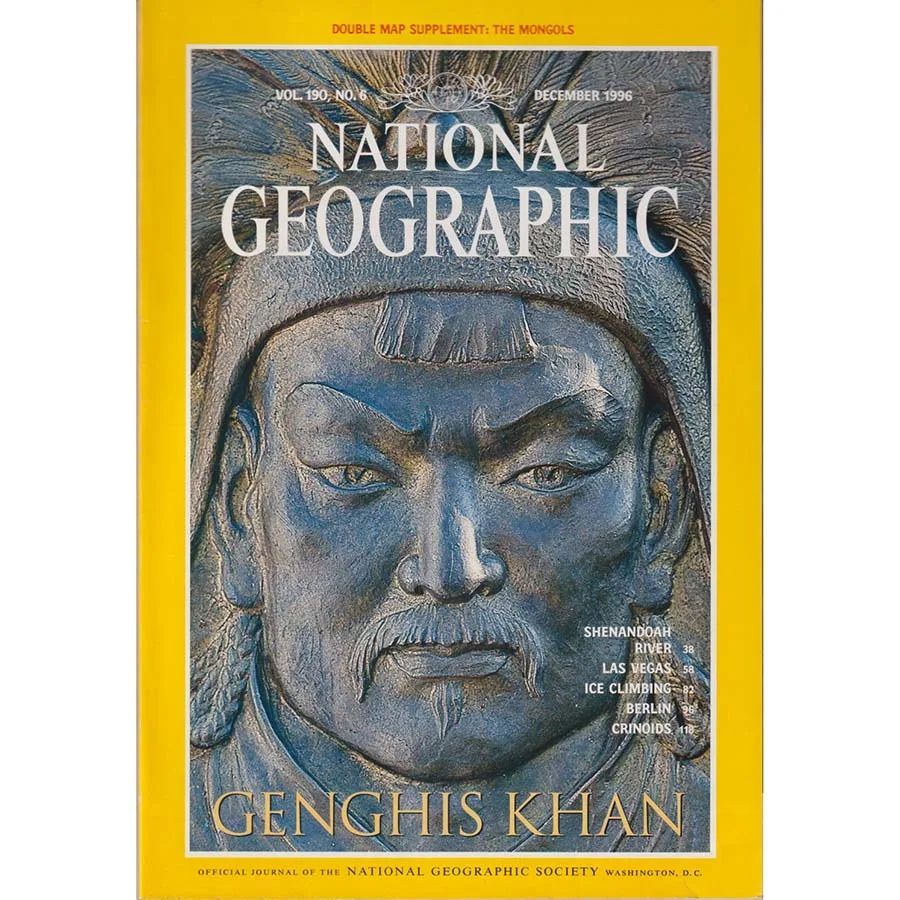
December 1996, and National Geographic chooses to end the year the way a confident magazine does: by putting Genghis Khan on the cover and letting him stare straight through your excuses. This is not a cosy, mince-pie-and-socks issue. This is a “history is large, unstoppable, and arriving at speed” issue — delivered in that soothing Geographic tone that makes world-changing conquest feel like a well-captioned museum tour.
The cover image alone is doing heavy lifting: a monumental, carved-looking Khan face in cool stone-blue, framed by the yellow border like a priceless artefact you’ve accidentally left on your coffee table. It’s quietly intimidating, like the magazine is saying, “Yes, you can scroll your phone… or you can learn about an empire that reshaped continents.” And because it’s December, you can pretend this counts as self-improvement.
Inside, the headline act is the Mongols — which sounds like a single topic until you remember the Mongols weren’t a “topic,” they were a force of nature with logistics. It’s horses, steppe, diplomacy, terror, trade, and the kind of organisational efficiency that makes modern project management look like a sticky note that fell behind the fridge. The writing will have you nodding thoughtfully while secretly grateful your own ambitions top out at “clear the inbox.”
And then, because National Geographic never just gives you one thing, it fills the rest of the issue with that classic end-of-year global sampler platter: Shenandoah River, Las Vegas, ice climbing (because adrenaline must be represented), Berlin (history stacked on history), and crinoids — yes, ancient sea creatures, because nothing says festive season like learning about fossilised life forms with feathery arms. It’s a magazine that can go from empire-building to underwater prehistory without spilling its tea. You will go from “Wow, the Mongols” to “Wait, what is a crinoid” in the space of a few pages, and somehow it feels normal.
And the real cherry on top: it includes a poster covering the Mongols — a proper pullout visual feast, the kind of thing you can unfold dramatically, admire for ten minutes, and then spend the rest of your life folding back incorrectly. It’s part education, part wall décor, part mild workout. Stick it up and your home instantly gains the atmosphere of someone who definitely knows where Karakorum is, even if you absolutely don’t.
Condition is Good, which in Crappy Old Books terms means it’s still handsome, still readable, and still ready to do its job: make you feel worldly, slightly humbled, and weirdly excited about geography at a time of year when your brain is mostly running on sugar and denial. No ISBN (magazines don’t do paperwork), just that glorious yellow-bordered portal to 1996 — when print felt permanent, posters were prizes, and a single issue could contain conquest, casinos, ice walls, reunified cities, and prehistoric sea lilies without even blushing.
Perfect for collectors, history nerds, map/poster enthusiasts, and anyone who wants a December read that whispers: You may not have conquered Eurasia, but you can at least conquer this issue.
Keep browsing: See more National Geographic books Other books by National Geographic
