


National Geographic 1985 December
Publisher: National Geographic
Format: Paperback
ISBN: none
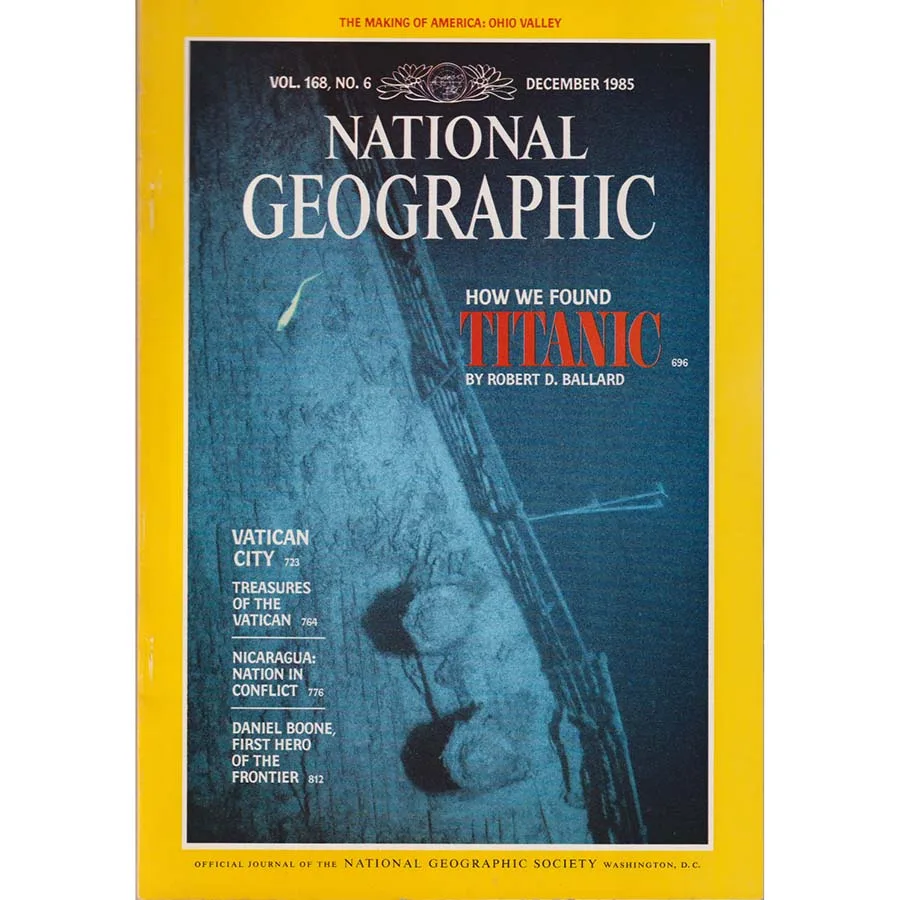
National Geographic, December 1985: the festive issue that turns up wearing a sensible cardigan, carrying a flashlight, and announcing—cheerfully—that your Christmas treat this year is the bottom of the Atlantic. Yes, while other magazines are doing “Holiday Sparkle” and “Ten Party Canapés,” NatGeo is calmly lowering a camera into the dark and handing you history with a side of goosebumps: How We Found TITANIC (by Robert D. Ballard), because nothing says seasonal comfort like a legendary shipwreck appearing out of the black like a ghost that still has impeccable engineering.
The cover is peak 80s National Geographic restraint: a cold, blue underwater hush, and one word in dramatic red—TITANIC—as if the ocean itself has finally cleared its throat. Inside, you get the deliciously methodical thrill of discovery: the tech, the patience, the sheer human stubbornness of “we are going to find this thing,” plus that uncanny emotional punch when the wreck becomes real. It’s not just a ship; it’s a frozen moment with a thousand stories trapped inside it, and the magazine knows exactly how to make you feel that without ever raising its voice.
But because this is NatGeo, it refuses to be a one-track obsession. While you’re still processing the Atlantic’s cold archive, it briskly ushers you into Vatican City and the Treasures of the Vatican, as if to say: “Look, we did the abyss. Now let’s do gilded ceilings.” From saltwater darkness to marble, gold leaf, and centuries of curated awe—because why choose between deep-sea archaeology and the world’s most famous locked display cabinet when you can have both before tea?
Then, just to keep your moral compass from getting too comfortable, there’s Nicaragua: Nation in Conflict—a reminder that 1985 isn’t all discovery and gilding; it’s also politics, upheaval, and people living inside the headlines. NatGeo’s signature move is to make you look—not just at scenery, but at consequence—and it does it with that steady, documentary tone that feels both compassionate and slightly devastating.
And finally, because every issue needs a dash of American myth-making to round out the buffet: Daniel Boone, First Hero of the Frontier. It’s the magazine’s version of dessert—except the dessert is wilderness, legend, and the complicated machinery of national stories. You’ll come away with buckskin-flavoured romanticism and the sneaking suspicion that history is always messier than the postcards.
Oh—and you also get an Ohio pullout map, because NatGeo cannot resist slipping a large, beautifully printed promise into the middle like a bonus level. It’s the sort of map that makes you want to plan a road trip you will never take, argue about river valleys, and insist, loudly, that you’re “just going to have a quick look” before you accidentally spend 40 minutes tracing routes with your finger like a Victorian railway enthusiast.
Condition: Good, which is exactly right for an issue that wants to be handled, opened flat, pored over, and left on the table like evidence. From Crappy Old Books, this is a surprisingly perfect December package: deep ocean chills, sacred splendour, real-world conflict, frontier lore, and a map big enough to remind you that exploration always comes with paper creases. A holiday special, if your idea of festive is “astonishment, but educational.”
Keep browsing: See more National Geographic books Other books by National Geographic
