


National Geographic 1985 September
Publisher: National Geographic
Format: Paperback
ISBN: none
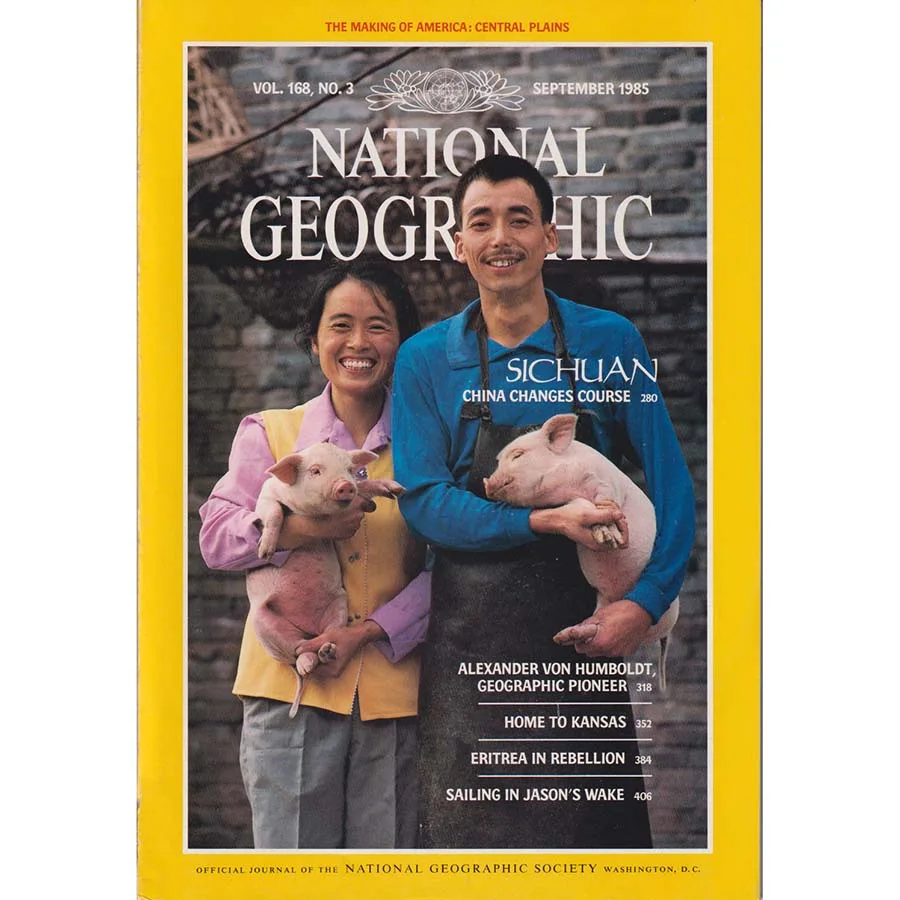
National Geographic, September 1985: the issue that shows up like a well-meaning uncle at a barbecue—smiling warmly, holding two pigs, and quietly implying you should probably learn something today. The cover alone is doing that classic NatGeo trick: “Yes, this is charming,” it says, “but also it’s a doorway into global history, politics, ecology, and at least one rabbit hole you didn’t ask for.” The pigs look mildly baffled, the humans look delighted, and you—the reader—are already negotiating with yourself about whether you can justify reading “just one article” before bed. (You cannot.)
Front and centre is Sichuan: China Changes Course, which in 1985 is basically a dispatch from the moment the world starts rearranging itself in real time. It’s the sort of writing that feels simultaneously patient and urgent: day-to-day life, food, work, tradition, and that undercurrent of “something big is shifting here” that you can’t unsee once it’s been pointed out. You’ll come for the pigs and stay for the geopolitics—like all the best accidents.
Then, because this magazine has the attention span of a curious magpie with a PhD, it pivots to Alexander von Humboldt, the patron saint of “what if we simply knew everything?” Expect towering curiosity, heroic stamina, and the kind of intellectual swagger that makes modern multitasking look like rubbing sticks together. You’ll finish the piece feeling inspired, slightly ashamed, and inexplicably interested in measuring things.
Need a palate cleanser? Here comes Home to Kansas, because nothing says “global exploration” like returning to the central plains and realising the drama is just quieter, not absent. This is National Geographic’s speciality: making the familiar feel vast. Wide skies, steady lives, and the soft existential thrum of a landscape that’s been shaping people long before anyone started calling it content.
But don’t get too cosy—there’s Eritrea in Rebellion, because 1985 is not here to pamper you. This is the magazine doing what it does best: pulling the curtain back on the world’s sharp edges, placing human lives in the frame, and giving you enough context to understand that headlines are just the tip of the iceberg you’re already standing on.
And then—because no issue is complete without one last “by the way”—there’s Sailing in Jason’s Wake, which sounds like a mythological road trip and reads like an excuse to mix adventure, history, and salt spray. It’s the kind of feature that makes you feel like you’ve travelled, even if you’re still in your kitchen wearing yesterday’s socks.
All of it comes wrapped in that unmistakable 1980s National Geographic tone: earnest but never dull, authoritative but quietly romantic about the planet. The photos do half the persuading, the captions do the rest, and before you know it you’re emotionally invested in a place you couldn’t have confidently pointed to on a map fifteen minutes ago.
Condition: Good, which is perfect for an issue like this—meant to be read, re-read, left open on a table, and picked up again when you suddenly remember you need to know more about Sichuan or Humboldt or why Kansas feels like the inside of a weather system. From Crappy Old Books, it’s a sturdy yellow-bordered time machine: part documentary, part travel itch, part gentle 1985 reminder that the world is enormous and you are, delightfully, not finished learning it.
Keep browsing: See more National Geographic books Other books by National Geographic
