


National Geographic 1995 October
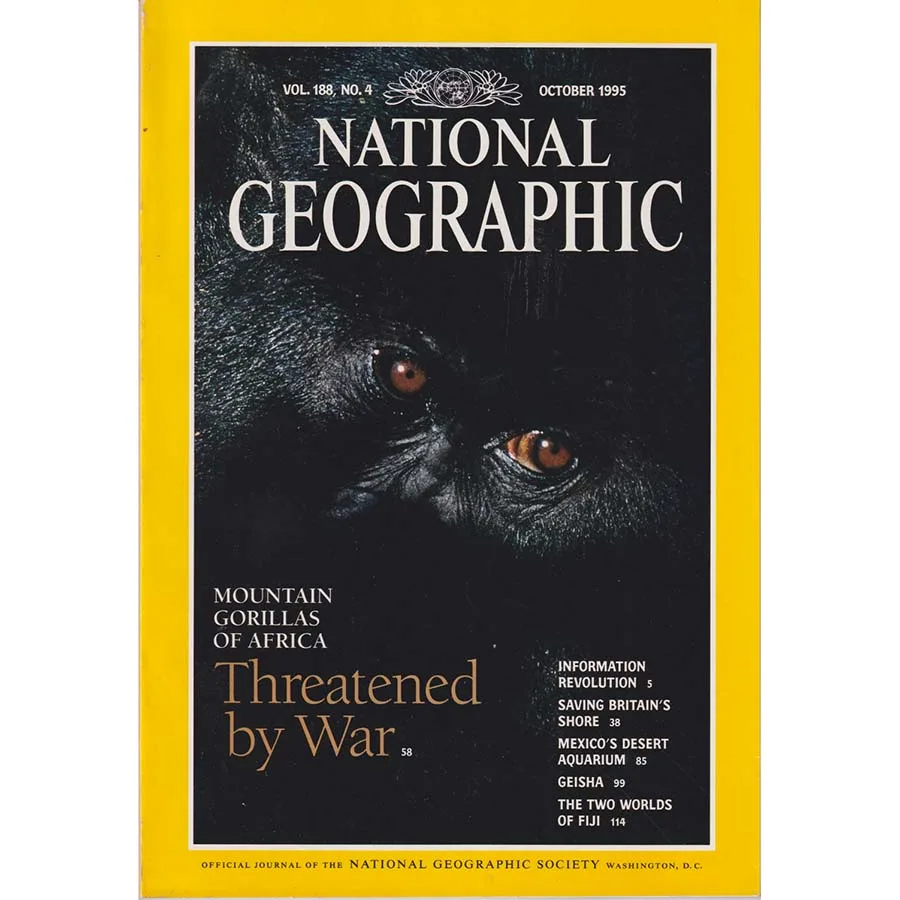
Publisher: National Geographic
Format: Paperback
ISBN: none
National Geographic – October 1995 is the kind of magazine that doesn’t so much sit on your coffee table as quietly judge you from across the room. The cover alone is basically a masterclass in intimidation: a gorilla’s face swallowed by shadow, with two amber eyes saying, “Yes, I can see your browser history, and no, I’m not impressed.”
This is peak mid-90s Nat Geo: big, earnest, world-spanning curiosity delivered with the calm confidence of an organisation that can helicopter into a rainforest on a Tuesday and still have time to label the photos correctly. The headline story—Mountain Gorillas of Africa: Threatened by War—is as heavy as it sounds: nature documentary beauty colliding with human chaos, and the quiet reminder that even the planet’s most magnificent creatures can’t file a complaint form and wait for the admin team to sort it out.
Then, because it’s 1995 and everything is happening at once, you also get the “Information Revolution”—that adorable moment when the digital future was still described as a revolution rather than an unavoidable atmosphere. You can almost hear the dial-up modem wheezing in the background while the magazine tries to explain, with careful optimism, how computers are going to change everything. (They did. Sorry about that.)
If you need a palate cleanser after gorillas and geopolitics, there’s Saving Britain’s Shore—a very British kind of drama where the enemy is tide, erosion, and the eternal question: “Should we move the fence back, or simply glare at the sea until it behaves?” It’s a story of sand, stubbornness, and the kind of quietly heroic engineering that doesn’t get action-movie music but absolutely deserves it.
Elsewhere you’ll find Mexico’s Desert Aquarium, which sounds like a contradiction until you remember nature is a show-off, and Geisha, a topic treated with that classic Nat Geo blend of admiration, detail, and slightly-too-much confidence that a magazine can briefly explain an entire world in a handful of pages. Finally, The Two Worlds of Fiji rounds things off with that familiar sense that every place is more layered than the postcard version, and also that you should probably stop assuming you understand anywhere after watching one travel programme.
Condition is Good, as sold by Crappy Old Books—meaning it’s lived a little, been leafed through by curious hands, and survived the real battlefield: the coffee table, the moving box, the “I’ll read it later” pile. It’s still very much ready to do what National Geographic does best: make you feel smarter, smaller, and oddly eager to learn about something you didn’t even know you cared about five minutes ago.
If you want a time capsule from the moment the world was both analog and nervously peering into the digital future—while gorillas, coastlines, culture, and deserts carried on being astonishing—this issue is a gorgeous, slightly ominous, absolutely classic slice of Nat Geo.
Keep browsing: See more National Geographic books Other books by National Geographic
