


National Geographic 2012 January
Publisher: National Geographic
Format: Paperback
ISBN: none
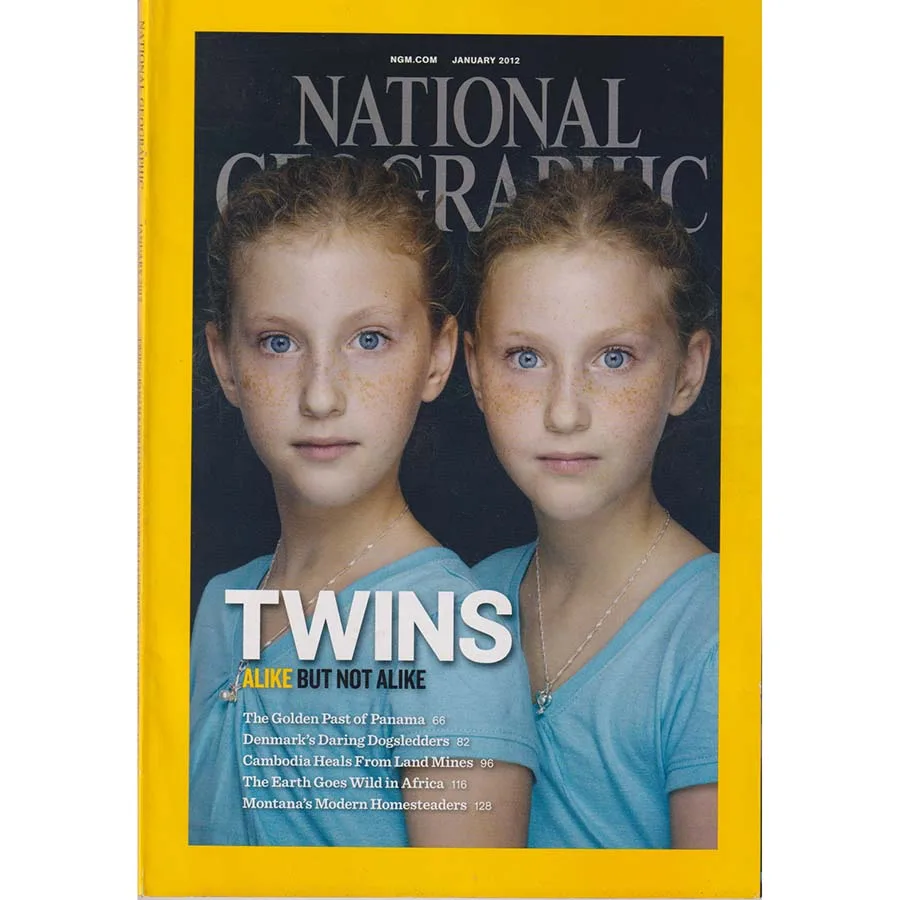
National Geographic – January 2012 turns up at the door holding two identical faces and one enormous question: how much of you is you, and how much is your operating system? It’s the “TWINS” issue — alike but not alike — which is a wonderfully diplomatic way of saying: “Yes, they share DNA. No, that doesn’t mean they share opinions about socks, risk, or whether pineapple belongs anywhere near civilisation.”
This is classic Nat Geo: take something you think you understand (twins), photograph it so beautifully you feel slightly underdressed, then quietly dismantle your confidence with science, psychology, and the gentle implication that your personality might be part biology, part upbringing, and part whatever happened to you that one time in Year 6. It’s nature vs nurture with a glossy spine, served at the exact moment you realise your own life could probably be modelled as a pie chart with a frightening “miscellaneous” slice.
And because National Geographic never believes in offering just one existential wobble per issue, it uses the twins as a launchpad into a broader, satisfyingly chaotic world tour. One minute you’re contemplating the spooky symmetry of two lives running in parallel; the next you’re off to Panama for the “golden past” (translation: history with enough drama to make you grateful you only have one set of ancestors to apologise for). Then you’re in Denmark with daring dogsledders, which is basically “the cold does not care about your feelings” in feature-article form. Cambodia shows up with the quietly heroic work of healing from land mines — a reminder that some stories are not about wonder, but about survival and patience. Africa goes wild (as advertised), and Montana’s modern homesteaders appear to reassure you that yes, some people are still out there voluntarily doing hard things on purpose, without Wi-Fi, and with a straight face.
It’s an issue that’s oddly comforting in its contradictions. Twins are familiar and uncanny. Humans are resilient and ridiculous. The planet is beautiful and complicated. And National Geographic remains the one publication that can make you feel both smarter and slightly judged by a photograph of someone calmly doing something you would immediately perish attempting.
Condition: Good, from Crappy Old Books, which feels appropriate for an issue about duplication: one copy for reading, one copy for staring at the cover and wondering whether you are the “alike” version or the “not alike” one. Either way, it’s the perfect January read — reflective, globe-spanning, and quietly smug in the way only a bright yellow border can be.
Keep browsing: See more National Geographic books Other books by National Geographic
