


National Geographic 1995 November
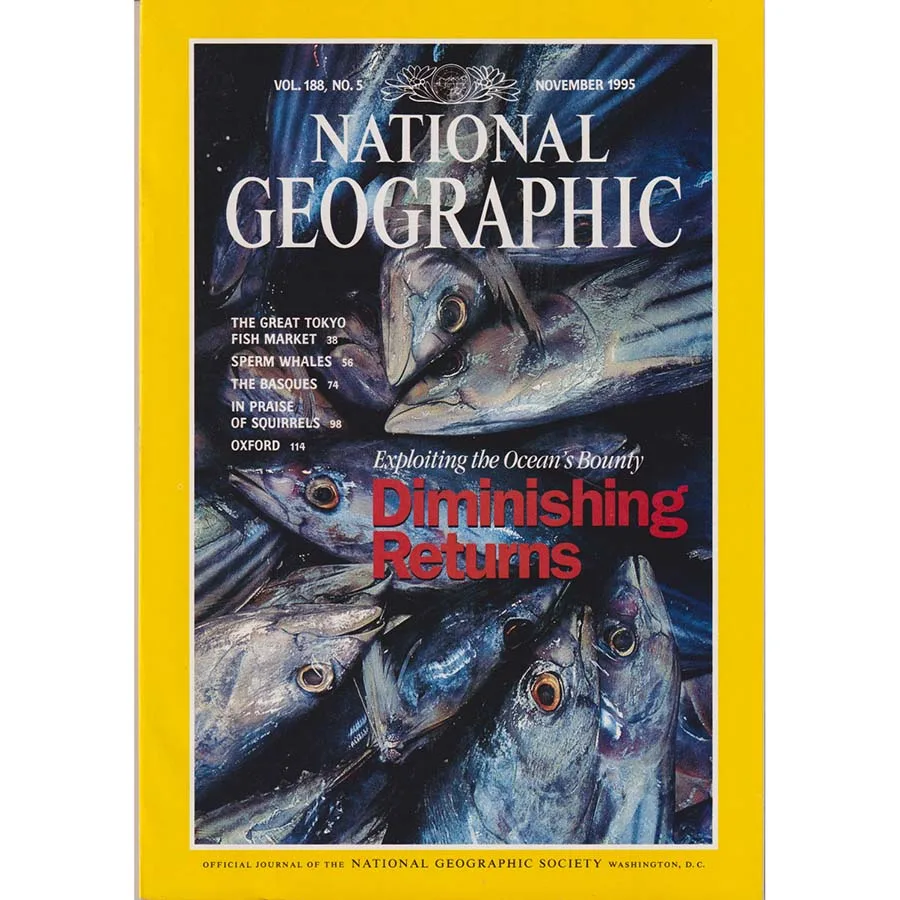
Publisher: National Geographic
Format: Paperback
ISBN: none
National Geographic, November 1995, is the sort of magazine that turns up looking immaculate in its yellow frame and then immediately starts talking to you about collapse. The cover is a heaving, silvery pile of fish—eyes bright, bodies stacked, glamour levels: grimly photogenic—under the wonderfully polite headline “Diminishing Returns”. It’s a phrase that sounds like a minor accounting issue until you realise it’s actually about the ocean being treated like a bottomless freezer and quietly disagreeing.
This issue is Peak Nat Geo: a beautifully composed warning delivered in museum-quality colour printing. You open it expecting a gentle tour of “the world and its wonders” and instead you get a 1990s masterclass in: Yes, the wonders are real, and yes, we are absolutely rinsing them. It’s ecological dread dressed as coffee-table elegance—like being handed a cocktail garnished with a small note that says “by the way, the ice is melting.”
Inside, the magazine does its trademark globe-trotting whiplash. First: The Great Tokyo Fish Market, where precision, ritual and capitalism meet at dawn in a symphony of knives, auctions, and very serious men shouting about seafood. It’s fascinating, it’s cinematic, and it’s also a reminder that “fresh” is just a marketing word for “recently sprinted towards extinction.”
Then: sperm whales, because Nat Geo can’t resist an animal with a ridiculous name and a biography longer than yours. You’ll get deep dives (literally), strange social lives, and the comforting sense that nature is both majestic and wildly odd. The whales arrive like ancient submarines with emotional depth and terrible PR. They are, as ever, the grown-ups in the room.
After that, the magazine pivots—because it always pivots—to culture and place with an air of “and now for something completely magnificent.” The Basques, all identity, landscape, stubbornness, and the kind of history that refuses to fit neatly into anyone’s neat little boxes. Then Oxford, which turns up as a palate cleanser: spires, scholarship, rain, and the quiet suspicion that the city itself is grading you as you walk through it. You can practically hear a bicycle bell ringing disapprovingly at your life choices.
And—because National Geographic is incapable of being normal—you also get “In Praise of Squirrels.” Yes. Squirrels. Those twitchy little tree gremlins who look like they’re permanently plotting a heist. Nat Geo treats them with the reverence usually reserved for emperors and erupting volcanoes, and honestly? It works. You’ll never look at a garden squirrel the same way again. You’ll think: resource management, territorial disputes, tiny paws, enormous confidence. The issue is basically telling you that the planet is full of wonder, and sometimes that wonder is stealing your birdseed.
Condition: Good, from Crappy Old Books, which feels appropriate: a magazine about the ocean’s “bounty” running out should look like it has been handled, read, sighed over, and left on a table while someone stared into the middle distance. This is the kind of issue you buy for the photography and keep for the uneasy feeling that the past was already warning us—politely, beautifully, and in high-resolution—while we nodded, turned the page, and went back for seconds.
Keep browsing: See more National Geographic books Other books by National Geographic
