


National Geographic 1986 July
Publisher: National Geographic
Format: Paperback
ISBN: none
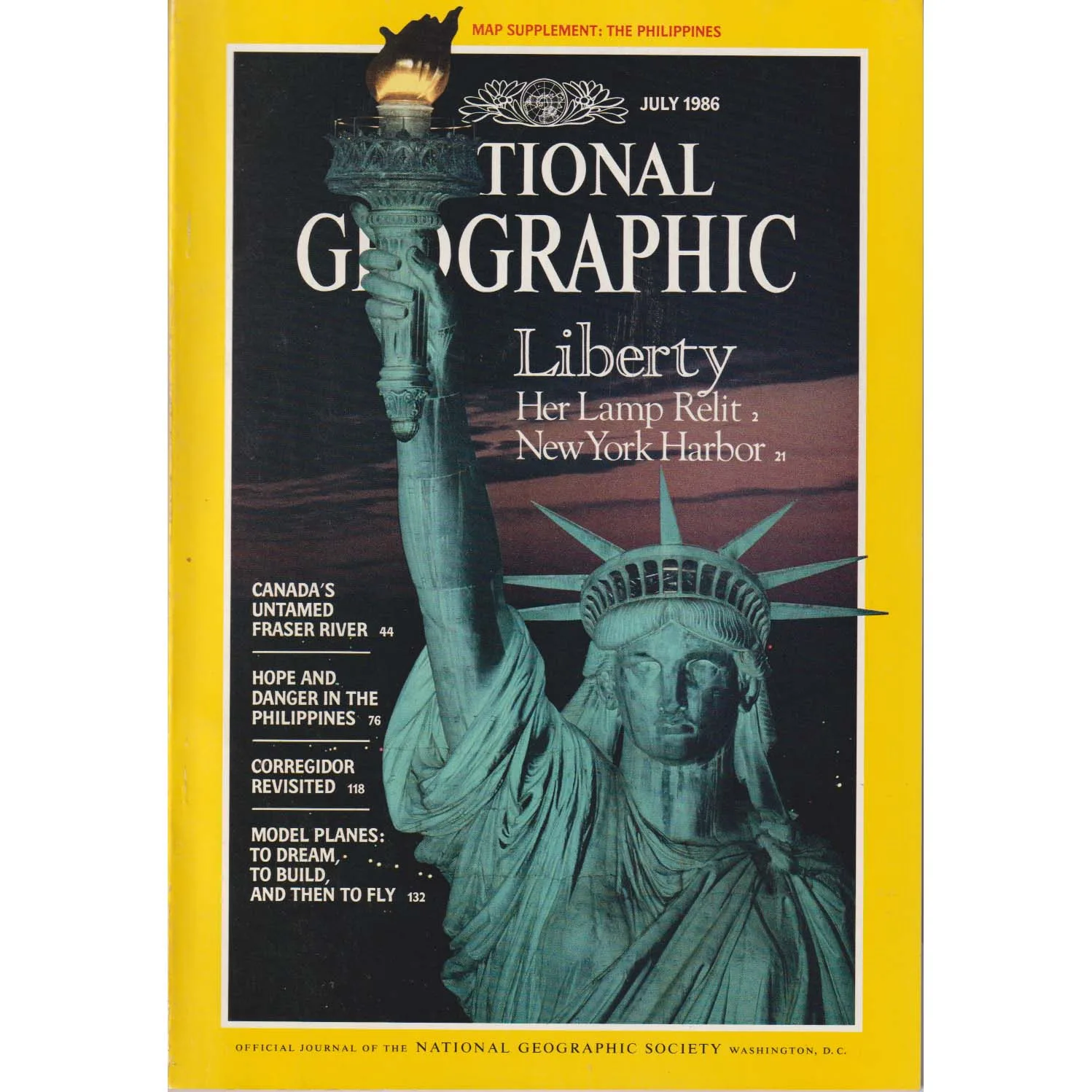
National Geographic, July 1986, arrives wearing its yellow frame like a passport stamp and a mild superiority complex. The cover is the Statue of Liberty at night, looking magnificently teal and slightly offended, as if she’s just been told her lamp needs rewiring (which, to be fair, is exactly the headline: “Liberty — Her Lamp Relit”). It’s classic Nat Geo energy: take something you assumed was eternal, reveal it’s basically a very large, weathered piece of engineering, and then make you feel strangely emotional about scaffolding and copper.
Inside, you get that very particular 1980s editorial cocktail: civic symbolism treated with the seriousness of a heart transplant, followed immediately by the planet doing something dramatic in another hemisphere. New York Harbor is all rivets, restoration, and patriotic electricity; then the magazine swivels to “Hope and Danger in the Philippines” like a friend who won’t let you stay cosy too long. One minute you’re admiring the glow of a torch, the next you’re reminded that history is not a museum exhibit—it’s a live-wire situation, and sometimes the wiring is exposed.
And because this is National Geographic, it refuses to be a one-theme evening. Alongside Liberty’s refurbished optimism you’ll find Canada’s untamed Fraser River—a reminder that the natural world doesn’t care about your monuments and will happily carve a continent while you’re still arguing about paint. Then there’s Corregidor revisited, which has the unmistakable Nat Geo flavour of “we went back, we stood there, we imagined the past very hard, and now you’re going to feel it too.” It’s time travel with better photography and fewer paradoxes.
Finally, just when you think you’ve got the tone pinned down—patriotism! geopolitics! wilderness!—the issue slides in a delightfully nerdy curveball: model planes. Yes, really. To dream, to build, and then to fly. It’s the sort of earnest hobby feature that feels like a warm handshake from a stranger at a community centre. It also quietly underlines the whole Nat Geo mission: humans are forever trying to lift themselves off the ground, whether with a torch, a boat, a revolution, or a tiny balsa-wood masterpiece held together by glue and hope.
Bonus: this copy includes a poster on the history of the Philippines—still attached—because National Geographic never met a wall it didn’t want to turn into an educational experience. It’s part supplement, part time machine, part “look, we’ve done the reading so you don’t have to,” and entirely the kind of thing you’ll unfold “just for a second” and then discover you’ve lost half an hour to dates, maps, and the sudden urge to learn about archipelagos properly.
Condition: Good, from Crappy Old Books, which feels poetically correct. A magazine about liberty, rivers, revolutions, and miniature aircraft should not be pristine. It should look like it has been places—possibly even New York Harbor at night—then returned to be reread by someone who enjoys their facts with a side of quiet wonder and the occasional existential shiver.
Keep browsing: See more National Geographic books Other books by National Geographic
