


National Geographic 1989 April
Publisher: National Geographic
Format: Paperback
ISBN: none
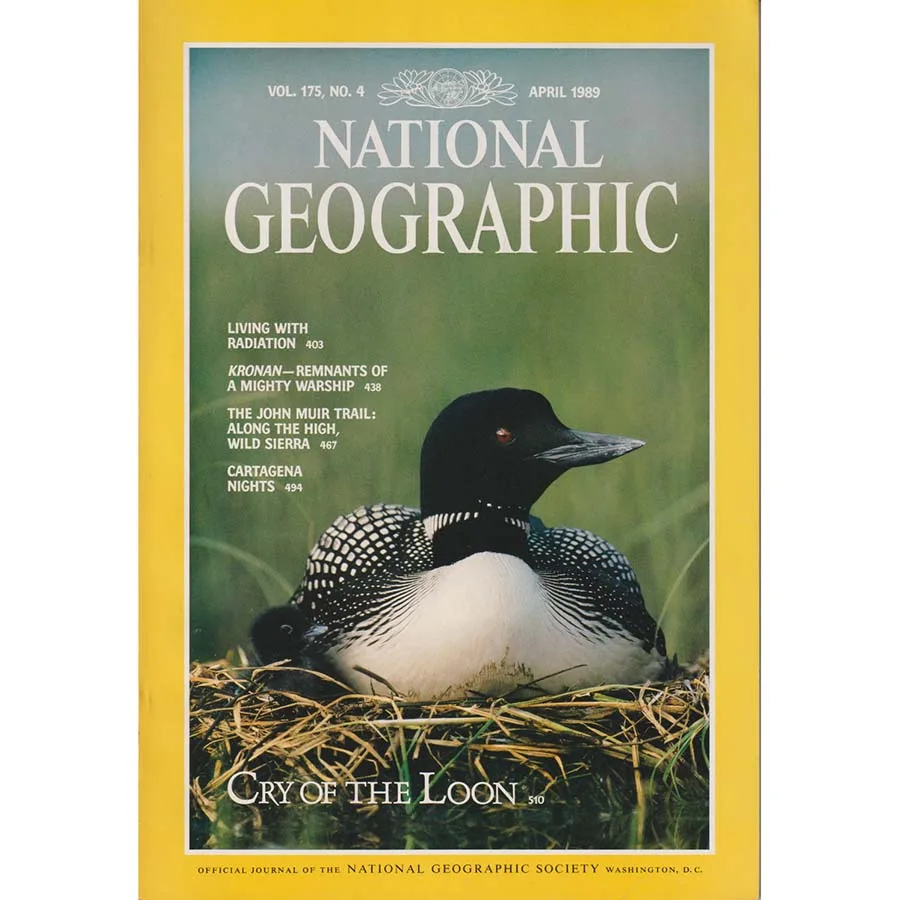
National Geographic, April 1989 arrives looking serene and slightly judgmental—like it’s about to teach you something important, but gently, and with excellent photography. The cover is a loon, perfectly composed on its nest, glossy black head turned sideways in that “I’m aware of your nonsense” pose, under the wonderfully dramatic title “Cry of the Loon.” It’s the kind of headline that makes you expect tragedy, poetry, and at least one paragraph that begins, “In the stillness of dawn…”
And honestly, that’s exactly the vibe. This issue is peak National Geographic in its quiet-documentary mode: nature presented as both beautiful and faintly ominous, as if every feather and reed is part of a much bigger story you’ve been ignoring while you check the kettle. The loon feature is the sort of thing Nat Geo does brilliantly—taking a creature many people can’t name (let alone identify) and turning it into the centre of the universe for an evening. You will finish this article with a surprising amount of emotional investment in waterbirds and habitat.
But April 1989 also has that classic Nat Geo tonal mix where it soothes you with wildlife and then slips in something that makes you stare into the middle distance. The contents list is a miniature rollercoaster: Living with Radiation (casual existential dread, served in measured prose), Kronan—Remnants of a Mighty Warship (shipwreck archaeology with a side of national mythology), The John Muir Trail: Along the High, Wild Sierra (pure landscape therapy), and Cartagena Nights (warm air, history, streetlight, probably a sentence about “the scent of jasmine” whether you asked for it or not).
It’s an issue that manages to contain: a nesting bird, radiation, a sunken warship, a high mountain trail, and Colombian night life—because National Geographic in 1989 had the editorial confidence of a person who can host a dinner party with guests who have absolutely nothing in common and still make it work.
The irony is that the loon looks like the calmest thing in the whole magazine. Everything else is humans: digging, hiking, building, radiating, wrecking, remembering. The loon just sits there like, “Yes. This is my nest. Try not to ruin it.”
Condition: Good, which is exactly right—this is the sort of magazine you want to feel lightly used, like it’s been read on a sofa, taken on holiday, and left open on a table to quietly impress visitors. Sold by Crappy Old Books, a name that feels like the perfect counterbalance to Nat Geo’s grand seriousness: one minute you’re contemplating radiation and shipwrecks, the next you’re buying it from somewhere that sounds like it might also sell you a slightly damp atlas and a cookbook from 1973.
Keep browsing: See more National Geographic books Other books by National Geographic
