


National Geographic 1991 August
Publisher: National Geographic
Format: Paperback
ISBN: none
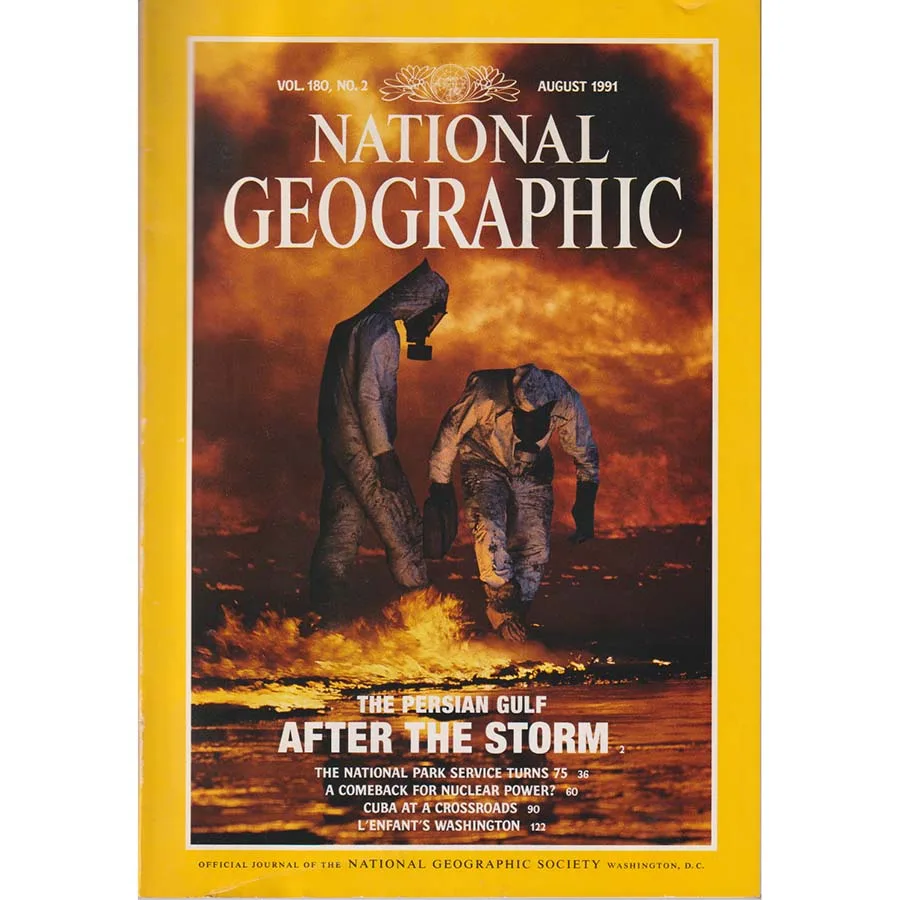
National Geographic, August 1991 turns up like a glossy time machine set to “recent history, but make it cinematic.” The cover is pure apocalypse realism: two figures in protective gear moving through a landscape on fire, the sky the colour of burnt copper, the ground shimmering like the world has been left on the hob too long. The headline doesn’t do poetry because it doesn’t need to: “The Persian Gulf After the Storm.” This is Nat Geo at its most unblinking—calm fonts, extraordinary photography, and a quiet insistence that you actually look at what war leaves behind.
Inside, the issue carries that early-90s mood: the Cold War has cracked open, the news cycle is accelerating, and the magazine is trying to pin down a world that feels like it’s shifting under everyone’s feet. “After the Storm” isn’t about the drama of the event so much as the wreckage, the aftermath, the environmental scars, and the human labour of cleaning up something that should never have happened in the first place. It’s a sobering read—made even more unsettling by the fact that the writing will be measured and composed, because National Geographic has always delivered horror with perfect manners.
And then—because Nat Geo is incapable of being only one thing—you get the rest of the planet in the same issue like it’s perfectly normal. There’s the National Park Service turns 75 (a palate cleanser of protected landscapes after the inferno), a comeback for nuclear power (1991 optimism and anxiety in one neat phrase), Cuba at a crossroads (history paused, waiting for the next push), and L’Enfant’s Washington (urban design as destiny, with grand avenues and bigger intentions). It’s the full Nat Geo spread: war, wilderness, energy, politics, and city planning—served in one sitting, no substitutions.
And yes, this copy includes two posters, which is wonderfully on brand for the era: you didn’t just read National Geographic, you physically unfolded it across your living room like a ritual of knowledge. Posters were the pre-internet way of saying, “I care about this enough to make wall space for it,” whether that meant a map, a natural wonder, or a handsome diagram that made you feel like a serious person.
Condition: Good, which is exactly right: handled, intact, ready to be revisited as both document and artefact. Sold by Crappy Old Books, whose name is the perfect accidental punchline—because this isn’t just “old.” It’s a snapshot of the world at a specific, smoky moment, packaged with posters and conviction, waiting to be read again by someone who still believes glossy pages can hold the weight of history.
Keep browsing: See more National Geographic books Other books by National Geographic
