


National Geographic 2012 October
Publisher: National Geographic
Format: Paperback
ISBN: none
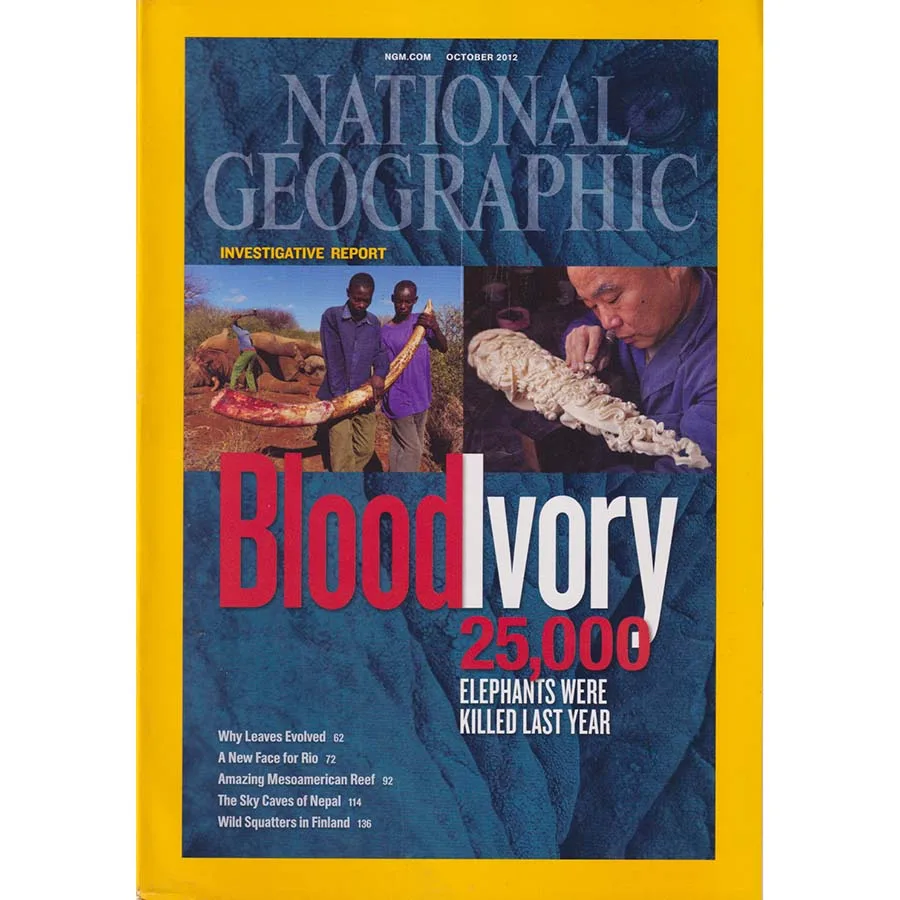
National Geographic, October 2012 is not here to cuddle you. It turns up in that comforting yellow frame and immediately hits you with the kind of cover line that makes you sit up straighter and feel faintly complicit: “Blood Ivory”—followed by the blunt statistic “25,000 elephants were killed last year.” It’s the classic Nat Geo move: lure you in with prestige typography, then quietly rearrange your insides with reality.
This issue is an Investigative Report, which means it’s less “look at this beautiful animal” and more “let’s follow the money, the routes, the middlemen, the carving workshops, the enforcement gaps, the politics, the human greed dressed up as tradition, and the tragic fact that a living elephant can be converted into a commodity in about the time it takes you to make a cup of tea.” The irony is sharp: the magazine famous for celebrating the natural world here becomes a crime dossier—still beautifully put together, still calm, but absolutely not letting anyone look away.
And because National Geographic has the editorial personality of a brilliant friend who refuses to let you spiral without also handing you something fascinating and strange, the rest of the issue swings wide and weird in the best way. You get Why Leaves Evolved (a whole feature on plants calmly inventing the world’s most successful solar panels), A New Face for Rio (cities reinventing themselves with equal parts ambition and chaos), Amazing Mesoamerican Reef (underwater splendour with a side of “please don’t ruin this too”), The Sky Caves of Nepal (humans doing improbable things in improbable places), and Wild Squatters in Finland (which sounds like a joke until you realise it’s probably about people, survival, and the odd ways modern life still contains frontier stories).
It’s a particularly 2012 cocktail: global urgency, investigative moral clarity, and that slightly glossy optimism that information still matters—like if you just see it properly, you might do something. Or at least you’ll never look at an ivory trinket the same way again, which is a start.
Condition: Good, which feels right: this is a serious issue, meant to be handled, read, passed on, and left on the table where it can glare at everyone politely. Sold by Crappy Old Books, a name that couldn’t be more ironically perfect—because inside this “crappy old” magazine is a brutally current story, plus a handful of gorgeous detours that remind you what’s at stake when the world treats living things as décor.
Keep browsing: See more National Geographic books Other books by National Geographic
