


National Geographic 1989 June
Publisher: National Geographic
Format: Paperback
ISBN: none
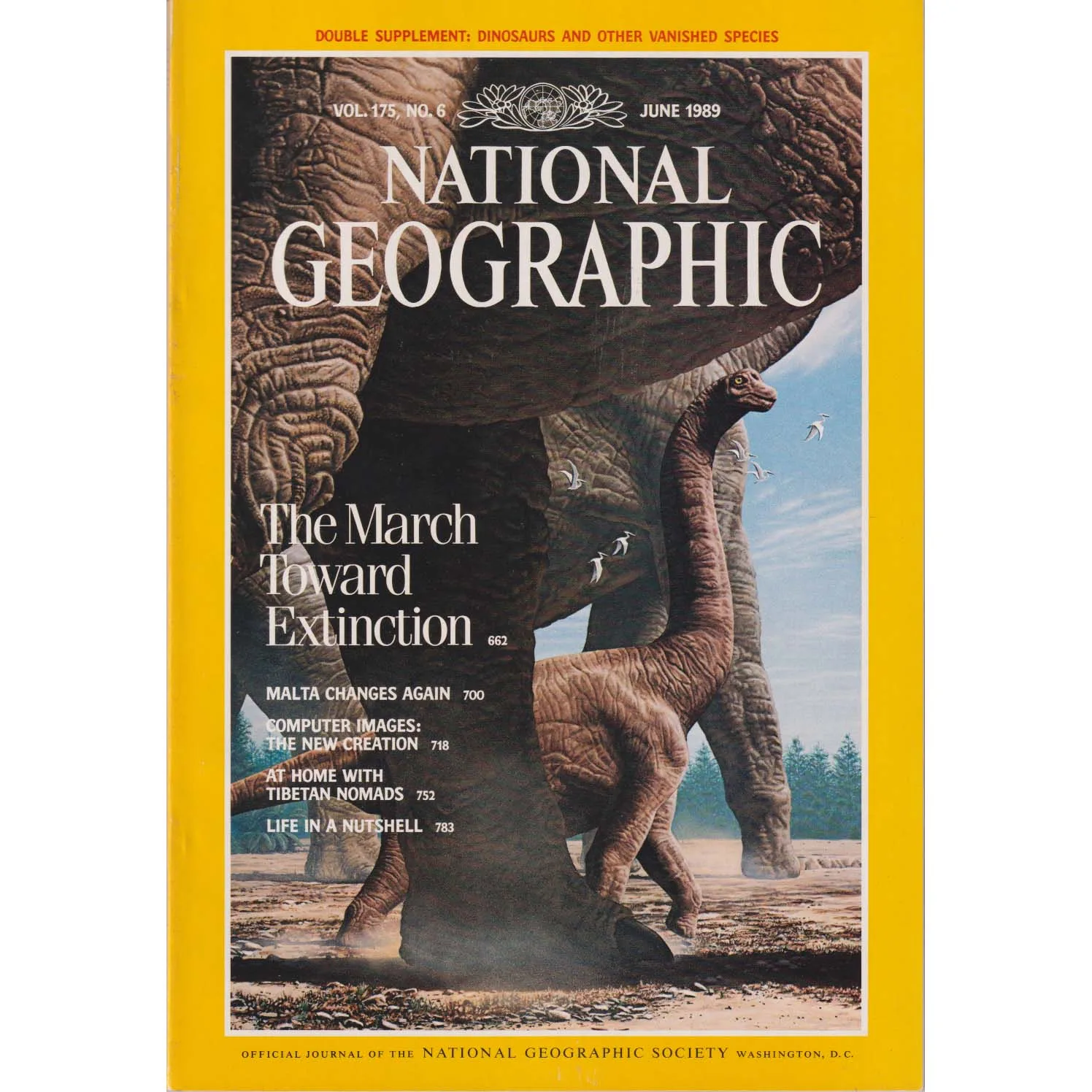
National Geographic, June 1989 comes lumbering onto your shelf with the quiet confidence of a creature that has never once worried about rent, email, or the concept of “personal space.” The cover is a full-on prehistoric power move: a dinosaur the size of a small building strolling past as if it owns the entire Mesozoic, while the headline lands with a grim little thud: “The March Toward Extinction.” Which is… not the cheeriest beach read, but then again, neither is reality.
This issue is a beautiful late-80s contradiction: awe-struck dinosaur spectacle paired with a sober warning that everything ends, eventually, and sometimes it ends because the environment changes faster than anything can adapt. It’s National Geographic doing what it does best—getting you to fall in love with the world and then gently informing you that the world is perfectly capable of deleting entire categories of life without a moment’s hesitation. Comforting!
And because Nat Geo in 1989 could never resist a bonus, there’s a Double Supplement: Dinosaurs and Other Vanished Species, which is basically the magazine handing you an extra helping of extinction with a smile. It’s the analogue equivalent of “you liked this topic, so here’s a whole extra map/poster/guide to make sure you really sit with it.” You can practically hear the paper unfolding across the table like a ceremonial warning: Look closely. This happened before.
But it’s not all doom and saurischians. This issue also swings you through a wonderfully eclectic set of side quests: Malta changes again (because islands are never finished, they’re just taking breaks), computer images: the new creation (1989’s optimistic fascination with digital imagery—back when “computer graphics” still sounded faintly like sorcery), at home with Tibetan nomads (the kind of human geography that makes your “busy week” seem a bit precious), and life in a nutshell (which feels both charming and faintly like an existential prank given the cover theme).
Reading it now is a particular pleasure: 1989 was peering into a future of technological possibility while also staring hard at the deep past, where nature’s ledger is full of crossed-out names. It’s a reminder that the planet is both generous and ruthless, and that “vanished species” is not just a dinosaur problem—it’s a pattern.
Condition: Good, which is ideal for a magazine about survival: it’s been around, it’s held together, and it’s still ready to haunt you in high-resolution print. Sold by Crappy Old Books, which feels perfectly right—because if you’re going to contemplate extinction, you may as well buy it from a shop that sounds like it might also sell you a slightly cursed atlas and a jar of mysterious buttons for 50p.
Keep browsing: See more National Geographic books Other books by National Geographic
