


National Geographic 2012 February
Publisher: National Geographic
Format: Paperback
ISBN: none
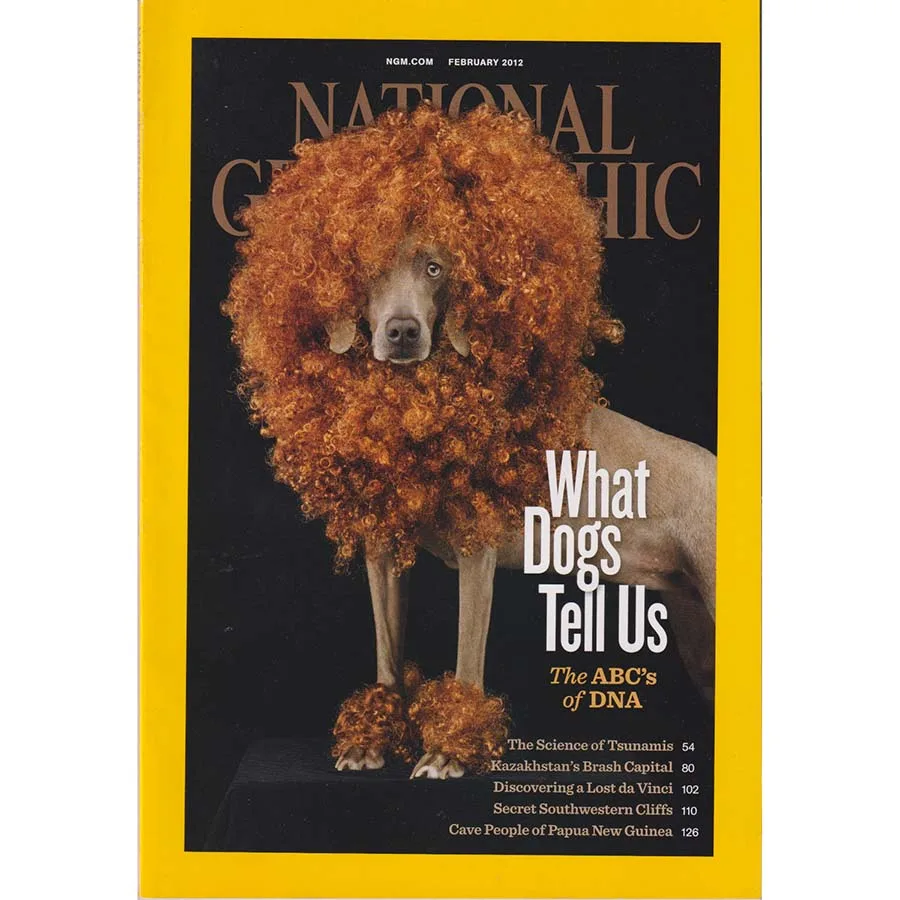
National Geographic, February 2012 is the rare issue that manages to be both a serious scientific publication and a fashion magazine for creatures who have never once asked to be perceived. The cover alone is an instant classic: a dog wearing what can only be described as a full theatrical wig, staring straight through you with the exhausted patience of someone who has endured too many humans saying, “He loves it, honestly.” And then the headline arrives like a polite mic drop: “What Dogs Tell Us: The ABC’s of DNA.” Translation: your pet is adorable, yes, but also a walking genome with opinions.
Inside, it’s Nat Geo doing what it does best—taking something you think you understand (dogs: friendly, enthusiastic, occasionally weird about hoovers) and turning it into a gateway drug for big ideas: evolution, genetics, domestication, and the unsettling possibility that your dog knows you’re stressed before you do. It’s part science, part anthropology, part gentle reminder that humans didn’t “create” dogs so much as enter into a long-running alliance with a species that saw our campfires and thought, “These people look snack-rich.”
And because this is National Geographic, it doesn’t stop at canine existentialism. You also get the science of tsunamis (a sober deep dive into the ocean’s ability to turn into a wall), Kazakhstan’s brash capital (architecture with the confidence of a new credit card), discovering a lost da Vinci (because art history loves a dramatic reappearance), secret southwestern cliffs (the kind of landscapes that make you whisper “how is this allowed?”), and cave people of Papua New Guinea (a reminder that the world is still vast enough to surprise the overconfident).
It’s a perfectly balanced February read: one part fluffy nonsense, three parts serious wonder, and a steady undercurrent of “the planet is incredible and also occasionally terrifying.” You’ll start by laughing at the wig-dog, then find yourself 40 minutes later thinking about genetic bottlenecks and plate tectonics, which is exactly how they get you.
Condition: Good, meaning it’s ready for rereading, coffee-table flexing, or quietly judging your browsing habits from a stack of other “I meant to read this” magazines. Sold by Crappy Old Books, which feels fitting: the grand mysteries of DNA, disaster science, lost masterpieces, and hidden worlds—delivered with the same casual shrug as a second-hand paperback and a mild smell of nostalgia.
Keep browsing: See more National Geographic books Other books by National Geographic
