


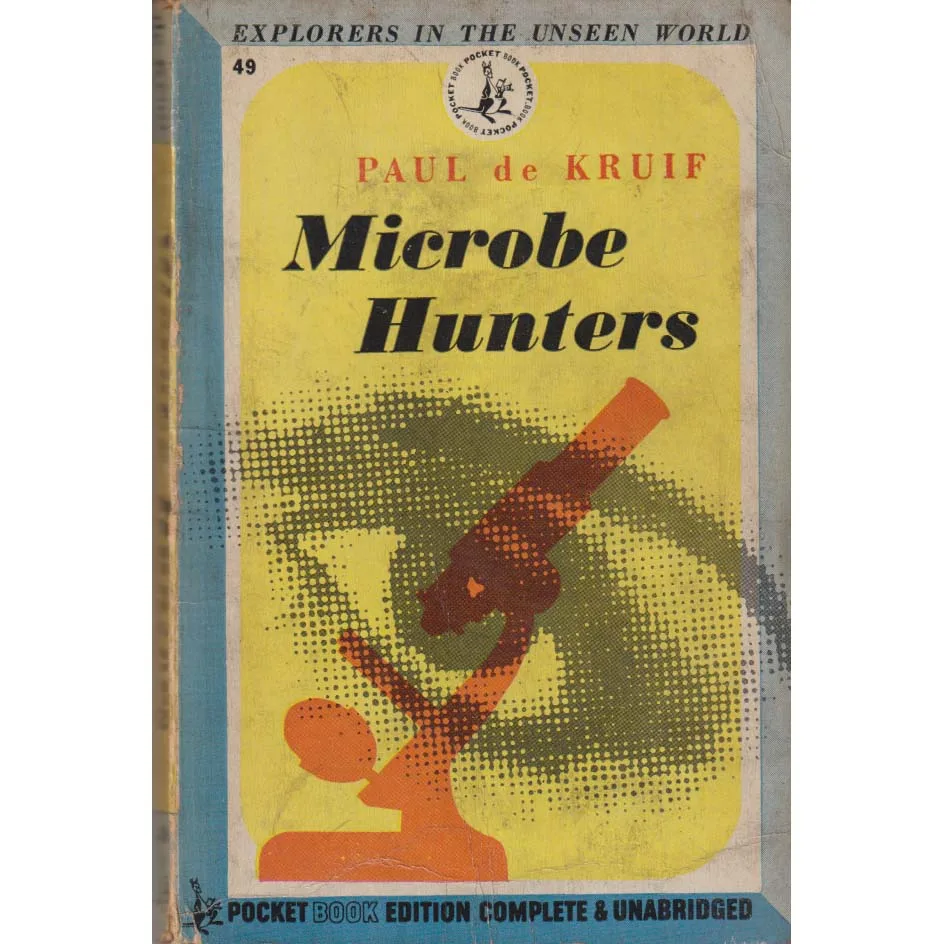
Microbe Hunters
Publisher: Pocket Books
Format: Paperback
ISBN: none
Microbe Hunters (1945) by Paul de Kruif — Pocket Books
ISBN: None (because 1945 expected you to identify a book by its title, not a laser scanner)
Condition: Good (as sold by Crappy Old Books, where “Good” means “still contagious with enthusiasm”)
Some books make science feel like homework. Microbe Hunters makes it feel like a swaggering adventure story in which the villains are invisible, the heroes are stubborn, and the plot twists involve Petri dishes, bad microscopes, and the occasional professional feud. It’s the kind of book that looks modest—just a vintage paperback—until you start reading and realise you’ve been recruited into a thriller where the stakes are: literally everyone not dying of something preventable.
Paul de Kruif had a gift for turning laboratory history into human drama. This isn’t a dry timeline of discoveries; it’s a parade of brilliant, obsessive, frequently difficult people peering into the unknown and refusing to look away. Expect ambition, rivalry, accidents, breakthroughs, moral panic, and moments of triumph that arrive not with fireworks but with someone quietly muttering, “I think I’ve got it,” while the rest of the world carries on blissfully unaware.
You’ll meet the great names of early microbiology—figures who chased down the causes of plague, cholera, anthrax, puerperal fever, rabies, and a whole gallery of microscopic mischief. But the real hook is the tone: de Kruif writes scientists as characters, complete with egos, blind spots, hunches, and the kind of relentless curiosity that borders on being a personality disorder. It turns out the “scientific method” is often: argue, fail, argue again, get lucky, then be right very loudly.
And reading a 1945 edition adds an extra layer of historical electricity. This is post-war, mid-20th-century confidence in progress: a time when modern medicine was accelerating, antibiotics were reshaping expectations, and the idea that we might actually outsmart disease felt not just possible but inevitable. (Cue the irony: you, in the future, know it’s never that simple. Microbes did not receive the memo.) Still, there’s something deeply comforting about a book that celebrates knowledge won by grit, patience, and the refusal to accept “mystery” as an answer.
It’s also a book that quietly teaches you how science really works: not as a clean march of genius, but as a messy, human process full of wrong turns, half-right ideas, and breakthroughs that only look obvious after the fact. If you like your nonfiction with momentum, peril, and a sense of wonder that doesn’t require special effects, this is a classic.
This copy is a Pocket Books edition in Good condition from Crappy Old Books—meaning it’s sturdy, readable, and pleasantly seasoned by time. Expect honest vintage wear: maybe a bit of rubbing, lightly toned pages, that faint old-paper aroma that says “I have outlived several medical fashions.” But the important thing is it’s still entirely capable of doing what it was born to do: make you look at the world and think, So that’s what was trying to kill us.
Buy it if you like:
-
scientific discovery told like an adventure serial
-
history with microscopes, rivalries, and dramatic “aha” moments
-
books that make you grateful for handwashing (without nagging)
-
vintage paperbacks with big ideas in small formats
Microbe Hunters: part biography, part detective story, part love letter to curiosity—served in a tough little 1945 paperback that has survived perfectly well without antibiotics, thank you. Courtesy of Crappy Old Books.
Keep browsing: See more Academic books Other books by Paul de Kruf
