


Clocks And Watches - An Historical Bibliograhy
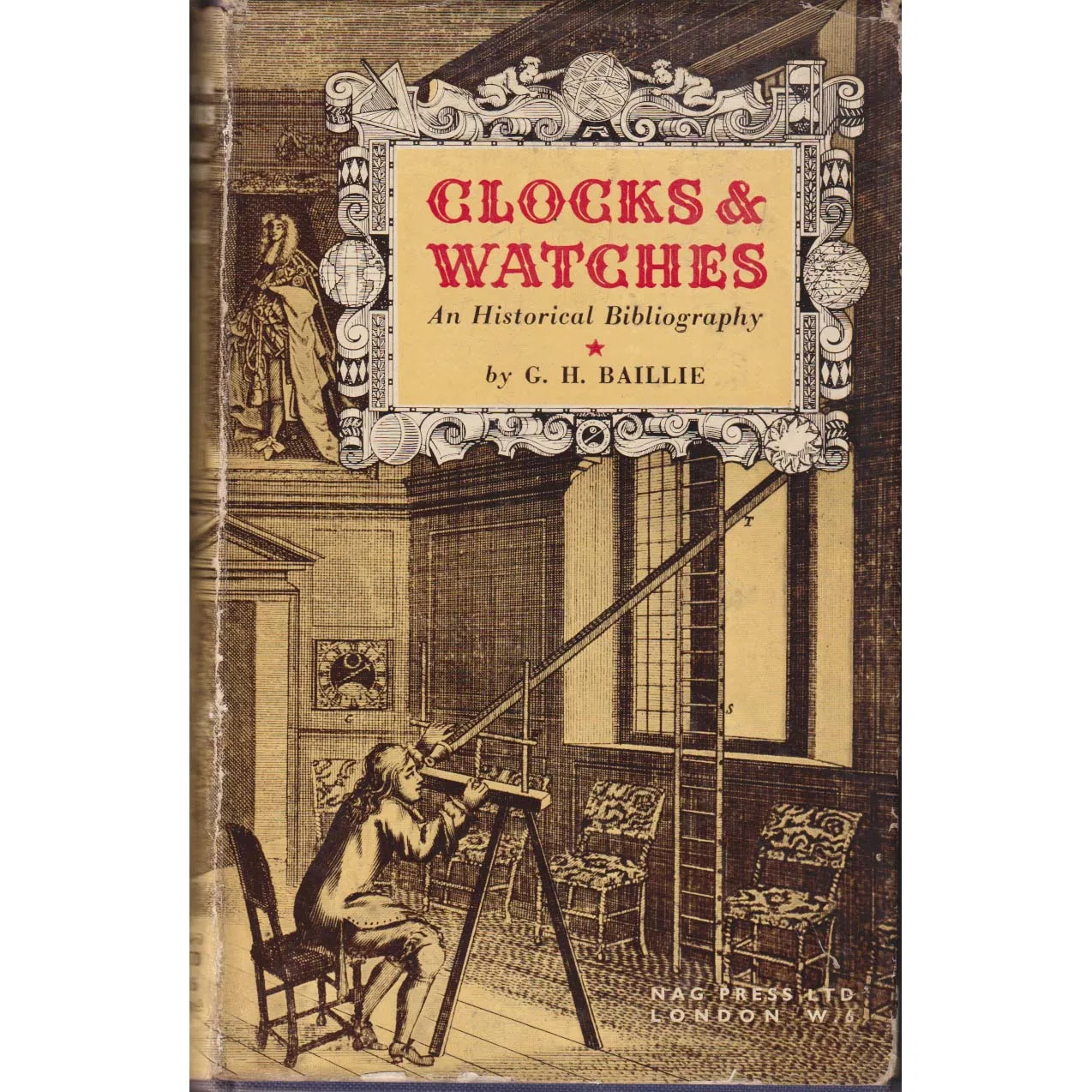
Publisher: NAG Press
Format: Hardback
ISBN: none
Clocks and Watches – An Historical Bibliography (1951) by G. H. Baillie — NAG Press
ISBN: None (because in 1951, identification was done with stern handwriting and mutual respect)
Condition: Good (as sold by Crappy Old Books, who know a thing or two about surviving the decades)
Some books tell time. This one tells you what people have written about telling time. Which is even better, because it’s the sort of niche, beautifully over-specific masterpiece that makes you realise civilisation didn’t merely invent clocks—it invented entire ecosystems of earnest scholarship to discuss them, cross-reference them, argue about them, and file them under the correct heading.
Clocks and Watches – An Historical Bibliography is exactly what it says on the tin: a bibliography. Not a cosy narrative history with charming anecdotes about watchmakers in candlelit workshops (though it will inevitably lead you to those). No, Baillie has come to do something far more serious: to assemble a map of the literature—books, pamphlets, articles, catalogues—so that anyone attempting to research horology can do so with maximum precision and minimum flailing.
And yet, somehow, it’s weirdly thrilling.
Because a bibliography is a secret confession: it quietly reveals what humans have cared enough about to document. And here the confession is loud and clear—people have cared a lot. About escapements. About fusees. About striking trains. About the ethics of “restoration.” About whether that particular dial is original or a later replacement and how dare you suggest otherwise. If you like the idea of knowledge organised into tidy lists, this is practically ASMR in book form.
It’s also a glorious snapshot of a world where expertise was built with paper, patience, and a willingness to chase obscure references through dusty catalogues. Baillie doesn’t offer you the final answer—he offers you the trail. This is the book you use when you want to go from “I have a watch, and it’s old” to “I am now involved in a multi-decade argument about provenance and I own a magnifying loupe.” It’s the gateway text to becoming the person who says “early English bracket clock” with a straight face at dinner.
And because it’s from 1951, it comes with that classic mid-century scholarly vibe: quietly authoritative, mildly allergic to nonsense, and entirely unbothered by modern expectations like “user-friendly.” It assumes you are here to work. It assumes you have a pencil. It assumes you will not be needing pictures.
This copy is Good, which in Crappy Old Books terms means sturdy, readable, and perfectly capable of being consulted repeatedly while you mutter “Where have I seen that reference?” Expect some honest age—perhaps a touch of shelf wear, maybe pages that have gently toned with time (the irony!), and the general air of a book that has spent decades being very useful without demanding applause.
Buy it if you enjoy:
-
niche reference works that feel like joining a secret society
-
the romance of scholarship: lists, citations, and obsessive completeness
-
clocks, watches, and the idea that timekeeping is basically applied philosophy
-
books that don’t try to entertain you, but accidentally do anyway
Clocks and Watches – An Historical Bibliography: for when you don’t just want to know what time it is—you want to know who wrote what about time, when they wrote it, where it was published, and which rabbit hole you’ll be falling into next. A perfectly sensible purchase, in other words.
Keep browsing: See more Antiques books Other books by GH Baillie
