


Southeys Life Of Nelson
Publisher: Oxford University Press
Format: Hardback
ISBN: none
Southey’s Life of Nelson (1911)
By H. B. Butler (ed.), after Robert Southey | Oxford University Press
ISBN: none (Heroic lives once travelled without barcodes)
Condition: Good as sold by Crappy Old Books
Here we have Southey’s Life of Nelson, but in its 1911 Oxford University Press school/classics edition, edited by H. B. Butler—the version that spent decades educating young Britons in the finer points of heroism, patriotism, and dying impressively at sea.
This is the biography that helped cement Admiral Lord Nelson as:
-
Half historical figure,
-
Half marble statue,
-
Half national myth (yes, that’s three halves; he was like that).
Originally written by Romantic poet Robert Southey, this life of Nelson is such a classic that by 1911 it had been turned into a respectable OUP volume, the sort of book that might be handed as a prize to a promising schoolboy who could spell “Trafalgar” without blinking.
What’s inside (besides gunpowder and reverence)
You get the full story arc:
-
Norfolk beginnings – small, sickly lad, clearly not destined for anything ordinary.
-
Midshipman years – seasickness, discipline, early flashes of lunatic bravery.
-
Meteoric rise – a man who regards enemy fleets as opportunities rather than discouragements.
-
The big set-pieces:
-
Cape St Vincent – general showing off.
-
The Nile – a masterclass in “let’s attack at night, what could possibly go wrong.”
-
Copenhagen – famously ignoring orders in a way modern HR policies wouldn’t love.
-
Trafalgar – the grand finale: decisive victory, patriotic apotheosis, unfortunate bullet.
-
Southey (with Butler guiding the text and notes) is not writing a cold, modern, revisionist biography. This is heroic narrative, with a clear moral arc: duty, courage, genius, sacrifice, and just enough romance and scandal to keep everyone awake.
The tone: Romantic hero worship, OUP edition
Expect a combination of:
-
Southey’s elegant, slightly purple prose – composed in the early 19th century, when you could describe a man’s character for three pages before letting him say anything.
-
Butler’s early 20th-century scholarship – introductions, notes, and the occasional editorial nudge to keep things academically respectable for 1911 students.
You get:
-
A Nelson who is very much the inspirational Great Man,
-
A good dose of moral commentary: courage good, cowardice bad, dithering unforgivable,
-
And an assumption that you, reader, might learn something about how to live (ideally with fewer cannonballs).
It’s all very earnest, but in a way that’s oddly refreshing in the age of “both-sides” takes.
This particular copy
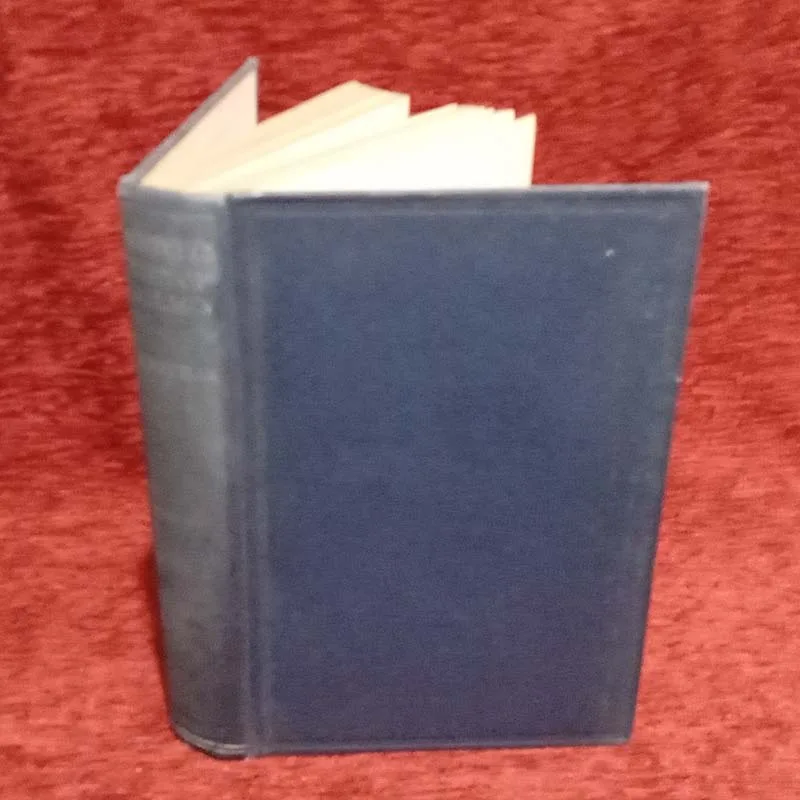
From the photo:
-
Dark blue cloth boards with a plain, blind-ruled design and gilt lettering on the spine, now gently sunned and softened by time.
-
Condition: Good – in Crappy Old Books language, that means:
-
Binding still firm, pages all present, no mutinies in the text block.
-
Corners and spine ends a bit bumped from a century of shelving, but nothing catastrophic.
-
Boards with light rubbing and the odd tiny mark – think “weathered officer’s coat” rather than “shipwreck”.
-
Inside:
-
Clean, readable pages, probably delicately tanned;
-
No reports of catastrophic underlining, so you’re free to form your own opinions about the admiral without ghostly exam notes interfering.
This is the sort of book that looks exactly right on a shelf between Dickens and a battered atlas.
Why you might actually want this
-
You’re a Nelson / naval history enthusiast who wants the classic literary life, not just modern rehashes with glossy plates.
-
You enjoy watching how 19th-century hero worship was packaged for early 20th-century education—it’s history squared.
-
You’re into compact but substantial OUP hardbacks that radiate “I passed exams before you were born.”
-
You suspect that, however revisionist modern history becomes, there’s still something to be said for the old-fashioned story of a man who simply refused to do anything quietly.
Also: it’s weirdly soothing to read about someone whose life purpose was extremely clear, even if it did involve a distressing number of broadsides.
The vibe
Reading Southey’s Life of Nelson in this 1911 Oxford edition feels like:
-
Sitting in a wood-panelled classroom while a teacher declaims, “Now this, boys and girls, is how a life is lived.”
-
Being swept along by a narrative that has no doubt whatsoever that decisive action is better than caution.
-
Watching the creation of a national legend in real time—before the age of irony, but after the age of wooden ships.
It’s part biography, part myth-making, part time travel into how a previous age wanted its heroes presented.
Condition vs. Glory
-
Physically: Good – a touch faded at the spine, but entirely seaworthy and ready for many more voyages from armchair to imagination.
-
Literarily: rich in story, strong on character, unashamedly admiring; an essential artefact of how Britain once told itself the story of Nelson.
Offered by Crappy Old Books, where the admirals are historical, the bindings are blue, the condition is Good, and the only shots fired are still ringing out from Southey’s rolling periods.
Keep browsing: See more History books Other books by HB Butler
