


Protagoras
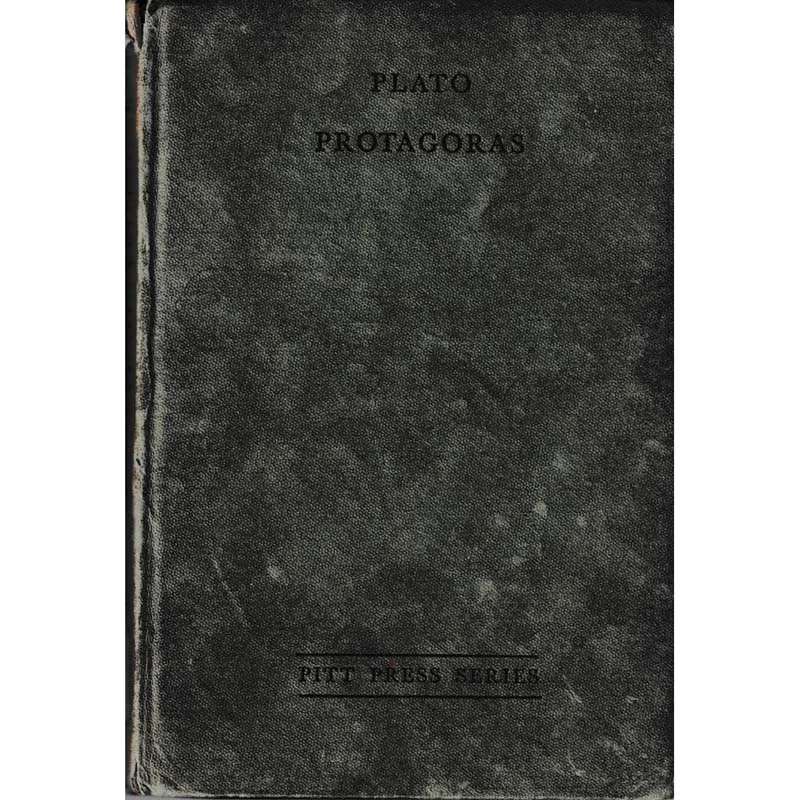
Publisher: Pitt Press Series
Format: Hardback
ISBN: none
Protagoras (1940) — Plato (Pitt Press Series)
ISBN: none (wasn’t invented when this little classic was setting homework)
Condition: Fair (the optimistic sort of “fair” that means it still has pages and most of them are attached)
Imprint: Crappy Old Books
Provenance: Ex-school copy, Old Palace School, Croydon (smells faintly of chalk, ink, and quiet rebellion)
Behold a hardy survivor of the British classroom: Plato’s Protagoras in the worthy Pitt Press livery, the exact shade of scholastic seriousness that says, “Please turn to page 17 and stop throwing rubbers.” This copy has been educated within an inch of its life and is now ready to educate your bookshelf. Expect institutional stamps with the solemnity of a bishop’s blessing, a pencilled shelfmark that refuses to fade, and the spectral outline of a long-retired checkout card. The moral: libraries may forget you; ex-school books never do.
“Condition: Fair” here means charmingly imperfect. The covers show the honest scuffs of corridors bravely faced. The spine is firmish (like a housemaster’s handshake), with a little give where generations of pupils prised it open to underline “virtue can be taught?” in faint 2B. There is foxing, but only the well-mannered, tea-biscuit kind. Corners are agreeably softened—think of them as Aristotelian: rounded off by experience. A few pages bear discreet annotations, the intellectual equivalent of whispered asides: “Ask Miss about sophists” and the occasional emphatic “???”
Inside you’ll find Socrates in peak tutorial mode, Protagoras billing by the hour, and a supporting cast of Athenians who would have adored Croydon if only they’d had the tram. The Pitt editors keep things brisk: proper notes, proper glosses, and all the pleasantly pedantic apparatus that made Britain the world capital of margin-squeezing. It’s the kind of school edition that assumes you can take a joke and a gerund.
As a reading copy, it’s superb; as a relic, it’s practically GCSE archaeology. It will sit handsomely on a desk, on a train, or under a stack of papers labelled “Must Read Plato.” Ideal for philosophers, teachers, reformed sophists, and anyone who suspects that the debate about teachable virtue was really about homework all along.
Crappy Old Books guarantee: we sell the sort of books that have already passed an exam. Expect character, not glamour. If you want mint, buy chewing gum. If you want the wisdom of Athens wearing a slightly battered school blazer from Croydon, you’ve found your edition.
Keep browsing: See more Ancient Classics books Other books by Plato
