


Criminal Types In Shakespeare
Publisher: Methuen
Format: Paperback
ISBN: none
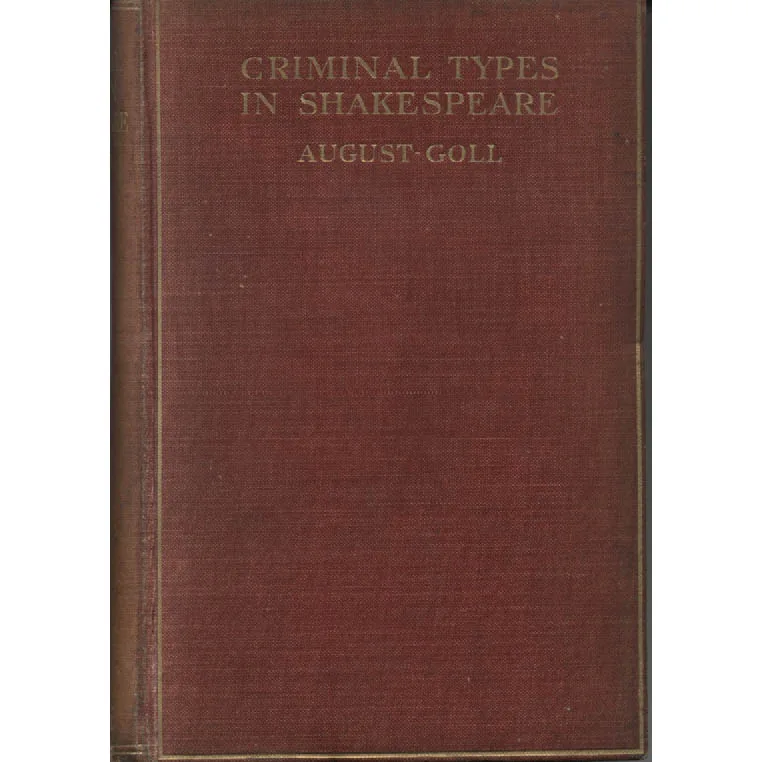
Presenting Criminal Types in Shakespeare (1909) by August Goll, published by Methuen—a brisk Edwardian safari through the underworld of the Shakespearean mind, where motives wear ruffs and alibis arrive in blank verse. ISBN: none (from that noble era when a printer’s colophon did the heavy lifting). This copy is sourced from the gloriously self-deprecating Crappy Old Books, graded Condition: Good—meaning the pages are steady, the spine is upright, and the only thing truly crooked here is the behaviour under discussion.
What’s inside? Goll—cool-headed, casebook in hand—audits the Bard’s roster of rogues like a criminologist moonlighting as a dramaturge. Iago becomes a study in sustained malice, Macbeth the textbook of ambition gone anaerobic, Lady Macbeth a seminar in complicity and sleep hygiene, Richard III the smiling thesis on opportunism, Edmund the dissertation on self-invention, Autolycus the pickpocket with a PR strategy, and so forth. The point isn’t to lock anyone up; it’s to unlock how Shakespeare makes wrongdoing make sense on the page. Expect a tour through motive, method, and the curious comfort that even the cleverest villain cannot outwit a properly placed soliloquy.
Expect:
-
Case files in doublet and hose—personality notes, behavioural tells, and the occasional metaphorical fingerprint dusted off a couplet.
-
Early-twentieth-century braininess—learned without being foggy; confident, but not (too) doctrinaire.
-
A taxonomy of mischief—from petty swindles to kingdom-scale catastrophes, arranged with tidy, almost librarian calm.
-
Ethical weather reports—storms of conscience, fog banks of self-justification, and those eerie calms before Act V.
-
Stagecraft meets psychology—how entrances and exits are really opportunity and pressure doing the choreography.
About this particular volume: Good means the boards are presentable, the corners courteous, and the pages clean—no furious marginal prosecutions, no spilled ink masquerading as bloodstains. It looks like it has lived on sensible shelves, travelled in a satchel that also contained sandwiches, and been read by someone who knows the difference between a motive and an excuse.
Buy it if you’ve ever:
-
Wanted a pocket Crown Court for the canon—verdicts not required, just better questions.
-
Suspected that a villain’s best weapon is syntax.
-
Needed fresh language to explain why some speeches charm while stealing your wallet.
-
Admired a book that treats Shakespeare not as sacred marble but as a living crime scene where clues keep turning up under the iambs.
Why Methuen? Because they were there for generations of actors and readers who like their scholarship with clean lines and sturdy stitching. Why August Goll? Because he brings an inspector’s patience and a critic’s ear, hearing the small hinge on which big betrayals swing. And why Crappy Old Books? Because behind the cheeky sign is a reliable stash of pre-loved volumes—like this Good copy—ready to cross-examine your assumptions with decorum.
In short: Criminal Types in Shakespeare is a wry, clear-eyed roll call of the Bard’s better baddies and borderline cases—a handbook for anyone who thinks motive, means, and metaphor belong in the same scene. Delivered in Good condition from Crappy Old Books, where the only thing “crappy” is the old habit of reading villains without taking notes.
Keep browsing: See more Literary Classics books Other books by August Goll
