


Managerial Leadership In The Post-Industrial Society
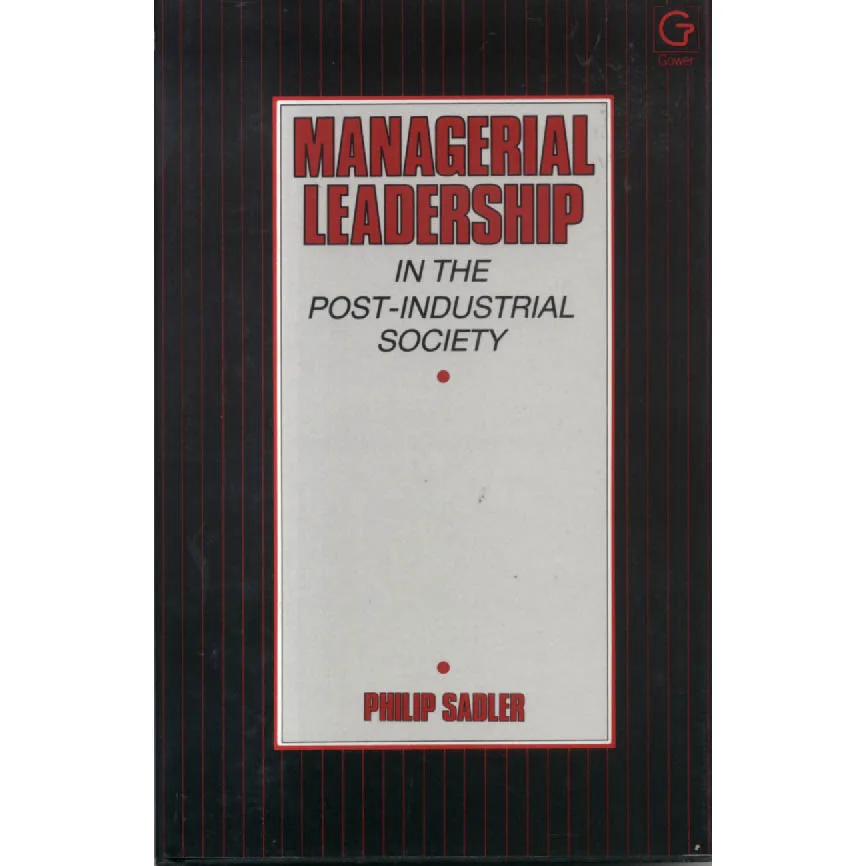
Publisher: Gower
Format: Hardback
ISBN: 9780566026119
Presenting: Managerial Leadership in the Post-Industrial Society (1988, Gower) by Philip Sadler — a handbook for the brave souls who discovered that “post-industrial” means the factory vanished and left you in charge of a jazz band. ISBN: 9780566026119. Condition: Near Fine, which in the refined dialect of second-hand bookmongers translates as “smart suit, polished shoes, and not a single coffee-ring on the quarterly vision.”
This is leadership with shoulder pads and staying power: part playbook, part time capsule, part eerie prophecy. Sadler surveys a world where hierarchies relax their backs, information behaves like weather, and “human resources” remember they are, in fact, human. He swaps clipboards for cultures, supervisors for stewards, and ecstatic memos about “empowerment” for practical ways to stop meetings from reproducing like rabbits. Expect chapters that tackle strategy without spreadsheets as life support, structures that bend without snapping, motivation that outlasts the doughnuts, and ethics that aren’t just a poster near the lift.
From the outside: classic Gower gravitas — tidy cover, unfussed spine, and pages with the kind of gentle ivory that says “kept on an executive shelf, consulted rather than punished.” Our Near Fine means: minimal shelf rub, corners as crisp as a mission statement, and text so clean it could present to the board without slides. No fluorescent graffiti, no battlefield Post-its; just a poised, almost startlingly pristine copy ready to look confident beside your stapler.
Inside, Sadler keeps it clear-eyed and unsentimental. He sketches the shift from machines to minds, bosses to leaders, orders to outcomes. He’s keen on vision that can be audited, communication that doesn’t need a decoder ring, and systems that encourage initiative without inventing chaos. There’s climate before it was culture, agility before it wore trainers, and accountability without the ceremonial blame game. Real examples intrude politely; frameworks click together with satisfying “oh, that’s why” sounds.
The tone? Brisk, pragmatic, occasionally wry — the managerial equivalent of a well-run agenda that ends early. Jargon is present but house-trained. Diagrams appear, make their point, and leave. You’ll come for the “post-industrial” mystique and stay for sentences that still work on Tuesday mornings, including the one where you must decide whether to fix a process or adopt it like a stray.
Why this copy? Because Crappy Old Books specialises in the noble paradox: decidedly un-crappy management classics with just enough patina to prove a human turned the pages. Near Fine here means “briefed, not battered” — the perfect companion for your desk stack labelled “read, then pretend it was my idea.”
Ideal for:
-
Leaders who inherited a pyramid and woke up inside a network.
-
MBAs who suspect the most radical KPI is clarity.
-
HR people who keep a spare strategy in their pocket “just in case.”
-
Anyone who has ever said “we’re a learning organisation” and then looked nervously at the calendar.
Potential side effects: spontaneous org-chart redrawing, a measurable reduction in meeting half-life, and the urge to replace “synergy” with “please talk to each other.” May cause allergic reactions to buzzwords unsupported by actions.
In short: a crisp, sensible, quietly prescient manual for guiding grown-ups through work that doesn’t come with a lever or a whistle. Managerial Leadership in the Post-Industrial Society remains a deft reminder that culture eats strategy, but only after leadership sets the table — brought to you by Crappy Old Books, where the name is self-deprecation and the stock is boardroom-ready.
Keep browsing: See more Business books Other books by Philip Sadler
