


Criminology
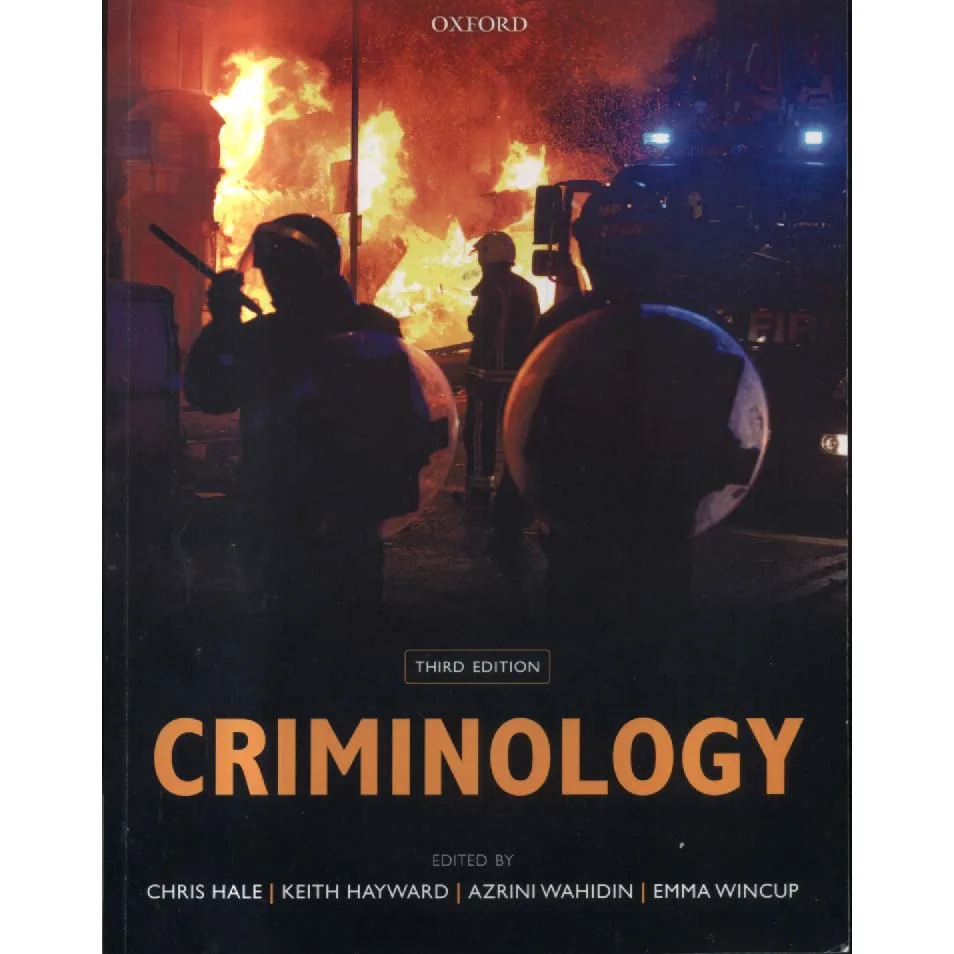
Publisher: Oxford University Press
Format: Paperback
ISBN: Oxford University Press
Polish your magnifying glass, straighten your methodology, and prepare to meet the only suspect that always shows up at the scene: society. Criminology (2009) by Chris Hale—issued by Oxford University Press—is the big, lucid handbook for anyone who has ever looked at a headline and thought, “Yes, but what actually happened here?” It’s the field guide to mischief and response, cause and consequence, theory and the midnight knock on the door—written with cool prose and an allergy to melodrama.
Hale doesn’t chase sirens; he interviews the data, checks the alibi, and asks the city how it sleeps. Expect a tour through the whole raucous constellation: classic theories (strain, control, learning) set alongside contemporary lenses (routine activity, environmental criminology, life-course turns); victimology that remembers victims are people and not just statistics; policing and prevention that distinguish between what feels tough and what actually works; courts, prisons, and community sanctions parsed with a policy wonk’s precision and a citizen’s conscience. The tone is calm, empirical, faintly amused by panic—and persistently interested in what the evidence says when the microphones are off.
Inside, you’ll find:
-
Crime trends demystified: rises, falls, plateaus, and the awkward role of measurement itself.
-
Why people offend (plural, on purpose): structure, opportunity, peers, neighborhoods, and the occasional terrible life-admin.
-
Who gets victimised and how risk actually works when you zoom past anecdotes.
-
Policing in practice: hot spots, problem-oriented thinking, discretion, legitimacy—and why trust is a tactic, not a by-product.
-
Punishment without drama: sentencing patterns, prison realities, reentry hurdles, and the modest miracles of programs that quietly reduce reoffending.
-
Policy with receipts: what survives a randomized trial, what collapses on contact with reality, and what we keep doing anyway because it photographs well.
Hale’s secret weapon is proportion. He grants theory its podium, then drags it outside for a walk with data; he lets emotion speak, then introduces it to context. The result is a book that replaces moral panic with testable claims, swaps “common sense” for clear sense, and sends you back into the world with fewer certainties and better questions.
Why this copy? It arrives via the gloriously candid emporium Crappy Old Books, in Condition: Good—translation: square spine, clean pages, minor shelf-whisper. The academic equivalent of a well-run community meeting: orderly, legible, tough enough for repeated consultation. It will sit politely beside your laptop while you fact-check the dinner-table hot take.
Vital stats for your evidence locker:
-
Title: Criminology
-
Author: Chris Hale
-
Publisher: Oxford University Press, 2009
-
ISBN: (publisher-marked; standard OUP edition details)
-
Condition: Good (tidy, reliable, citation-ready)
-
Vendor: Crappy Old Books—the name confesses; the stock corroborates.
Buy it for the scope; keep it for the discipline—that habit of pausing before outrage, checking the numbers, and remembering that good policy is just good evidence with a diary. After a few chapters you’ll catch yourself diagnosing news stories for methodological alibis, praising a graph for not lying, and asking the eternal criminological question with a new calm: what works, for whom, in what conditions—and how do we know?
Keep browsing: See more Crime books Other books by Chris Hale
