


The Story Of Opera
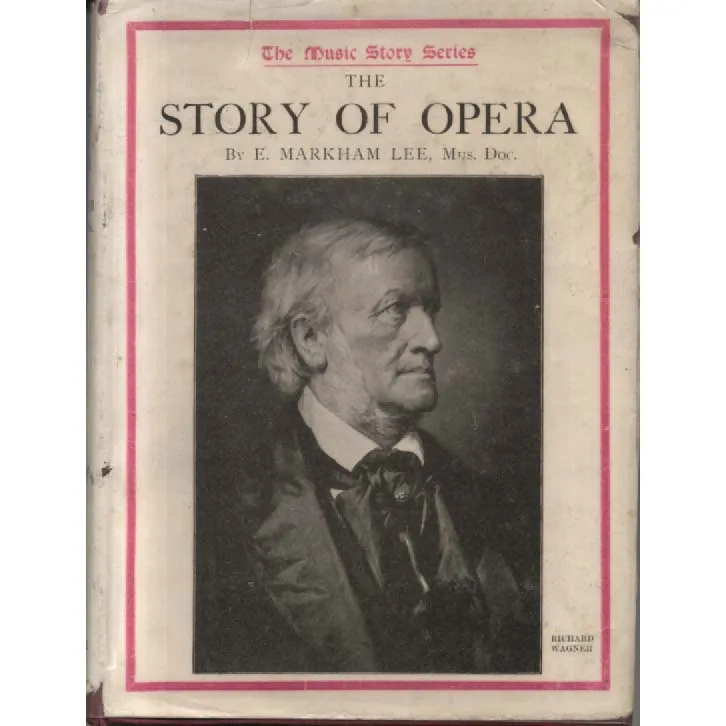
Publisher: Scott Publishing
Format: Hardback
ISBN: none
The Story of Opera (1925)
by E. Markham Lee • Scott Publishing • ISBN: none • Condition: Good • Sold by Crappy Old Books
Before search bars, there were people—calm, tweedy people—who could explain what on earth a cabaletta was and why Wagner keeps handing the brass section a gym membership. E. Markham Lee was one of those noble guides, and The Story of Opera is his grand tour from velvet curtain to final curtain call: a pocket-sized proscenium where Monteverdi strolls in wearing history’s first sensible recitative, Mozart turns chaos into clockwork, Verdi weaponizes melody, Wagner invents the infinite sentence, and Puccini makes you cry in 4–6 business pages.
Written in 1925 (when an aria could still stop time and an encore might start a riot), Lee’s book is the kind of lucid, unflappable primer that assumes you are clever and rewards you for proving it. He decodes the secret signals—overtures as thesis statements, leitmotifs as musical name tags, bel canto as athletic elegance—and treats librettos like what they are: highly caffeinated morality plays with excellent costumes. You’ll learn why sopranos always seem to have complicated evenings, how a baritone can ruin your day with just one well-placed suspicion, and where tenors keep their high notes (answer: somewhere between panic and glory).
Because it’s from the age of hat pins and honest footnotes, the prose is delightfully dry in just the right places, with sudden flashes of warmth—the textual equivalent of an orchestra quietly tuning and then absolutely going for it. Expect brisk sketches of the big names, affectionate nods to the also-rans, and the gently devastating observation that opera survives every trend by sheer force of being louder, larger, and somehow truer than the room it’s in.
What you’ll pick up along the way (besides a craving for velvet):
-
How an overture tells you who’s lying and who’s merely lyrical.
-
Why recitative moves the furniture and aria rearranges your feelings.
-
The difference between bel canto elegance, verismo realism, and Wagnerian “pack a sandwich.”
-
The secret life of the orchestra pit, where the conductor negotiates with destiny and the third bassoon keeps civilization intact.
Field notes from Crappy Old Books (specialists in noble paper and glorious nonsense):
Condition is graded Good—the respectable, still-sings-on-pitch kind of Good. The binding is sound, the pages turn with civilized rustle, and there’s the expected gentle patina of a life spent near lamps and opinions. No ISBN, of course (1925: when book numbers were called page numbers), but plenty of scholarship, cleanly set. Minor foxing may cameo like a tasteful sepia filter. If you catch a faint whisper of old library, consider it the ghost of a velvet curtain.
Who is this for?
Newcomers who want a map before the music starts; seasoned operagoers who enjoy nodding along while muttering “quite so”; readers who like their culture explained without being scolded; anyone who suspects that the phrase “it isn’t over till…” owes royalties to a mezzo with opinions. It’s the ideal interval companion: compact, witty, and more helpful than that stranger in Row G insisting you’ve mispronounced Guglielmo.
Open it anywhere and you’ll hear the orchestra tune under the text: history humming, voices ready, the stage set. Lee won’t bully you into reverence; he’ll give you reasons to feel it. By the end, you’ll know why the lights dim, why the violins lean forward, and why, even a century later, opera still walks in like it owns the night.
In short: a charming, brainy, fully house-trained guide to the biggest indoor voice humanity ever invented—wrapped in 1925 manners and still entirely showtime. Curtain up.
Keep browsing: See more Music books Other books by E Markham Lee
