


National Geographic 1990 February
Publisher: National Geographic
Format: Paperback
ISBN: none
National Geographic – February 1990
Publisher: National Geographic | ISBN: none (seals don’t register ISBNs) | Condition: Good (worn at the edges, but still glossy enough to reflect a tide pool)
Surfacing once more courtesy of Crappy Old Books
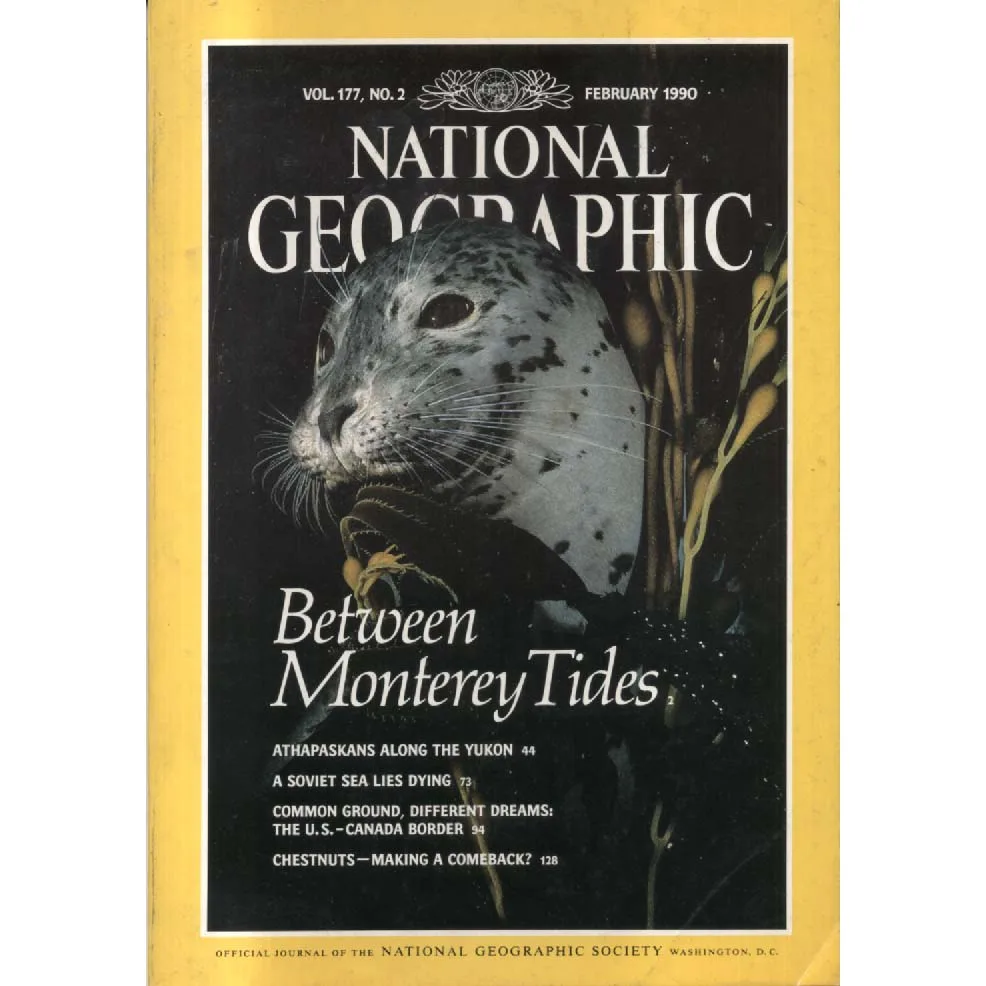
February 1990: the Berlin Wall had just fallen, Nelson Mandela was weeks away from release, and National Geographic put a whiskered seal on its cover to say, “Yes, geopolitics matter, but so do the tides in Monterey.” The result: a perfectly 1990 issue where the fate of nations and the fate of mollusks coexist without irony.
The contents bob up and down like kelp in the surf:
-
Between Monterey Tides — tide pools, otters, kelp forests, and one suspiciously photogenic seal who looks like it’s about to release a jazz album.
-
Athapaskans Along the Yukon — portraits of life in the far north, where subsistence meets modernity and snowmobiles meet traditional fur-lined boots.
-
A Soviet Sea Lies Dying — an ecological obituary for the Aral Sea, which 1990 readers still thought might be saved if enough scientists frowned at it.
-
Common Ground, Different Dreams: The U.S.–Canada Border — a tale of two nations joined by politeness, divided by beer prices.
-
Chestnuts — Making a Comeback? — a hard-hitting feature that finally gave the American chestnut the comeback narrative it had been waiting 50 years for. Spoiler: slow progress.
Condition: Good. Which here means the spine is intact, the seal is still staring soulfully from the cover, and the maps and photos remain lush enough to make you consider moving to a tide pool. Expect mild scuffing and just enough musty nostalgia to smell like the early 90s, back when fax machines were “the future.”
Why should you want this issue?
-
Because seals with better cheekbones than you deserve a place on your coffee table.
-
Because tide pools are cheaper than aquariums and far trendier than aquascaping.
-
Because you’ve always wanted to know whether chestnuts really were on the comeback trail.
-
Because the U.S.–Canada border is the least dramatic frontier Nat Geo ever made dramatic.
-
Because nothing says “1990” like the Aral Sea still gasping for attention.
So here it is: National Geographic, February 1990 — an issue that swims between ecological earnestness and chestnut optimism, all framed in yellow. Offered, with a whisker of irony, by Crappy Old Books, where even tide pools come second-hand.
Keep browsing: See more National Geographic books Other books by National Geographic
