


The Hungarian Game
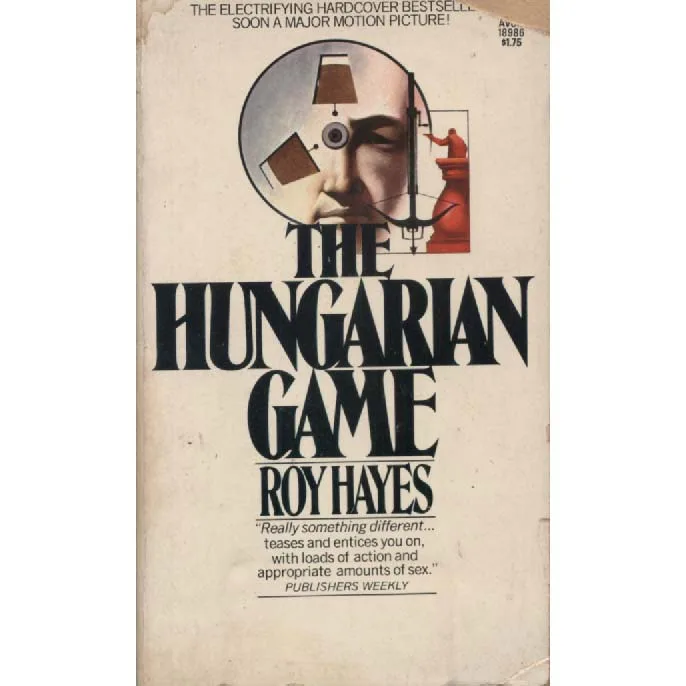
Publisher: Avon
Format: Paperback
ISBN: none
In a world where the game of chess could very well double as a metaphor for life, Roy Hayes’ 1973 masterpiece, The Hungarian Game, tantalisingly teeters on the edge of being both an intellectual treatise and an unintentional comedy. Published by Avon during an era when paperbacks had the unique ability to smell like both nostalgia and mothballs, this book is a curious artifact that’s likely been passed around more than your grandmother’s fruitcake at Christmas.
Slight dogging to the front and back cover, as per image.
With a title that invokes visions of smoky cafes in Budapest and the hushed whispers of chess grandmasters plotting their next moves over steaming cups of coffee, one might expect a riveting narrative filled with intrigue and strategic deception. Instead, readers are greeted with a whimsical collection of thoughts that meander through the minds of players who may or may not exist. Are they real-life chess champions? Are they figments of Hayes’ imagination? The answer, dear reader, is as elusive as a poorly placed pawn on a chessboard.
As you flip through the faded pages, you might find yourself contemplating whether the Hungarian Game is a riveting commentary on Soviet politics or just a fanciful romp through the author’s daydreams about chess clubs. Each chapter tantalises the intellect while simultaneously nudging the reader to question their own sanity. Is it a game, a game about games, or a philosophical treatise on the futility of existence? Spoiler alert: it likely answers none of these questions.
Unbeknownst to many, The Hungarian Game also offers a unique historical perspective on chess in Hungary, but only if you squint hard enough to draw meaning from Hayes’ peculiar prose. He invites you to consider the geopolitical implications of chess as if it were a diplomatic negotiation gone terribly, terribly wrong. To put it mildly, one could argue that Hayes takes the art of metaphor to new, dizzying heights, or perhaps, depths.
As far as characters go, they may as well be pieces on a chessboard: interchangeable and often misunderstood. You’ll meet the somber rook who yearns for a life beyond the confines of squares, the flamboyant knight who believes himself to be far more important than he really is, and the queen, of course, because every game needs a strong female presence—even if she’s perpetually stuck in a state of existential crisis.
Condition: Good. This book exhibits a delightful patina of age, with dog-eared pages that whisper stories of late-night readings and casual neglect. The spine may exhibit some wear, possibly from being forcefully opened in fits of frustration as readers grapple with Hayes’ labyrinthine thoughts. Page 87 has a coffee stain that adds a certain je ne sais quoi to its charm—after all, what’s a literary adventure without a splash of caffeine-induced chaos?
Readers are advised to keep a dictionary close at hand; Hayes’ penchant for elaborate vocabulary may lead to moments of delightful confusion. It’s a bit like trying to play chess with a deck of cards—challenging, perplexing, and oddly rewarding if you’re willing to suspend your disbelief and play along. With moments that are both laughable and enlightening, The Hungarian Game is a book that is as unpredictable as a game decided by a dice roll.
So, if you find yourself wandering in the aisles of Crappy Old Books, don’t overlook this peculiar piece of literary history. Whether you’re a chess aficionado, a lover of the absurd, or simply seeking a rollicking read to ponder whilst pretending to be profound, The Hungarian Game might just find a cozy spot on your shelf—if not as a conversation starter, then as a reminder that sometimes the game is far more entertaining than the outcome.
Keep browsing: See more Thrillers books Other books by Roy Hayes
