


Body Language
Publisher: Sheldon Press
Format: Paperback
ISBN: 0859694062
Summary of Body Language by Allan Pease
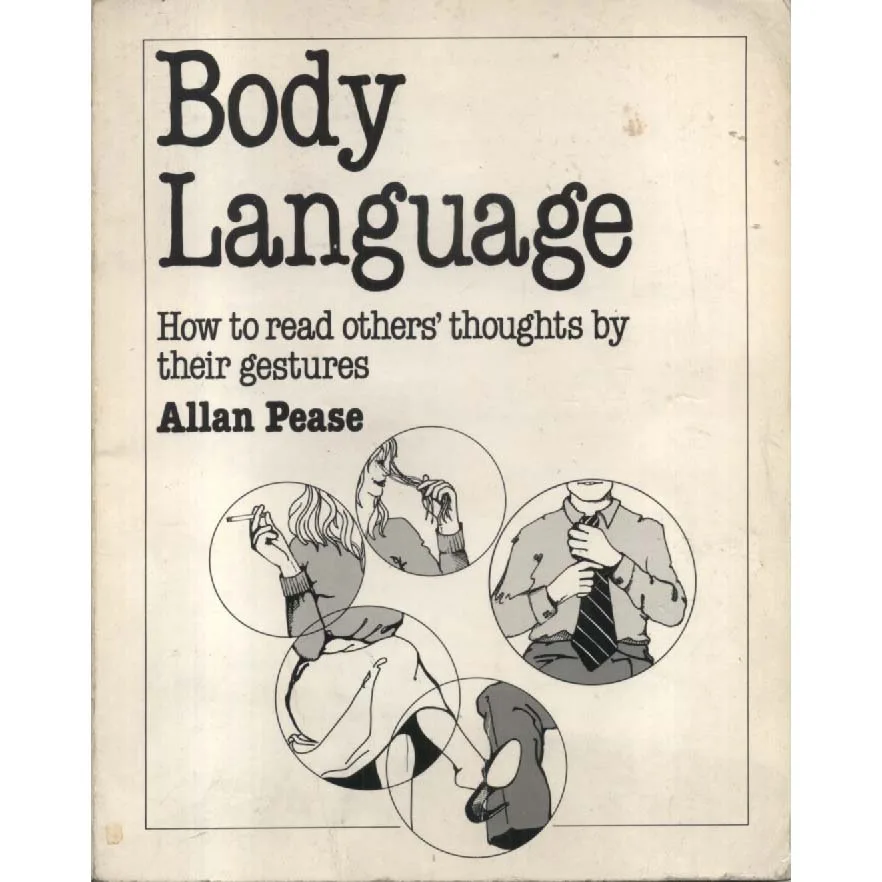
Allan Pease’s Body Language is a comprehensive guide to understanding and interpreting non-verbal communication. The book explores how body movements, gestures, facial expressions, and posture reveal a person’s true thoughts and emotions, often more accurately than words.
Key Themes:
-
The Power of Non-Verbal Communication
Pease emphasizes that over 60% of communication is non-verbal, making body language a crucial aspect of human interaction. -
Facial Expressions and Eye Contact
The book explains how eye movements, blinking rates, and facial expressions can indicate honesty, interest, or deception. -
Hand Gestures and Arm Movements
Different hand positions, such as open palms (honesty) or crossed arms (defensiveness), can reveal confidence, insecurity, or resistance. -
Posture and Personal Space
The way people stand, sit, or position their feet can indicate dominance, submission, or attraction. The concept of personal space and how its invasion affects interactions is also explored. -
Mirroring and Rapport Building
Pease highlights that people unconsciously mimic the body language of those they feel comfortable with, which can be a powerful tool for building trust and influence. -
Lie Detection
The book covers common body language cues associated with lying, such as touching the face, avoiding eye contact, or shifting posture. -
Cultural Differences
While many gestures have universal meanings, Pease explains that some body language cues differ across cultures and should be interpreted accordingly.
Conclusion
Body Language provides practical insights into reading and using non-verbal cues effectively. By understanding body language, readers can improve their communication skills, enhance relationships, and become more persuasive in both personal and professional settings.
Keep browsing: See more Academic books Other books by Allan Pease
