


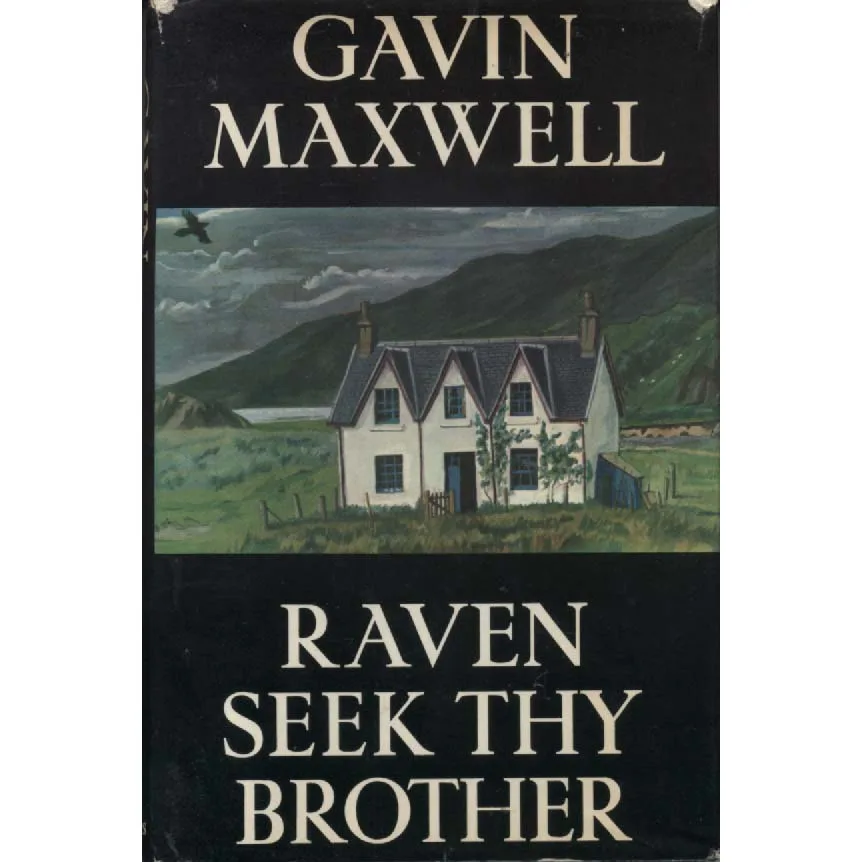
Raven Seek Thy Brother
Publisher: Longmans
Format: Hardback
ISBN: none
In the dim corridors of literary exploration, where oddities of thought collide with the mundane, we find Gavin Maxwell’s enigmatic masterpiece: *Raven Seek Thy Brother*. Published in the illustrious year of 1968—an era when bell bottoms and existential musings roamed freely—this tome serves as a curious reminder of the peculiarities of both the natural world and the human condition. Maxwell, a man who apparently took his inspiration from both the wilderness and a good cup of tea, beckons readers into a labyrinth of introspection that feels as tangled as your grandmother’s Christmas lights.
One might wonder about the title alone, which harks back to a time when ravens were viewed not merely as feathered creatures but as profound symbols of mystery and sibling rivalry. Perhaps it is a postmodern call for familial unity, or maybe it’s just a plea for a familial birdwatching club. Either way, readers are urged to look beyond the surface—though they might find themselves questioning if they’re after kinship or merely a well-cooked casserole as they plod through the pages.
Maxwell’s writing style oscillates between poetic whimsy and moments of stark realism, making you feel as if you’re simultaneously sipping a delightful Earl Grey while stepping barefoot on a rogue Lego piece. The author, known for his affinity for nature and wildlife, seems to be in a perpetual state of dialogue with the natural world. One can only hope that he doesn’t expect his audience to join in on this tête-à-tête with the flora and fauna. Spoiler alert: most readers may not be equipped for such spirited debates.
This book offers a blend of philosophical musings and anecdotes that will leave you either invigorated or baffled. You might ponder whether the raven is indeed seeking its brother, or if Maxwell’s prose is just a thinly veiled metaphor for the quest for meaning in one’s own life. What does it mean to seek? And more importantly, why is the raven so keen on family reunions? You’ll find yourself asking these profound questions while simultaneously wondering if you should have opted for a simpler read about a dog instead.
As you delve deeper, prepare to encounter a medley of characters that range from the whimsically eccentric to the existentially troubled. You may be treated to tales of bizarre escapades—some might even find them relatable, while others risk the danger of becoming existentially perplexed. Does Maxwell’s penchant for the odd and the obscure serve as a commentary on the absurdity of life? Or is it just a delightful romp through the minds of those who’ve perhaps spent too much time in the wild? The answer, dear reader, is as elusive as a well-cooked roast at a vegan potluck.
Condition: The physical state of this book is a testament to its adventures, having weathered time like a seasoned sailor on a particularly stormy sea. Expect creased pages, subtle stains reminiscent of a past owner’s questionable choices in beverages, and a cover that has seen better days—much like your high school gym teacher. It carries the scent of wisdom, or perhaps just a hint of mustiness. Either way, it adds character, much like the quirky relatives at family gatherings.
As you contemplate adding this second-hand curiosity to your collection, consider the myriad of possibilities it presents: a conversation piece for your coffee table, a gift for that friend who claims to love “deep literature,” or simply a chance to impress your next date with obscure literary references. Whatever your intention, *Raven Seek Thy Brother* is bound to elicit a response—be it admiration, confusion, or an urgent desire to discuss the inner workings of avian familial structures.
So, navigate your way through the offbeat allure of Gavin Maxwell’s work and remember that at Crappy Old Books, we not only celebrate the charm of antiquity but also the quirks that come along for the ride. What’s a little wear and tear when you can engage in profound existential debates with a raven? It’s all part of the experience, after all.
Keep browsing: See more Nature books Other books by Gavin Maxwell
