


The Lilies Of The Field
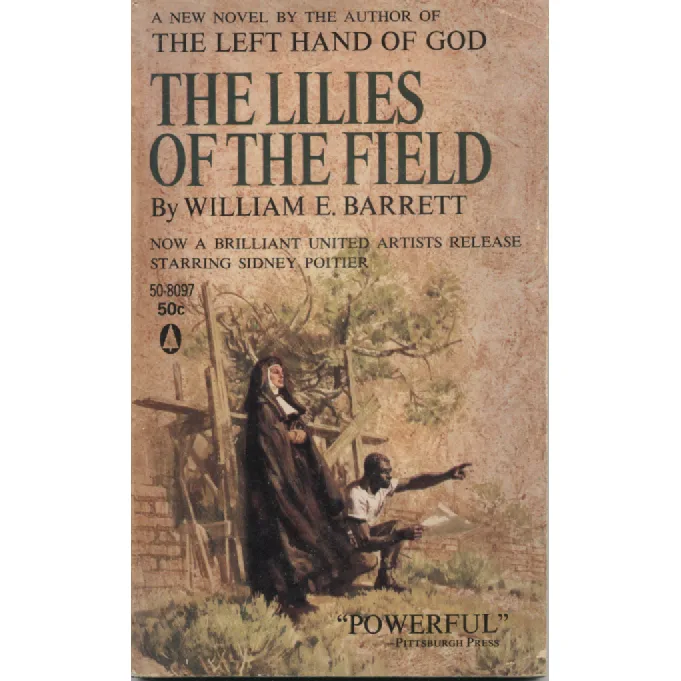
Publisher: Popular Library
ISBN: none
In an era when leisure reading was often accompanied by a cup of over-brewed tea and the faint aroma of questionable biscuits, William E. Barrett’s "The Lilies Of The Field" emerged from the depths of Popular Library in 1963—like a lark in a field of pigeons. Though the title suggests a pastoral meditation on flora and fauna, don’t be fooled. This is not a botany manual, nor a quaint gardening guide, but a curious exploration of faith, redemption, and the inexplicable charm of a certain group of nuns. Yes, nuns. Because who doesn’t love a dash of the divine in a world often dominated by the mundane?
Picture it: a dusty road where destiny and divine intervention skewer the ordinary. Barrett’s prose possesses a peculiar knack for intertwining the spiritual with the absurd. The story revolves around a man, lost in both the literal and metaphorical sense, who stumbles across a group of nuns tending to their rather ambitious flower garden. It’s as if you took a slice of life from a Sunday sermon and sprinkled it with a hint of irony, creating a brew strong enough to question your own existence—or at least your choice of reading material.
As readers, we are challenged to ponder profound questions while navigating the intriguing mishaps of our protagonist and his interactions with the nuns. Are they merely caretakers of lilies or are they, in fact, the embodiment of hope? Or perhaps just a quirky bunch who have mistaken lilies for something far more significant? The narrative is a meandering river of thoughts, meandering as if Barrett himself might have lost his way in the plot’s twists and turns, leading to delightful tangents that may or may not contribute to the larger picture.
Barrett’s work is replete with metaphysical musings and bizarre encounters, all delivered with a wry smile and a twinkle of mischief. His style dances between the profound and the ridiculous, as though he holds a philosophical debate at the local pub while also attempting to impress the barmaid. The writing’s charm lies in its ability to mix heavy themes with lighthearted prose, resulting in a book that is as much about the lilies as it is about the human condition—whatever that condition may be, particularly on a Tuesday afternoon.
But wait, dear reader! This tome does not merely exist to entertain. It serves a greater purpose: to remind us that life can be absurd, and sometimes, all one needs is a lily—or a dozen—to lift one’s spirits. You may find yourself laughing inappropriately at moments you shouldn’t, making awkward eye contact with your fellow readers as they react to Barrett’s unexpected comedic timing. And let’s be honest, who wouldn’t want a little chuckle amidst the solemnity of life?
Condition: The copy we have on offer from Crappy Old Books may show signs of having been read with fervor, with creases that suggest someone was deeply invested in the spiritual and floral dilemmas within. The pages might have yellowed, reminiscent of a well-loved diary, and the cover is more creased than a long-time yoga instructor. Yet, this merely adds to its character, enhancing the mystical journey through Barrett’s whimsical universe. Expect dog-eared pages, the occasional coffee stain marking a particularly exhilarating passage, and perhaps a faint aroma of nostalgia that wafts through the pages. It’s a used book that has lived a life, much like the nuns within its pages.
So, if you find yourself longing for a literary jaunt that challenges both your sense of humor and your understanding of faith, then "The Lilies Of The Field" awaits you. It’s a delightful detour from the ordinary, an odd blend of introspection and laughter, and perhaps a fitting reminder that in the garden of life, surprises—much like nuns—may appear when you least expect them. For those willing to embrace the quirky, the ironic, and the slightly absurd, this book is a splendid companion, as sold by Crappy Old Books, where oddities find their perfect home.
Keep browsing: See more Fiction books Other books by William E Barrett
