1886
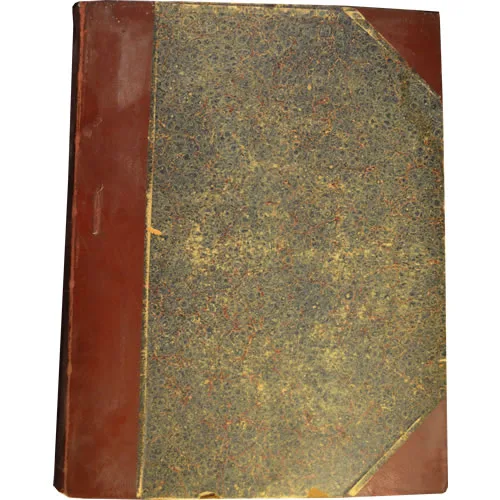
Publisher: Times Newspapers
Format: Hardback
ISBN: none
Good condition set of four.
Events 1886
January — Ulster Protestant Unionists begin to lobby against the Irish Home Rule Bill, establishing the Ulster Loyal Anti-Repeal Union in Belfast.
13 January — After six years of campaigning, the atheist Charles Bradlaugh is permitted to affirm rather than take the traditional oath, allowing him to take his seat as a Member of Parliament.
18 January — The Hockey Association is founded, largely on the initiative of sports clubs in the London area, and codifies the rules for hockey.
27 January — Salisbury loses supports of the Irish Party, and resigns as Prime Minister.
1 February - William Ewart Gladstone becomes Prime Minister for the third time. He appoints as Under-Secretary of State for the Home Department Henry Broadhurst, the first person from a working-class labour movement background to be appointed a government minister in the U.K.
1 February - Mersey Railway opens, linking Birkenhead and Liverpool.
7–8 February — Two days of rioting in the West End of London by the unemployed, coinciding with the coldest winter in thirty years. March
7-8 february - Gladstone announces his support for Irish Home Rule.
7-8 February - Linfield F.C. is formed in Belfast.
10 March — First Crufts dog show held in London.
April — New English Art Club mounts its first exhibition.
8 April — Gladstone introduces the Government of Ireland Bill (the first Irish Home Rule Bill) in the House of Commons. During the debates on the Bill
8 April - Financial Secretary to the Treasury H.H. Fowler states his support for the Bill which in his words would bring about a "real Union—not an act of Parliament Union—but a moral Union, a Union of heart and soul between two Sister Nations".
8 April - Lord Randolph Churchill voices his opposition with the slogan "Ulster will fight, Ulster will be right".
11 May — The International Exhibition of Navigation, Commerce and Industry in Liverpool is opened by Queen Victoria.
8 June — The Irish Home Rule Bill fails to pass in Parliament on a vote of 343-313. Ulster Protestants celebrate its defeat, leading to renewed rioting on the streets of Belfast and the deaths of seven people, with many more injured.
12 June — Gladstone calls for a dissolution of Parliament.
25 June - Crofters’ Holdings (Scotland) Act grants security of tenure to crofters.
25 June - Riot (Damages) Act provides for property owners to recover compensation from local police forces in the event of damage due to riot.
30 June — Royal Holloway College for women, established by Thomas Holloway, opened by Queen Victoria at Egham in Surrey.
12 July–mid-September — Belfast riots: Beginning with the Orange Institution parades and continuing sporadically throughout the summer, clashes take place between Catholics and Protestants, and also between Loyalists and police. Thirteen people are killed in a weekend of serious rioting, with an official death toll of 31 people over the period.
23 July — The inaugural Eclipse Stakes, run at Sandown Park in Surrey with a prize fund of £10,000 donated by Leopold de Rothschild, making it at this time the richest British horse race, is won by the stallion Bendigo.
27 July — General election won by the Conservative Party under Salisbury but with a Parliamentary majority depending on the support of the new Liberal Unionist Party.
1 September — The Severn Tunnel is opened by the Great Western Railway.
11 October — Memorial statue to Sister Dora unveiled in Walsall.
9 December - Southport and St Anne’s lifeboats disaster.
9 December - Beatification of Edmund Campion (executed 1581) by Pope Leo XIII.
25 December — Great snow storm in London.
Keep browsing: See more Times Newspapers books Other books by Times Newspapers